TOPLINE

Geo Energy makes foray into renewables even as it doubles down on coal 

Uma Devi
Uma Devi

Published Mon, Aug 28, 2023 · 05:00 AM
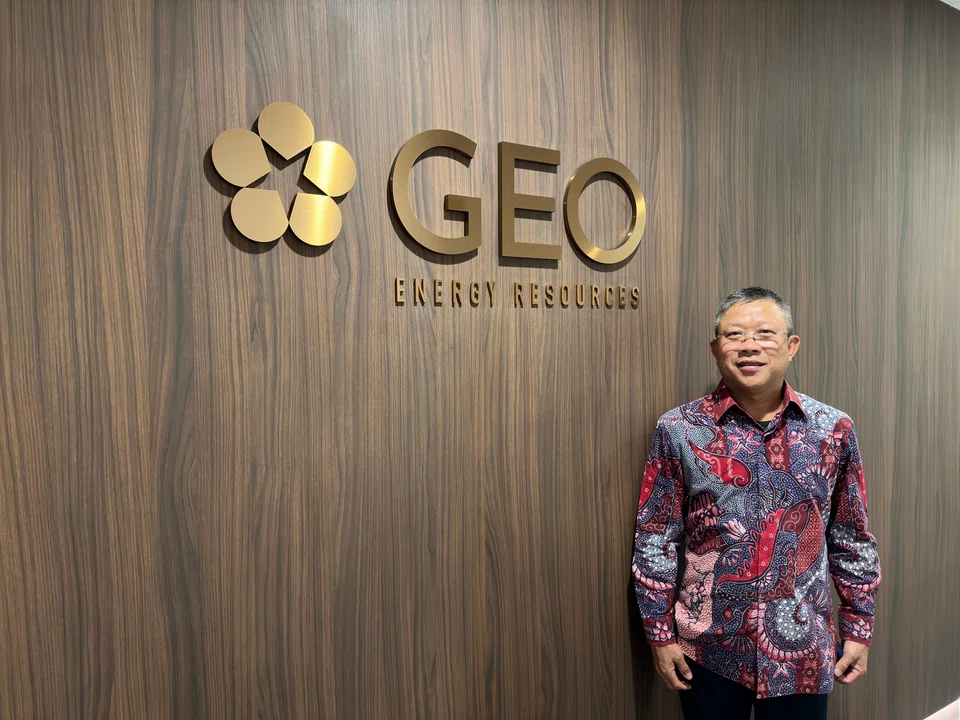
    • Geo Energy's chairman and chief executive Charles Antonny Melati says the group is exploring the diversification of its business, but is not exiting the coal market.
    • Geo Energy's chairman and chief executive Charles Antonny Melati says the group is exploring the diversification of its business, but is not exiting the coal market. PHOTO: GEO ENERGY RESOURCES

    COAL producer Geo Energy has signalled its continued commitment to the coal market, despite the commodity gaining a negative reputation from banks and investors amid rising environmental, social and governance (ESG) concerns.

    Geo Energy recently announced that it would fork out just over US$154 million to acquire stakes in two Indonesian coal-linked companies. But the group’s chairman and chief executive Charles Antonny Melati said the company is also looking at investments or acquisitions in the renewables space, in a bid to diversify the company’s exposure. 

    In a recent interview with The Business Times, Melati said Geo Energy is “in discussions” with another company to diversify into renewables. 

    “We are trying to explore the diversification of the business, but we are not saying we want to exit from (the coal market),” he said. 

    In an announcement on the Singapore bourse on Friday (Aug 25), Geo Energy said it was making an initial investment of US$4 million in Singapore-headquartered electric vehicle (EV) startup Charged Asia.

    Geo Energy has an option to up its capital investment by a further US$36 million, which would make it a major shareholder of Charged Asia.

    The EV manufacturer and distributor has developed three motorcycle models and delivered more than 1,000 motorcycles in Indonesia, Malaysia and Vietnam.

    Stakeholders and investors are likely to welcome Geo Energy’s push into the renewables sector, which gives it a more “balanced” portfolio. “The coal sector is not sexy,” Melati said.

    He argued, however, that coal remains the cheapest energy option, and is still a necessity for many markets and industries today.

    “At the moment, our core business is still coal,” he said. But he noted that Geo Energy’s business mix could change five years down the road, with the company putting money into a “future business that is not big yet”. 

    Selective coal acquisitions only

    One reason for Geo Energy’s decision to move forward with another coal-related acquisition was that its existing mines had just five years of life left. The acquisition would extend Geo Energy’s mine lifespan significantly. 

    Melati said Indonesia’s biggest coal miners, such as Adaro Energy and Bumi Resources, maintain at least 15 years of life for their mines. 

    According to the terms of the acquisition announcement, Geo Energy will take up an initial stake of 58.7 per cent in Indonesia-listed coal miner Golden Eagle Energy, and a 33 per cent stake in coal infrastructure developer Marga Bara Jaya

    Geo Energy said Golden Eagle Energy produces high-quality coal of favourable low sulphur and low ash content through its subsidiary. Such coal enjoys strong demand and commands a premium. 

    An independent valuation report on Aug 24 put the value of Golden Eagle Energy’s coal mine at US$809 million, based on a 2023 variable coal forecast and a preferred value of US$957 million, based on a constant coal price.

    But the mine itself “is not (a) very important” aspect of the transaction, Melati said. The key factor that sealed the deal for Geo Energy was the logistical benefits that came with the mine. 

    According to the company’s announcement, Marga Bara Jaya is looking to build a network to transport coal for Golden Eagle Energy and neighbouring mines in the south Sumatra area. 

    Its planned road and jetty have a targeted capacity of up to 50 million tonnes per year, with 25 million tonnes reserved for coal per annum from Golden Eagle Energy. 

    Melati explained that having its own road could save the company some costs, as it currently has to pay for the other roads it uses that are not its own. Having its own road also gives the company flexibility in terms of transporting coal from the mines to ports. 

    Excluding Golden Eagle Energy’s mine, Geo Energy now has four producing mines. Melati said that while the company might consider investing in coal mines again, it will be selective. This is despite the fact that the company is sitting on cash and bank balances adding up to US$150 million as at end-June.  

    Geo Energy will only look at buying mines around the area it currently has works in that it can begin exploration works on immediately, and can generate cashflow for the company upon purchase. 

    The company is also not likely to consider greenfield projects, and will pay close attention to the grade of coal before purchasing a mine, Melati added. 

    A tough market

    So far this year, coal miners have had it rough due to normalising coal prices. 

    Geo Energy posted a 74.1 per cent decline in earnings for the first half of the fiscal year ended June, to US$27.1 million. Revenue was down 34.9 per cent to US$239.8 million.

    The weaker financial figures were attributed mainly to lower average Indonesian Coal Index price for 4,200 gross as received coal (ICI4). In addition, the group’s top-line and bottom-line figures faced pressure from higher government royalties and higher strip ratios. 

    Geo Energy’s board of directors recommended a lower interim dividend of S$0.005 per share, versus S$0.02 per share in the prior year. 

    But Melati noted that, like other commodities, coal’s nature is cyclical due to demand and supply dynamics.

    He recalled that last year was a “very good year to order coal from a coal miner” because coal prices were high. Coal miners then ramped up production at their mines, which led to an increase in overall supply in the market. 

    But the higher prices have since tapered off, and regulations around ESG have also become stricter. This led to Geo Energy’s local peer Golden Energy and Resources sounding its intention to exit the energy coal business altogether in November last year. 

    Melati said that Geo Energy is still in a relatively safe space, and is expected to be able to manage operations even if coal prices dip below US$40 per tonne. 

    The company has forecasted a production of eight million tonnes this year, down from 11 million tonnes last year when coal prices were significantly higher.

    For this year, Melati said he expects coal prices to remain at about the same range the commodity is currently trading at, but stressed that he is unsure about 2024 and beyond. 

    For the medium to long term, however, he is more optimistic. 

    The group is expecting demand growth to come primarily from China, which has approved more than 50 gigawatts of new coal power in the first half of 2023, and stated that coal power will still grow at a reasonable pace into 2030. The country’s coal imports remained at elevated levels, with overseas purchases doubling in the first half of 2023. 

    On the supply side, the ageing resources of existing mines and a lack of mine approvals resulting from net-zero initiatives are crimping new supply from entering the market.

    Looking ahead, Melati believes coal demand is expected to outpace supply, which could result in a premium for the commodity’s price in the medium to long term.