

Germany, Italy threaten EU plan to scrap combustion engines
 Add BT as a preferred source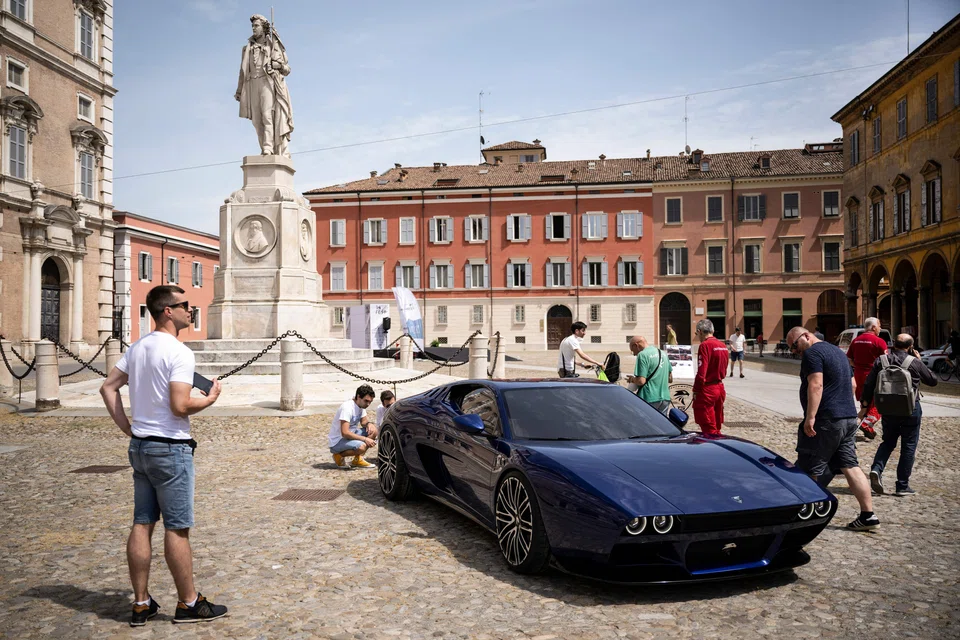
DeeperDive is a beta AI feature. Refer to full articles for the facts.
GERMANY and Italy are threatening to block a European Union ban on new combustion-engine cars, putting the bloc’s green goals at risk.
The countries are demanding that the EU come up with a promised proposal to exempt vehicles that use climate-neutral synthetic fuels. Poland and Hungary have also signalled their opposition to the plan, which requires carmakers to reach a zero-emissions target by 2035. Member states had provisionally agreed on the plan last year.
Germany successfully lobbied for a loophole in the rules, under which the European Commission agreed to make a proposal for registering vehicles running exclusively on CO2-neutral fuel after 2035.
German Transport Minister Volker Wissing said on Wednesday (Mar 1) that the Commission had failed to deliver the proposal, so the government in Berlin is unable to give its approval for the wider plan in a final vote by EU government ministers that is due on Mar 7.
Overruling a deal made between lawmakers and member states at this late stage would likely be politically toxic, with the vote next week normally seen as a rubber stamp. A preliminary vote by EU officials on the issue due on Wednesday was postponed to Friday.
“We need e-fuels, as there is no alternative if we want to operate our vehicle fleet in a climate-neutral way,” Wissing said in an interview with public broadcaster ARD.
Navigate Asia in
a new global order
Get the insights delivered to your inbox.
“Whoever is serious about climate-neutral mobility must keep all technological options open, and also use them,” he added. “I don’t understand this fight against the car, and why people want to ban some technologies.”
The German automotive industry makes up roughly 5 per cent of the nation’s economy, and employs more than 800,000 people. The sector includes scores of specialised parts-makers that have developed over the course of more than a century of supplying carmakers including BMW, Mercedes-Benz and Volkswagen with components for their combustion-engine cars.
In Italy, the auto industry contributes about 8.5 per cent to the economy, employing about a quarter of a million workers.
Europe’s automotive lobby group said that it is “carefully” monitoring the discussions on the ban, and is confident that the legislative process will take its course. Spiralling inflation, and the price of batteries increasing for the first time in over a decade, mean that affordability risks becoming a “bigger obstacle” in the transition to zero-emissions, the Brussels-based group ACEA said in e-mailed comments in response to a Bloomberg query.
“Policymakers must therefore also address emissions from the existing fleet of vehicles on the road,” the organisation said. “At the end of the day, it is all about slashing emissions, not about getting rid of a technology. As the current energy crisis demonstrates, diversification is essential to improve Europe’s resilience.”
An EU spokesperson said that a transition to zero-emission vehicles was absolutely necessary to meet the bloc’s target of cutting emissions by 55 per cent by the end of the decade – on the path to achieving climate neutrality by the middle of the century. Road transport is one of the most carbon-intensive sectors in the EU, generating about a fifth of the bloc’s emissions.
Carmakers have already moved well down the path of an all-electric future, with unprecedented investments into the battery supply chain and new models.
While sales of electric cars are taking off, concerns over patchy charging times and comparatively high costs of an EV have not dissipated, with Stellantis chief executive officer Carlos Tavares warning of a deep upheaval if consumers no longer have access to affordable vehicles. EVs are also less complex to make, triggering job cuts.
As carmakers ploughed billions into electrification, their approaches differed. BMW has stuck with a plan to offer buyers globally a range of technologies, including combustion-engine cars and hydrogen fuel-cells because of expected differences in regulation and uptake.
Concerns about the EU’s push have surfaced elsewhere too, with Internal Market Commissioner Thierry Breton in November urging manufacturers to keep making combustion cars that help create quality jobs and drive exports.
Germany’s Wissing is a member of the pro-business Free Democratic Party (FDP), the most junior member of Chancellor Olaf Scholz’s three-party coalition, and his latest comments prompted some pushback from elsewhere in the ruling alliance.
The FDP has been trying to raise its profile in the government in recent months, following a series of poor performances in regional elections and amid waning support in voter polls.
Matthias Miersch, deputy chair of the parliamentary group for Scholz’s Social Democrats, told Deutschlandfunk radio that the government supports the 2035 target to phase out combustion-engine vehicles.
“E-fuels are only suitable for a certain type of vehicle,” Miersch said. “And they will be very, very expensive compared to battery technology.”
Italy’s right-wing government led by Giorgia Meloni has long been critical of the plans to ban new combustion-engine cars. Deputy Premier and Transport Minister Matteo Salvini said that such a plan “makes no sense”, and puts thousands of jobs at risk.
“The use of clean fuels compatible with combustion engines will allow the continuation of a green transition without economic impact on citizens,” said the environment ministry in Rome on Tuesday. BLOOMBERG
Decoding Asia newsletter: your guide to navigating Asia in a new global order. Sign up here to get Decoding Asia newsletter. Delivered to your inbox. Free.
Share with us your feedback on BT's products and services
TRENDING NOW
Air India asks Tata, Singapore Airlines for funds after US$2.4 billion loss
Beijing’s calculated silence on the Iran war

China pips the US if Asean is forced to choose, but analysts warn against reading it like a sports result

Richard Eu on how core values, customers keep Singapore’s TCM chain Eu Yan Sang relevant

