

Global Premium Hotels puts 23 hotels on market at S$1.4b
Chairman says group will consider offer only if buyer takes all properties
Singapore
A PORTFOLIO of 23 hotels, mostly under the Fragrance brand, is up for sale by Global Premium Hotels (GPH) at an indicative price of S$1.4 billion.
They have been on the market since the second half of last year.
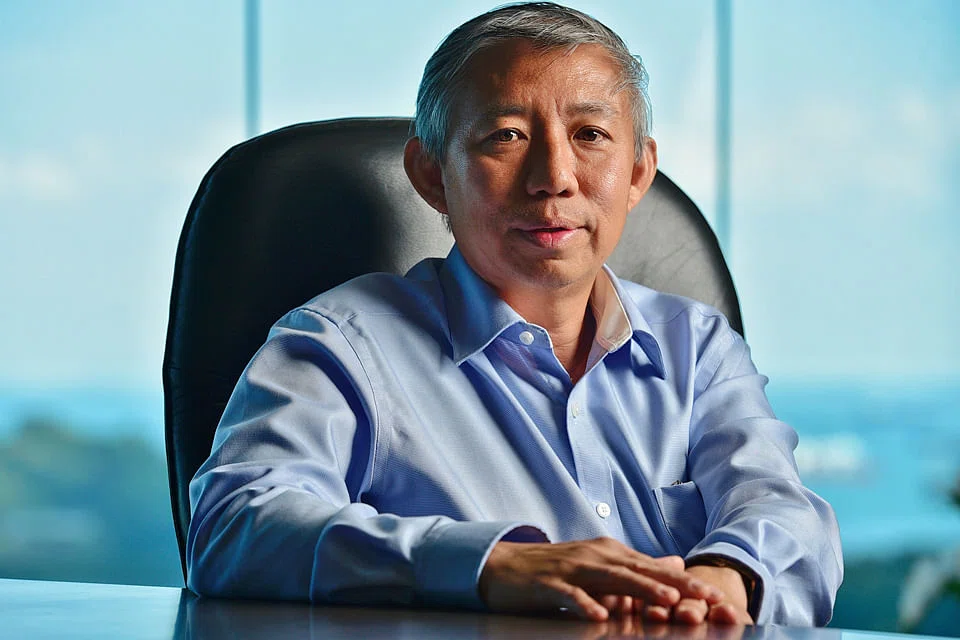
Although there have been no takers so far it is not for the lack of interest, said GPH chairman James Koh.
In an interview with The Business Times, Mr Koh, who is also founder, chairman and CEO of Fragrance Group, said GPH had received "a couple of offers".
He said: "We would rather sell as a whole than piecemeal...then we can devote our time to hotel development... My very, very strong passion is in development, rather than management."
He disclosed that buyers would enquire about buying the group's properties from time to time but he had mostly ignored them until in 2018 when interest spiked.
"There were many, many calls every month. Someone would look for us saying they have customers wanting to buy five, or six, or, seven, or eight (of our properties), so it prompted in us the idea that maybe we should sit down and have an internal discussion. And we decided, okay, if anyone would like to have the whole portfolio, we may consider."
The indicative price is based on a valuation done by an international valuer whose identity Mr Koh declined to name. At S$1.4 billion, the indicative price translates to about S$720,000 per key.
For comparison, Indonesian magnate Tahir is reportedly interested in buying Oxley Holdings' Mercure and Novotel hotels in Stevens Road for S$950 million, or about S$1.23 million per key.
Last month, Cheong Sim Lam, whose family developed International Plaza and the Hyatt Regency Singapore, acquired Ascott Reit's Ascott Raffles Place Singapore for S$353.3 million, or about S$2.4 million per key.
These are properties in prime locations, compared to GPH's portfolio of 23 hotels - 21 of which are under the Fragrance brand and two under the Parc Sovereign brand - spread across the Geylang, Balestier, Selegie, Pasir Panjang and Bugis areas. GPH also manages another hotel, Klapstar Boutique Hotel, under the Klapstar brand but does not own the property.
According to its 2016 annual report, its last before the company was taken private, the carrying value of the 23 hotels was S$1.21 billion as at Dec 31, 2016. Most of its properties are freehold, with the oldest, Fragrance Hotel Sapphire in Lorong 10 Geylang, dating back to 1998.
Mr Koh dismissed talk that the hotels are up for sale because Fragrance Group needed to raise cash to refurbish its hotels, or to tide over the difficult Australian residential property market where Fragrance Group has two properties, Premier Tower in Melbourne and NV Apartments in Perth. As at Sept 30, 2018, they were 74 per cent and 23 per cent sold, respectively.
Mr Koh said the hotels under Fragrance Group are refurbished every three to five years and in good condition. In addition, the company is financially healthy with a net gearing of about 1.17 as at end-September 2018.
He added that the two companies, GPH and Fragrance Group, are separate entities. Mr Koh had in 2017 launched a cash offer to take the firm private at 36.5 Singapore cents a share through his investment holding vehicle, JK Global Capital, citing the firm's low trading liquidity and the fact that it had not carried out any exercise to raise equity capital since 2012. The offer succeeded and he subsequently delisted GPH.
"A sale of GPH's hotel portfolio would have no impact on Fragrance Group at all," he said. He also stressed that he did not intend to sell the portfolio in the first place and will not succumb to low-ball offers.
"I have my way of doing business. It is not you come and offer me a big discount and want me to take a haircut. I won't entertain."
He said depending on negotiations with buyers, the sale could go also include the company and management team, for ease of keeping the hotels in operation.
He said GPH is in the black, without much loan encumbrances. For the fiscal year ended Dec 31, 2016, GPH reported a net profit of S$11.9 million on the back of S$58.3 million in revenue.
As for Fragrance Group, for the nine months ended September 2018, the developer posted a 31 per cent increase in net profit to S$17.5 million.
Revenue rose 24 per cent to S$167.2 million, on higher contributions from its City Gate development project in Singapore and rentals from its commercial properties and hotel operations income from Ibis Styles Hobart in Australia and The Imperial Hotel in the United Kingdom.
Interest in hotel developments from developers and investors has been on the rise.
Some headline-grabbing transactions in the past few months included a hotel site in Club Street that in January drew a record price of S$562.2 million for 99-year leasehold land at a state tender.
Waterloo Apartments was sold through a collective sale for S$131.1 million last November to Fragrance Group, which plans to redevelop it into a hotel; and Golden Wall Centre was sold en bloc in the same month for S$276.2 million to Worldwide Hotels, which owns and manages hotel chains such as Hotel 81.
Last year, hotel investment sales hit a four-year high of S$1.36 billion, according to data from Cushman & Wakefield.
The supply pipeline in the next few years is expected to taper. Cushman & Wakefield estimates an average of 892 extra rooms per year from 2019 to 2022, down from 3,357 annually between 2014 and 2017.
JLL senior vice-president for investment sales Adam Bury said: "We are now moving into an upward cycle in terms of trading performance of hotels. 2019 and 2020 will be good years for hotel trading in Singapore because of the limited supply."
He attributed this to a reallocation of capital from residential investments to hospitality, after the latest round of cooling measures doused the fervour in the residential market.
"Hotel supply and demand is in owners' favour now. It is a game of investment returns over the whole period.
"You typically see longer holds in Singapore compared to many other markets, and right now, for owners, you do see that potential for significant gains in capital value."
He added: "Prices have been on an uptrend, so owners are able to recognise a capital value gain against their entry prices... Capital values are also driven by an improvement in performance of hotels, and this is evident in both the increase in average room rates and occupancy rates."
Also fuelling interest is the government's flexibility to consider applications for sites to be converted to hotel use, in view of rising tourism arrivals and expected future hotel room demand.
This is a reversal from a few years back when applications for such changes of use were generally not allowed.
TRENDING NOW

Good Class Bungalow market activity picks up pace on ‘realistic’ pricing
Indonesia imposes US$116 million in fines over manipulation of Sinar Mas, Prajogo-linked stocks

Singapore identifies 7 firms responsible for haze fires, notices issued urging action: Grace Fu

Once staunchly pro-China, Malaysian Chinese businesses are now distancing themselves from Beijing

