

Global trends bode well for SGX
Singapore will gain as fund managers look more to generating alpha than tracking beta, says the Exchange's head of equities

Angela Tan
Singapore
INVESTORS' search for alpha and liquidity, as well as the stability and consistency of Singapore's capital market, are a few trends that bode well for the Singapore Exchange (SGX).
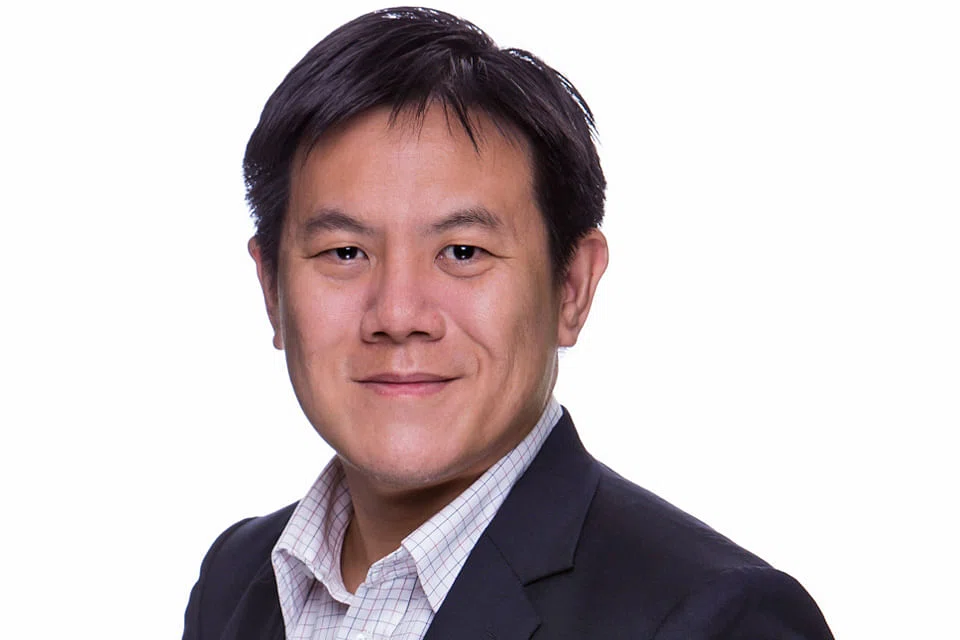
Chew Sutat, head of equities and fixed income at SGX, told The Business Times in an interview that the market outlook is promising for Singapore.
"There has been a lot of dislocations/misallocations in the capital markets,'' he said. Investors have been chasing US indices - collections of the largest publicly traded US companies - resulting in less capital allocated in smaller value stocks.
"Blind money" investment - where money flows to a subset of companies based not on fundamentals but on their inclusion in the index - is starting to shift with heightened market volatility and uncertainties. The money that had gone from East to West is starting to slowly move back, Mr Chew noted. Investors are starting to realise that US equities have become "crowded trades", with institutional fund managers, benchmark folks, exchange-traded funds and private bank customers chasing the same stocks.
Such a strategy, where hordes of investors pursue the same endgame, can be dangerous as these trades tend to lead the way down when the market turns bearish, he said.
"When there is a lot of money going in and giving very high valuations to all these companies in unique sectors and markets, what tends to happen is when a correction comes, it tends to be very steep," he said, citing as examples, Facebook and Twitter.
"These are the very crowded trades. We expect fund managers will be looking more to generating alpha, rather than tracking beta," he said.
When that happens, Singapore - which has many mid- to small-value companies, not just the benchmark Straits Times Index (STI) - will benefit.
The second trend that has emerged is investors' demand for liquidity, which is pushing more money from the private to public markets.
"We think that is healthy because that will lead to changes in the cycle where public markets will be more relevant," said Mr Chew.
"Venture capital (VC) funds ultimately need to have exits. In the last five years, they were able to exit by selling to the next private equity fund, or the next VC fund. But now, that's harder and harder to come by. We see the trends where there are more relistings, rather than delistings."
The relisting of ERA Realty, one of Singapore's largest property brokers, is one such example of a return to the public market. It was delisted in 2012 and a year later, Hersing Group sold it for about S$130 million to private equity fund Northstar. After a revamp, the property group was relisted as APAC Realty last year.
"So, misallocation of capital, tracking indices seem to be cracking and there seems to be a greater search by investors for alpha, which is healthy," said Mr Chew.
"Private market funding may be harder to come by. It is still a big challenge to the public markets, but more exits are coming into the public markets. That is also healthy."
Recent volatility in the bigger markets, North Asia in particular, also allowed Singapore to play to its strength.
"We may not be the most exciting volatile market in the world, but we are also not the one that gives investors a heart attack from time to time," Mr Chew said.
"The strength, stability, and consistency of the Singapore capital market for initial public offers (IPOs), secondary fundraising, fixed income capital raising, has started to really bear fruits. Volatilty in the market here is less but the transactions continue to grow unabated," he added, citing examples in the core sectors of real estate investment trusts (Reits) and infrastructure, consumer and healthcare as well as technology.
For the full year ended June 30, 2018, SGX chalked up a five-year high net profit of S$363.2 million, up 6.9 per cent, on the back of a 5.5 per cent increase in revenue to S$844.7 million - a record since its listing in 2000.
On some brokers' lamentation that the retail investor's participation has fallen sharply over the years, Mr Chew said the trend is reflective of a more developed market. "That's just evolution,'' he said.
"The retail wallet has been bifurcating and traditional remisier-assisted models have gone down. But the market has grown correspondingly with aggregated institutionalised retail coming from the bankers, etc."
"That's what makes Singapore different from Taiwan, Thailand and China. Our international institutional portion is big. There is no way we can have an international global Reit market in Singapore without institutional international capital."
He reckoned retail participation in Singapore is 20-plus per cent of daily turnover. This compares to Hong Kong where numbers are in the high teens to low 20s. In other more developed markets, retail participation is around 10 per cent in Australia and Japan, and at a single digit in the US. As for emerging markets such as China onshore, retail participation is at 80-90 per cent; Taiwan 70 per cent; and Thailand 70-80 per cent.
In the retail broker's space, Mr Chew sees room for different technology platforms and models.
"We would love to have all segments of the market grow. As the market grows, we hope everyone equally benefits but very clearly, there are differentiation and competition. Some models do better and customers' needs change over time."






