

Global wave of consultancy layoffs has not hit Singapore
Such retrenchments may eventually happen but on a limited scale, say watchers

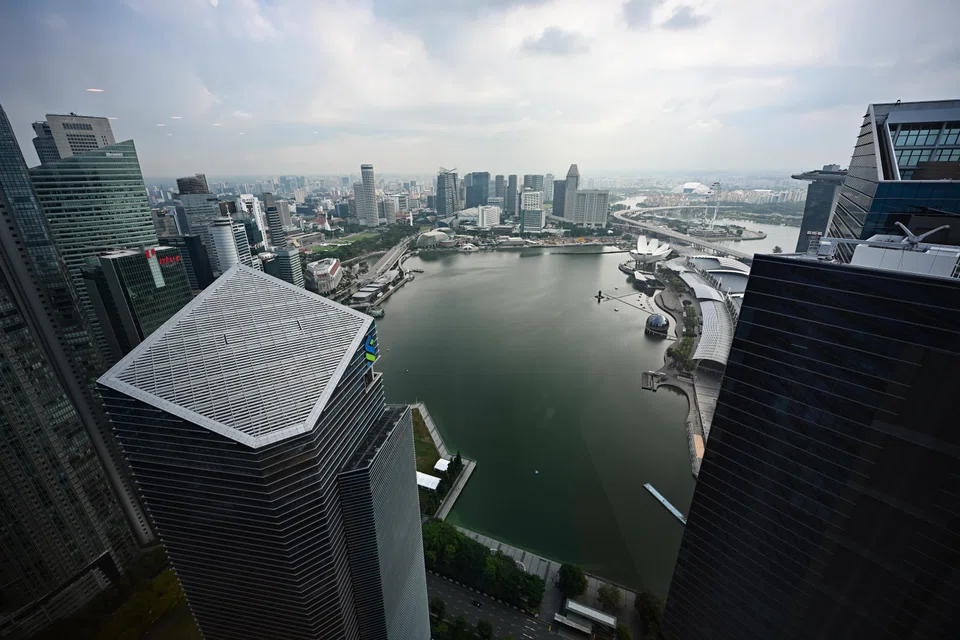
LAYOFFS have swept through global consultancy and professional services companies, but the wave has spared Singapore so far, with big players in the Republic noting continued demand for their services.
Since 2023, the industry has been plagued by a rash of job cuts worldwide. After rounds of layoffs last year, Big Four firms are seeing more.
Last month, PwC Australia said it would make over 300 roles redundant. In February, it was reported that Deloitte was set to slash 100 more jobs in the UK. Ernst & Young is now reportedly weighing further cuts in Oceania. Outside the Big Four, McKinsey & Co began global headcount reductions last month.
Firms attributed their cuts to a slowdown in client demand amid economic headwinds. The layoffs also follow a stretch of aggressive hiring during the pandemic.
But consulting and professional services firms in Singapore remain sanguine, with no plans to cut jobs – and active hiring by some.
KPMG in Singapore currently does not plan to reduce jobs in the Republic, where the economy is “resilient”.
“As the sectors and industries we cater to are diverse, the demand for professional services firms in Singapore is robust,” said a KPMG in Singapore spokesperson, noting healthy demand in the areas of innovation, digital transformation and environmental, social and governance.
Deloitte Singapore also sees continued demand for its services despite less-than-ideal global market conditions, said country managing partner Shariq Barmaky. This is particularly in areas such as cybersecurity, artificial intelligence (AI), technology transformation and sustainability.
Deloitte is still hiring in Singapore and continues to invest in developing its talent, he added. Singapore is Deloitte’s largest market in South-east Asia. Its office in the Republic serves companies headquartered here, with local and/or regional operations.
Liew Nam Soon, EY Asean regional managing partner and EY Solutions Singapore country managing partner, said: “In Singapore, we have not had layoffs in recent years nor consider it as a strategy to optimise our operations.”
Instead, EY aims to nurture a “high-performance culture”, he said. It hires for “in-demand areas like AI, tech, risk and accounting”.
A McKinsey spokesperson said its global layoffs were “within a small number of capability areas”, and part of the firm’s approach of adjusting “the size of our capabilities as appropriate”. Its Singapore operations were not affected.
Singapore remains a key market, said the spokesperson, stressing McKinsey’s commitment to investing in capabilities and attracting talent, including in Singapore.
PwC Singapore has been retaining jobs “since before the pandemic”, through job redesign and upskilling. A spokesperson said: “PwC will always look to redeploy staff and exhaust all possible means before considering layoff measures.”
Singapore not spared from global economic weakness
Still, some layoffs may eventually happen here, as Singapore has not been spared from global economic weakness, said industry watchers. Companies are pausing growth plans and streamlining costs instead.
Some examples are the recent restructuring exercises at Grab and Sea, said Tong Yen Hee, associate professor of accounting at the Nanyang Technological University’s business school. Such cost-cutting may trickle down to reduced demand for consultancy services, said Prof Tong, who expects layoffs in the consultancy and professional services sector here.
Kelvin Law, an associate professor of accounting at NTU’s Nanyang Business School, sees a “moderate risk of substantial layoffs” in the industry in Singapore over the next 12 months.
Headcount reduction decisions are often based on a target percentage across all regions, not just a specific location’s performance or demand, he said.
Prof Law also noted that a “considerable number” of consultants are hired for tech-related projects, but the US tech market – a bellwether for the industry – has slowed down. This suggests a similar fall in demand in Singapore’s near future.
Eugene Chang, an independent culture and change management consultant, suggested that consultancy firms may not yet have the solutions that clients are seeking. “We are at the start of a disruptive cycle with AI,” said Chang, who has “senior professional” certification from the Institute for Human Resource Professionals.
In areas with no known experts or answers, potential clients may not turn to consultants but instead experiment in-house, he noted. “Consulting is one or two bounds behind, and will come back... in force once new frameworks and models can be devised to help proliferate solutions (to help) companies deal with the disruption.”
Still, Singapore offices should not be hit as hard as their overseas counterparts, industry watchers agreed.
Chang noted that local firms tend to already be leanly staffed. They also provide more affordable consulting on “core” areas – such as enterprise resource planning or talent development – with known solutions. “Consultants are still able to secure work, albeit potentially with lower margins in a tight demand scenario,” he said.
Prof Tong believes any layoffs may be concentrated in a few areas. Financial advisory services and strategy consulting may be hit by the pullback in clients’ growth plans, while IT consulting employees may fall victim to recent restructuring in the tech sector.
But there could be continued demand for operations consulting, as clients seek opportunities to cut costs, he said. The sustainability push may also mean strong demand for sustainability strategy implementation, risk management and reporting-related services.
“The scope of layoffs will be restricted as long as consultancy and professional service firms realign their offerings and reconstitute talent pools towards areas with growth potential,” he said.
TRENDING NOW

He built the Vingroup empire. Now South-east Asia’s richest man is handing some key roles to his sons
Quarter of Singtel special discounted shares sold ahead of CPF Board transfer

Why Tan Aik Keong of digital solutions specialist Agmo wants to make himself less indispensable

Asia needs new energy security architecture

