

Going green may not be so green after all

Janice Lim
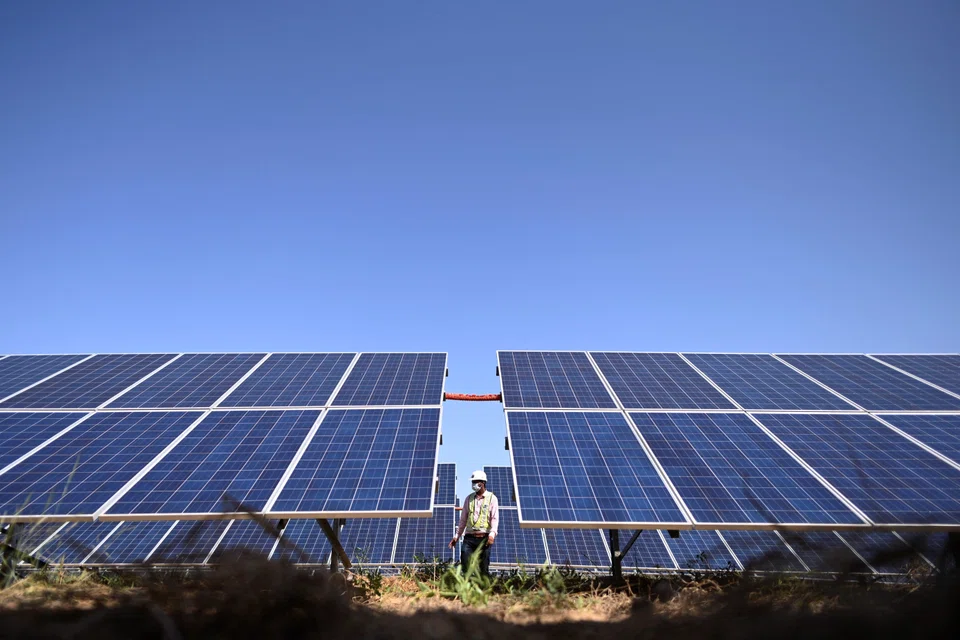
THE benefits of renewable energy sources such as wind and solar are well-known. As governments and companies race to fulfil their climate obligations, it is expected that these cleaner sources of energy would be increasingly included in a country’s or company’s energy mix. Yet, the not-so-green side to energy transition is not something often talked about.
While renewable energy sources, like solar and wind, do not emit carbon dioxide while they are being used to generate energy, their manufacturing processes, transportation and disposals once they have reached the end of their life cycles do have negative effects on the environment.
Industry practitioners use a method called the life cycle analysis to find out the extent of environmental impacts associated with all the stages of the life cycle of a product, process or service.
According to an academic article in 2019, which studied the environmental effects of renewable energy transition in Singapore, Malaysia and Brunei from 2015 to 2050, researchers from the National University of Singapore (NUS) found that global warming potential can be expected to decline by more than 55 per cent from current levels. However, acidification potential would increase by 66.6 per cent, while human toxicity potential would go up by 12 times.
“Every kind of energy production system will have some negative impact... Each of them have their own impact category that is higher than others,” said Augustine Quek, former NUS researcher and lead author of the study.
How green is green energy?
To begin with, wind and solar farms use 10 times more land than coal or gas-fired plants, said Kevin Milla, carbon services lead at sustainability consultancy Paia Consulting.
In the case of solar power, one of its main impacts is in the embodied carbon of the photovoltaic (PV) panel, which refers to the amount of carbon dioxide emitted during its manufacturing process. Many solar panel manufacturers today — a majority of them in China — still burn coal to produce the panel, said industry experts. There are also concerns of hazardous materials being used in its manufacturing process. These include heavy metals, such as lead and chromium.
According to Quek’s study, workers involved in the extracting of such materials, as well as the manufacturing of solar modules, would face the highest risk of toxicity, unless safe workplace practices are followed.
“What is the price of all the resource extraction and, in the use case, what is the trade-off of using that much land to cover with solar panels?” said Milla.
However, Armin Aberle, an NUS professor and chief executive officer of the Solar Energy Research Institute of Singapore, said that there are manufacturers that have managed to come up with premium products without these hazardous materials. The issue, however, is cost.
There is also a carbon footprint associated with wind power. Building and erecting wind turbines requires materials such as steel, concrete, copper — materials which typically do not have the cleanest manufacturing processes.
There is also the issue of what happens to these panels and turbines when they reach the end of their life cycles.
According to Michael Ottaviano, managing partner in renewable energy for Asia-Pacific at sustainability consultancy ERM, most wind and solar farms that are being decommissioned are disposed of in landfills, though he noted that these represent only 5 to 10 per cent of all wind and solar farms that have been built. The life cycle of solar PV panels and wind turbines are between 20 and 30 years.
“It’s not a major issue today as it is still a new industry. But it will become a big issue over the next decade,” said Ottaviano.
Milla said waste from solar panels is expected to grow to 78 millon tonnes by 2050 if it is successfully adopted as a result of the global push in energy transition.
Besides the environmental impacts, there are also concerns that the installation of renewable energy systems may cause biodiversity loss.
Along a particular section of the Mekong Delta in Vietnam, where the coastline is extensively dotted with wind farms and transmission cables, there has been loss and disturbance of wetlands used by migratory waterbirds, said Yong Ding Li, advocacy and policy manager at BirdLife International (Asia).
To transit or not to transit?
Despite the numerous challenges that come with energy transition, experts and observers have unanimously agreed that it is not a pointless exercise, and that there is an urgent need to continue pushing forward. For one thing, the overall net effect of renewable energy is still less harmful for the environment than the continued use of fossils.
The energy payback time for solar panels, which refers to the duration it has to run until the energy consumed for its production is regenerated, is just about 1 year. It also takes between 6 and 12 months for wind farms, depending on the size of the farm. Solar and wind farms that are decommissioned are also much less pollutive than coal and gas power plants, which can have liabilities associated with them for decades after their closures.
“There is no perfect solution... Whilst it’s not perfect, it is dramatically better than the fossil fuel equivalent,” Ottaviano said.
According to life cycle assessments done by the National Renewable Energy Laboratory in the United States, solar and wind power emit much lower level of carbon emissions for each kilowatt-hour of electricity produced.
“If it’s a small difference, you can say, ‘What’s the point? It’s difficult and it costs money. Why bother?’ The reality is there is a huge difference,” the ERM managing partner said.
Quek pointed out that fossil fuels are a finite resource and that transition is still necessary, regardless of the type of environmental impact from renewable energy sources, and at which part of its life cycle.
“Climate change just brought forward energy transition,” he said.
Minimising negative externalities
Some experts believe that the onus is on manufacturers and project developers to make sure that they are not causing more problems than they are solving.
There are movements in Europe and the US calling for regulations around stewardship of solar and wind products to force project developers and manufacturers to take their production more seriously.
Milla said organisations looking to transition should do their diligence and find out the sources of clean energy used by these manufacturers and where these providers are locally. They can also contract research institutions or task their own internal research and development team to carry out life cycle assessments.
As for the impact on biodiversity, Tris Allinson, senior conservation scientist of BirdLife International, said that wind and solar farms should be located in areas of low ecological value.
“If we are careful in selecting sites for these technologies, we can meet all our renewable energy targets without incurring significant collateral harm to the environment,” he said.
But while plenty of research can be done and huge amounts of data can be churned, Quek noted that it’s up to the user or producer to decide what environmental impact is more important.
“This is not an easy question to answer. Even if you have all the numbers, it is still a subjective choice,” he said.






