Gold ETFs shine on rising interest from the West
Rate cuts by central banks reducing opportunity cost of holding the precious metal

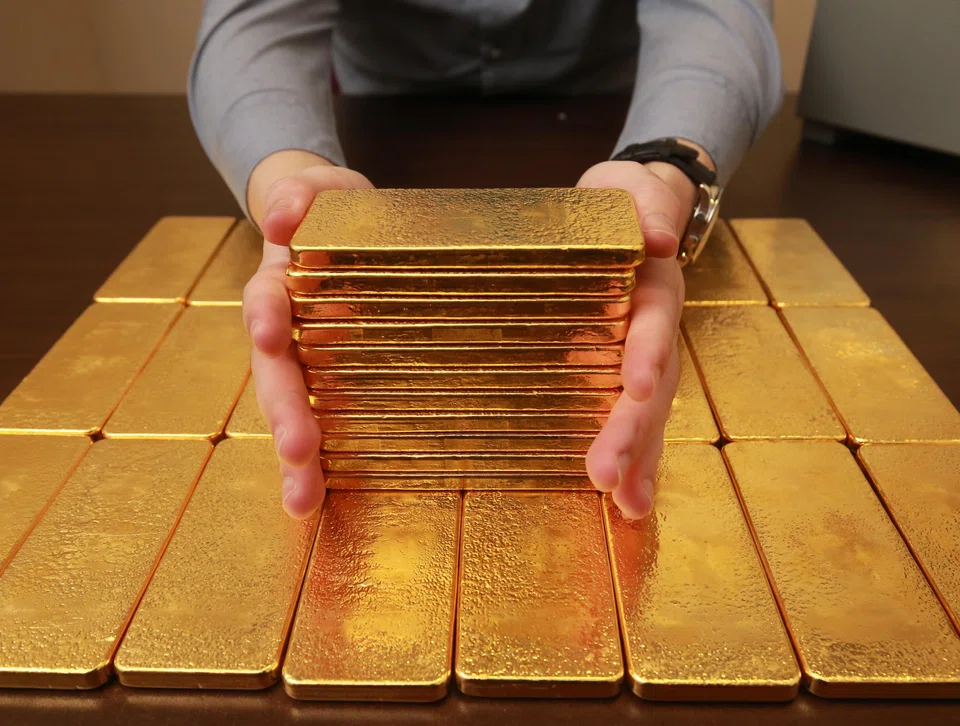
GOLD has long been a favourite among Asian investors. Now, rising interest in gold exchange-traded funds (ETFs) among investors in the West is helping the precious metal to regain its shine.
After registering net global outflows for nine consecutive quarters, gold ETFs reversed to net inflows in the third quarter of 2024, according to data from the World Gold Council (WGC).
“While flows into gold ETFs turned positive only a few months ago, this is largely because of the return of Western investors to this asset class,” explained Fan Shaokai, WGC’s global head of central banks.
He attributed the rising popularity of gold ETFs in Western markets to major central banks easing interest rates, which reduces the opportunity cost of holding gold.
“A continuation of this easing cycle may spur more investor interest, as lower interest rates have historically been positive for gold investment,” he said.
Fan also noted that ETF flows in Asia have been positive for 19 consecutive months, mirroring the strong retail demand for physical gold investment in many Asian markets over the same period.
Spot gold prices have been breaking records, and have held steady above US$2,700 per ounce since it broke the ceiling on Oct 18.
The strong momentum of gold prices has been an important tailwind for gold ETF inflows, said Robin Tsui, Asia-Pacific (Apac) gold strategist at State Street Global Advisors. He explained that investors use such investment funds as a cost-effective and convenient way to capture the strong price rally.
“Since the end of April 2024, global investors have poured more than US$11 billion into gold ETFs,” he added.
Commodity strength
The shine of gold ETFs comes on the back of rising global ETF flows, which hit a quarterly record of US$390 billion in Q3, according to a recent Morningstar ETF report. As at end-September, assets in global ETFs have reached an all-time high of US$13.4 trillion, the report said.
Morningstar data showed, however, that commodity-backed ETFs returned to positive flows only in the recent two quarters, while equity and fixed-income ETFs continue to dominate global ETF inflows.
“Much of the current discourse in the fund industry is around innovations in alternatives and private-to-public offerings, but vanilla equity and fixed-income strategies still prevail. These two core categories captured US$894 billion, or 96 per cent, of flows for the year to date,” stated Morningstar.
This raises the question of whether gold investments should be considered an important portfolio component for investors.
Sylvester Flood, Morningstar’s senior product manager, noted that the investment research company is “very sceptical of gold as an investment” as it is a commodity that has no cash flow.
Morningstar’s director of passive investment ratings Jackie Choy added that gold ETFs typically account for only a small proportion of portfolios, and are considered an alternative asset class instead of a core investment.
“Some investors would look at it as a store of value, but some investors would be using it as a speculation tool... because gold is not a revenue-generating asset,” said Choy, adding that the price movements in gold and gold ETFs are very much demand-driven.
Thomas Taw, head of the Apac investment strategy team at BlackRock, highlighted a rising preference among investors for commodity-backed ETFs amid elevated macro and geopolitical volatility.
“This defensive tilt has also continued to benefit gold exchange-traded products (ETPs), with the precious metal gaining US$1.1 billion in September in global ETP flows,” said Taw.
He noted, however, that while gold ETFs notched a five-month streak of inflows of US$7.8 billion, the funds remain in net outflow territory with net selling of US$0.4 billion in the year to date.
Taw highlighted that Apac-listed commodity ETF flows have tilted heavily towards gold ETPs, which account for the entirety of the net US$3.2 billion of Apac-listed commodity ETF inflows this year.
Singapore rally
SPDR Gold Shares – the only gold ETF listed in Singapore – has posted net inflows since June, in line with the recent global gold ETF inflows.
Geoff Howie, market strategist at the Singapore Exchange, noted that as at Oct 24, the accumulated S$165 million inflows into SPDR Gold Shares ETF’s Singapore listing since June 2024 represent 2.4 per cent of the ETF’s global net inflows of S$6.8 billion.
This indicates strong investor demand through Singapore compared with its other cross-listing venues, he said.
Howie added that geopolitical tensions have been a familiar theme in global financial markets over the past five years, and markets are increasingly concerned that rising tensions could bring wider economic consequences in 2025.
For example, he cited recent warnings by the Bank for International Settlements and the International Monetary Fund over the potential global economic shocks from geopolitical risks, climate change, and supply chain disruptions in 2025.
“The more fluid outlook has seen the average daily trading range of the SPDR Gold Shares ETF doubling to 81 basis points in Q3 2024 (from 36 basis points in Q2), which also generated a doubling up of daily trading turnover,” he said.
In the year to date to Oct 25, the ETF has clocked returns of 31.7 per cent in Singapore dollar terms, bringing the gains since the end of 2019 to 72.7 per cent – more than doubling the total return of the FTSE Asia Pacific Index.
WGC’s Fan expects greater investor attention towards gold – and gold ETFs – as spot gold prices rally.
“Many investors may not have previously considered gold as part of their portfolio allocation before, and are now evaluating it because of the recent performance. Since gold ETFs are a relatively simple way to gain exposure to the gold price, they may benefit as a result,” said Fan.
Similarly, BlackRock’s Taw expects to see investors in Singapore and South-east Asia continuing to turn to gold as a risk-diversification tool into 2025.