

Gold extends slump in turbulent week
London
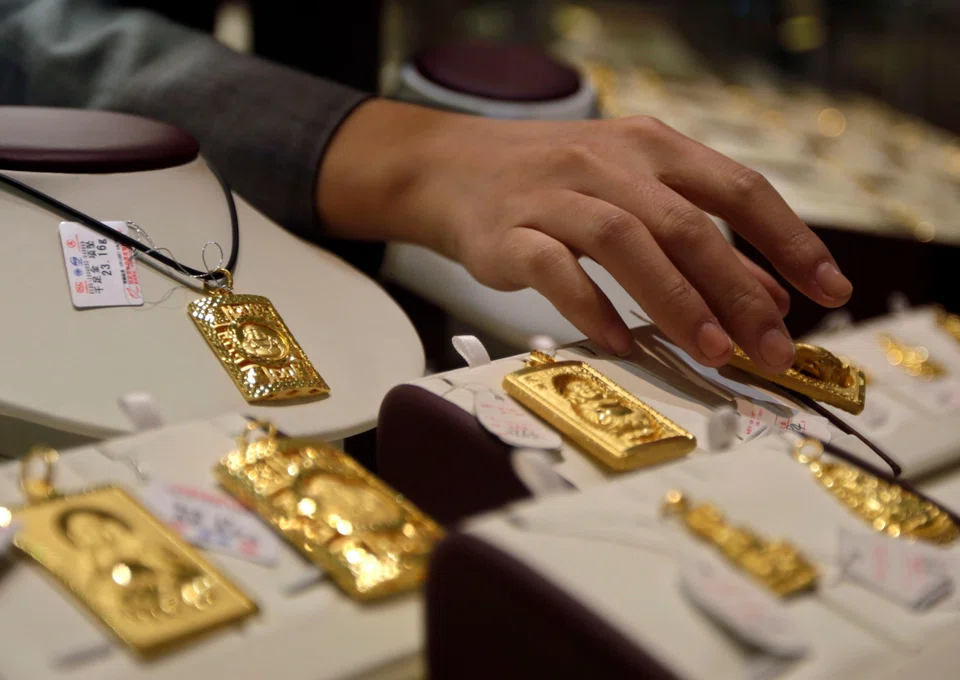
GOLD prices hit a four-year low last week, hit by persistent dollar strength, while crude oil plumbed multi-year troughs on fears over Saudi price cuts and plentiful supplies.
A rebounding greenback makes dollar-priced commodities more expensive for buyers using weaker currencies. That tends to dent demand and prices.
"The precious metal sector was the hardest hit for a second week in a row with both gold and silver continuing to be sold," said Saxo Bank analyst Ole Hansen. "Gold . . . continues to suffer from the adverse impact of a rising dollar and falling energy prices."
Gold plunged to US$1,131.24 an ounce on Friday - its lowest level since mid-April 2010. Silver touched a similar nadir at US$15.06 an ounce.
The euro, meanwhile, sank to US$1.2358, a level last seen on August 21, 2012, before bouncing back above US$1.24 on mixed US non-farm payrolls data.
Separately on Friday, overseeing of London's scandal-hit gold price setting process was awarded to a division of US group Intercontinental Exchange (ICE).
Industry body the London Bullion Market Association (LBMA) announced that ICE Benchmark Administration had been selected as third party administrator for a new mechanism for setting gold prices.
By late Friday on the London Bullion Market, the price of gold sank to US$1,154.50 an ounce from US$1,164.25 a week earlier.
Silver declined to US$15.42 an ounce from US$16.20.
On the London Platinum and Palladium Market, platinum weakened to US$1,198 an ounce from US$1,227.
Palladium dipped to US$763 an ounce from US$784.
In a rollercoaster week for the market, prices plunged on Tuesday after leading producer Saudi Arabia cut its prices for crude sold to the US market. New York crude tumbled to its lowest close since October 2011 and Brent to its lowest since October 2010.
Analysts interpreted the Saudi move as an effort to maintain market share in North America against cheaper oil flooding from US shale fields.
New York crude then rebounded on Wednesday after the US Energy Information Administration (EIA) revealed a smaller-than-expected increase in crude oil supplies.
The EIA reported that US crude inventories grew by 500,000 barrels in the week ended Oct 31. That was much less than the 2.2-million-barrel increase expected by analysts. Over the four previous weeks, crude inventories had climbed by roughly 23 million barrels.
The market also rallied on Wednesday following reports of a pipeline blast in Saudi Arabia. However, state-owned oil firm Saudi Aramco said operations were unaffected.
Crude futures then sank on Thursday after Opec cut its longer-term production forecasts in the face of rising North American shale output.
By Friday on London's Intercontinental Exchange, Brent North Sea crude for delivery in December slid to US$83.64 a barrel from US$85.36 one week earlier.
On the New York Mercantile Exchange, West Texas Intermediate or light sweet crude for December recoiled to US$78.99 a barrel compared with US$80.18 a week earlier.
Base or industrial metal prices held steady, with gains limited by the strong dollar.By Friday on the London Metal Exchange, copper for delivery in three months increased to US$6,682 a tonne from US$6,720 a week earlier.
Three-month aluminium firmed to US$2,069 a tonne (from US$2,031.50); lead inched up to US$2,017.50 a tonne (US$2,014); tin advanced to US$20,076 a tonne (US$19,955); nickel fell to US$15,450 (US$15,768); and three-month zinc decreased to US$2,249 a tonne (US$2,313).
Arabica recoiled to a six-week low at 182.10 US cents on favourable growing conditions in Brazil.
"Ever since mid-October, the price has been driven down by favourable weather forecasts in Brazil, the most important growing country," said Commerzbank analysts.
"All the same, it is still unclear whether the rainfall will prove sufficient for the coffee berries to develop well once the blossoming phase has come to an end."
By Friday on ICE Futures US, Arabica for delivery in December dipped to 183.65 US cents a pound from 186.10 cents a week earlier.
On LIFFE, London's futures exchange, Robusta for January fell to US$2,010 a tonne from US$2,032 a week earlier.
Kuala Lumpur rubber prices pushed lower amid a report that Indonesian rubber exporters were exercising caution and holding on to stocks.
The Malaysian Rubber Board's benchmark SMR20 fell to 151.00 US cents a kilo on Friday, from 160.20 US cents the previous week. AFP
TRENDING NOW

He built the Vingroup empire. Now South-east Asia’s richest man is handing some key roles to his sons

Floods compound Philippine growth woes from public-works scandal

Tokyo reverses baby bust with AI matchmaking and generous subsidies

More interest in ETFs, low-cost funds but Singapore still lacks pressure to further lower fund fees

