

Gold slides on rate hike fears after strong US jobs data
New York
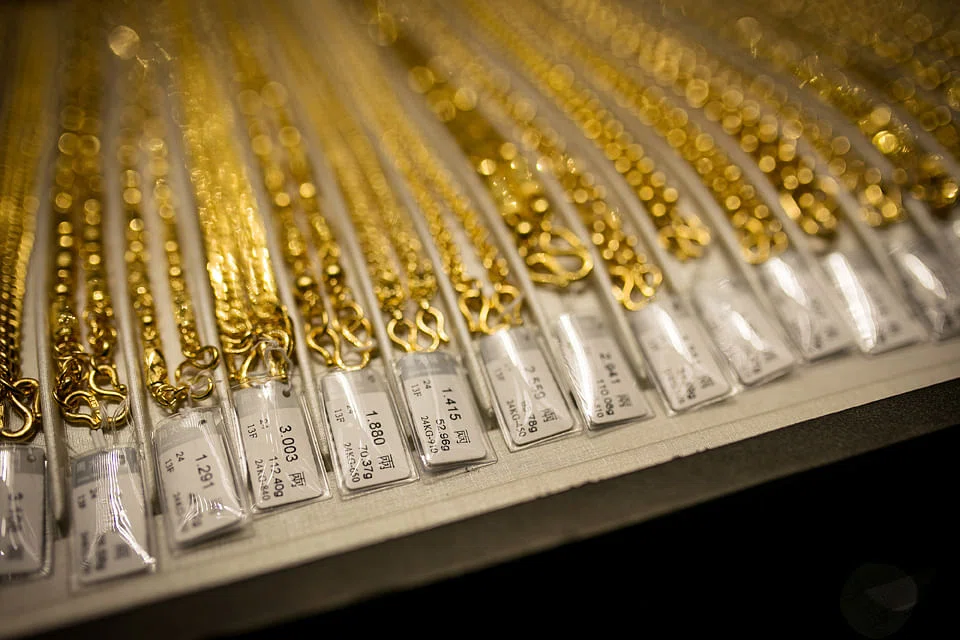
GOLD fell more than one per cent on Friday after US March payrolls data beat expectations, allaying some fears about the US economy and stoking speculation about the timing of likely interest rate hikes by the Federal Reserve this year.
US employers added 215,000 jobs in March, the payrolls report showed, against expectations for 205,000. US interest rate futures suggested traders are now betting the Fed will next raise rates as soon as November, versus December ahead of the report.
Spot gold was down one per cent at US$1,220.07 an ounce by 2:49pm EDT (1849 GMT), having earlier touched a low of US$1,208.45, while US gold futures for June delivery settled down US$12.10 an ounce at US$1223.50.
The metal saw its biggest quarterly rise in nearly 30 years in the three months to March, rallying more than 16 per cent as expectations faded that the Fed would move to normalise interest rates after their first increase in nearly a decade in December.
"We may have had a few more people thinking the Fed's going to hike (rates) in June because of the numbers. I don't agree with that - I think the Fed will hike just once this year," said Bill O'Neill, co-founder of commodities investment firm Logic Advisors in New Jersey. "It's an emotional market right now and we get different signals from the Fed governors. What has people worried is that there is something of a split in the Fed and they aren't all on the same page."
Gold had risen as much as 2 per cent earlier last week after Fed chair Janet Yellen said the US central bank should proceed only cautiously with further interest rate increases. The metal slid 3 per cent the previous week after hawkish comments from several Fed officials. The metal is sensitive to moves in US rates, as a rise would lift the opportunity cost of holding non-yielding assets such as bullion, while boosting the US dollar.
European stocks fell and US stocks opened lower after the jobs data, seen as a sign of economic resilience that could allow the Federal Reserve to gradually raise rates this year.
Physical gold demand in the major Asian markets of China and India was soft last week due to rising prices, traders said. India's gold demand in the March quarter is set to drop by about two-thirds from a year ago to its lowest in seven years.
Silver was down 2.4 per cent at US$15.04 an ounce, while platinum was down 1.9 per cent at US$954.50 an ounce and palladium was down 0.4 per cent at US$559.5 an ounce.
Aluminium hit a two-week peak on Friday after data showed China's factory sector grew for the first time in nine months. Aluminium prices had gained after the official Chinese Purchasing Managers' Index (PMI) unexpectedly rose to 50.2 in March, beating forecasts and above the 50-point mark that separates growth from contraction.
Three-month aluminium on the London Metal Exchange (LME) had gained 1.4 per cent to US$1,541.50 a tonne by 1424 GMT after touching an intraday peak of US$1,544.50, its highest level since March 15.
Some analysts were cautious, however, about PMI data in China, the world's top metals consumer, accounting for 45 per cent of global copper demand.
"Our economists believe it's mainly due to seasonal factors. There are some signs of a stabilising Chinese economy, but it's too early to talk about any lasting recovery," Commerzbank analyst Daniel Briesemann in Frankfurt said.
Also weighing on metals were downbeat data from Japan, where business sentiment among big manufacturers deteriorated to the lowest in nearly three years, and weak factory growth in the eurozone.
Helping to support aluminium prices were movements in stocks. Available aluminium inventories on the LME, which fell by another 25,000 tonnes on Friday, have slid by a fifth over the past three weeks.
Lower local inventories in Japan sparked a 5-6 per cent rise in aluminium premiums for April-June shipments compared to the previous quarter, sources told Reuters.
LME copper fell 0.1 per cent to US$4,844 a tonne after sliding to US$4,807, the lowest since March 3, extending a 0.5 per cent loss from Thursday.
LME tin was unchanged at US$16,750 a tonne after sliding to US$16,300, the weakest in over three weeks.
Zinc was the strongest LME performer, climbing 2.2 per cent to US$1,856 a tonne while lead added 1.6 per cent to US$1,732 and nickel fell 0.8 per cent to US$8,420. REUTERS
TRENDING NOW

Britain’s mansion tax shows the difficulty of targeting wealth

Once staunchly pro-China, Malaysian Chinese businesses are now distancing themselves from Beijing

The only common thing in S-E Asia is that we all eat rice: Cisco’s Asean president

Singapore data centre operator DayOne opts for US IPO at likely US$20 billion valuation

