

Gold slumps to 4-year low as Fed calls time on QE
London
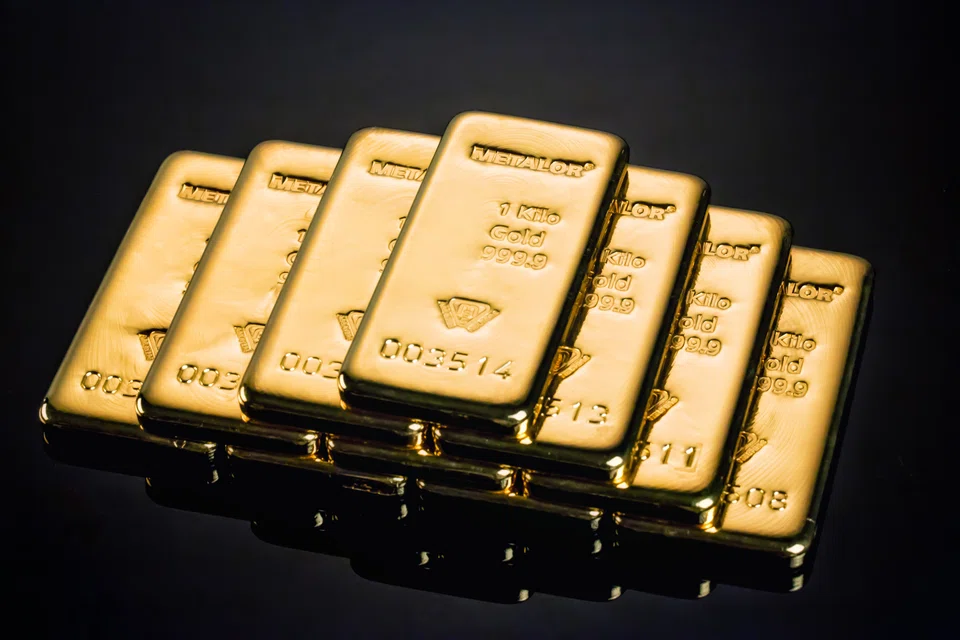
GOLD tumbled last week to a four-year low and many other commodities also faltered, as the US dollar rebounded after the Federal Reserve ended its quantitative easing stimulus. The euro dived below US$1.25 for the first time for more than two years, driven also by speculation that the US central bank could raise borrowing costs sooner than expected. The European single currency slid on Friday to US$1.2486, its lowest level since August 2012.
The stronger greenback makes US dollar-priced raw materials more expensive for buyers using weaker currencies, which tends to dent demand and prices.
Gold dived on Friday to US$1,161.16 per ounce, the lowest point since late July 2010. Gold has fallen sharply since the Fed said on Wednesday that it will end its QE policy, after six years of pumping easy money into the US economy via asset purchases to shore up growth.
Official data showed on Thursday that the US economy grew at an annualised 3.5 per cent in July-September. That beat expectations for a 3.0-per cent rise. The reading, coupled with upbeat comments about the jobs market from the Fed, stoked speculation that it could hike interest rates earlier than its timetabled mid-2015 date.
"The gold market again reacted negatively to the prospect of rate hikes, highlighting how sensitive the market has again become to tighter monetary policy," said Barclays analyst Suki Cooper. "We continue to believe the prospect of firmer (interest) rates, coupled with our expectation for a stronger (US) dollar, present significant headwinds for gold."
Sister metal silver slid to US$15.76 per ounce, a nadir last witnessed in February 2010. In contrast to the Fed, the Bank of Japan (BOJ) ramped up its vast monetary easing programme on Friday, in a shock move aimed at reviving growth.
By late Friday on the London Bullion Market, the price of gold tanked to US$1,164.25 an ounce from US$1,232.75 a week earlier. Silver declined to US$16.20 an ounce from US$17.19. On the London Platinum and Palladium Market, platinum weakened to US$1,227 an ounce from US$1,254. Palladium was unchanged at US$784 an ounce.
Prices slid on heightened expectations of rising US borrowing costs, and on stubborn concern over plentiful crude supplies. Singapore's United Overseas Bank said oil faced downward pressure "as expectations that US interest rates may rise sooner than previously thought" pushed the US dollar higher. Commerzbank analysts added: "Apart from a firmer US dollar, a more-than-ample supply is continuing to weigh on oil prices."
New York crude had fallen to two-year lows and Brent to its lowest levels in four years in October, pressured by oversupply and weak demand from slowing world economies. Opec (Organization of Petroleum Exporting Countries) secretary-general Abdullah El-Badri declared on Wednesday that market conditions did not justify recent sharp falls for crude futures and signalled the cartel would maintain output through next year.
Crude futures have slumped by about one quarter in value since the middle of June, with New York contracts hitting two-year lows, largely owing to a supply glut in the United States. Demand is, meanwhile, downbeat in Europe against a backdrop of weak growth in the eurozone.
By Friday on London's Intercontinental Exchange, Brent North Sea crude for delivery in December slid to US$85.36 a barrel from US$86.03 one week earlier. On the New York Mercantile Exchange, West Texas Intermediate or light sweet crude for December recoiled to US$80.18 a barrel compared with US$81.38 a week earlier.
Base or industrial metal prices mostly rose, boosted by the BOJ's surprise stimulus boost and upbeat Chinese data. The BOJ announced on Friday it would add up to 20 trillion yen (S$229 billion) to its current asset-buying scheme, bringing it to 80 trillion yen annually.
By Friday on the London Metal Exchange, copper for delivery in three months eased to US$6,720 a tonne from US$6,724 a week earlier. Three-month aluminium rose to US$2,031.50 a tonne from US$1,971. Three-month lead inched down to US$2,014 a tonne from US$2,015. Three-month tin advanced to US$19,955 a tonne from US$19,427. Three-month nickel rose to US$15,768 a tonne from US$15,174. Three-month zinc increased to US$2,313 a tonne from US$2,265.25.
Arabica fell to a one-month low of 185.65 US cents on forecasts of more rainy weather in top global producer Brazil, with extra pressure from the weak real currency. By Friday on ICE Futures US, Arabica for delivery in December dipped to 186.10 US cents a pound from 192.10 cents a week earlier. On Liffe, London's futures exchange, Robusta for January rose to US$2,032 a tonne from US$2,019 a week earlier. AFP
TRENDING NOW

Nvidia reinstates Jensen Huang as CEO; Trump says move poses no national security risk

Indonesia’s coal tycoon Low Tuck Kwong replaced as Bayan Resources president-director

Nvidia surges 33% after reinstating Jensen Huang, reviving AI trade; stocks soar in US and Europe

Consider lowering homeownership barriers for some non-resident foreigners

