

Good governance is about balancing the bottom line and softer metrics
And history has shown it teeters between the extremes: Minister Ong
Singapore
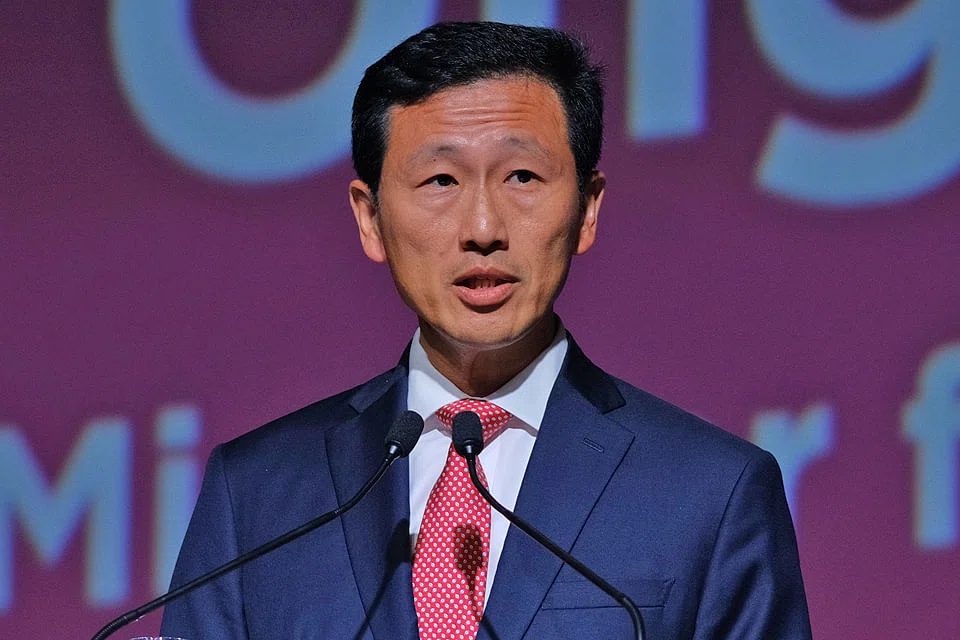
THE definition of corporate governance will continue swinging between focusing on financial performance and maximising shareholder value on the one hand and more inclusive practices that meet the interests of all stakeholders on the other, Education Minister Ong Ye Kung has said.
The minister, who is also a board member of the Monetary Authority of Singapore (MAS), said at the Singapore Institute of Directors (SID) conference: "It will serve us well to understand the pendulum of history. Humans' herd instinct means that we will always overshoot in one direction or another, and then have to adjust. I don't think that will ever change; it is an instinct."
What he means is, if companies are seen as being too focused on profits at the expense of society, and worsen income inequality or degrade the environment, public indignation will set in. Public protests will lead to a correction.
The industrial revolution, which triggered the rise of Marxism, workers' unions and communism, is one good historical example.
Another example comes from the post-2008 global financial crisis situation in the United States and the United Kingdom today. There have been calls for higher taxes on the rich, stricter regulations, nationalisation of key utilities and for company shares to be redistributed to employees. To these calls, about 200 American chief executives have responded by pledging to go beyond serving just shareholders to also doing right by a broader slate of stakeholders - customers, staff, suppliers, communities and even the environment.
He said: "People have asked: Is this a major shift in capitalism as we know it? Is enhancing or maximising shareholder value finally dying? Is there a fundamental change?"
Answering his own questions, he said that these corporate leaders' response was actually not a new idea.
The idea of corporate governance has always been shifting. It has evolved from prioritising shareholders' value in the 1970s, to achieving a balanced scorecard between financial performance and metrics such as developing people, satisfying customers, engaging communities and discharging corporate social responsibility around the 1990s.
Good governance, therefore, is about achieving a wise balance between, and sometimes a combination of, the extremes.
"Thinking that inclusive growth means lower growth, or that doing good for society means doing badly for the company, or that being profit-oriented means having no social consciousness - these are all false dilemmas.
"Only profitable companies can grow, create jobs and deliver good products and services to the public. And a profitable company also then has a responsibility to give back to society and improve the lives of all its stakeholders," he said.
He cited four aspects of good governance: the definition of success, dynamism, far-sightedness, and stakeholder engagement.
Firstly, the definition of success cannot be a single measure, he said. A well-run company would not have a single metric or definition of success, be it return on equity or economic value added.
A company will need to evaluate its success in various ways that are relevant to its various stakeholders.
Secondly, there is good governance when there is dynamism and innovation in the company. Mr Ong said he does not believe that a company will lose its nimbleness and competitiveness without a dedicated focus on growth and profitability.
Thirdly, good governance happens when a company is far-sighted, and has a long-term vision and plan.
A company that is not well-governed will just be mired in addressing urgent day-to-day pressures, focusing on what is urgent, but not what is important for the long run.
Only a far-sighted company that has a plan to realise long-term challenges and opportunities can do something new, break into new markets and seize new opportunities, he said.
Lastly, having developed a long-term plan, a company must be able to engage its stakeholders and bring them on board.
In this process, stakeholders may have to make trade-offs between short-term benefits and long-term goals - and discussions on finding this balance can take place only when there is trust among the stakeholders, he said.
At a subsequent panel discussion, four panellists discussed the usual triggers for change, and the role boards must play in leading technological change at the company level.
The four were BCG chair professor of Insead Business School Chan Kim, executive chairman of Aviva Asia and Aviva Digital Chris Wei, chief executive of food and beverage company JR Group Jocelyn Chng, and chief executive of Futuristic Store Fixtures David Low.
They said that a company that practises proactive transformation can avoid the subsequent pain of having to lay off people to cut costs in order to rationalise the business.
More than 30 business change and transformation speakers shared their views at the event, which attracted over 800 participants.






