Grab to buy foodpanda’s Taiwan business for US$600 million
The deal marks Grab’s entry into its first market outside South-east Asia

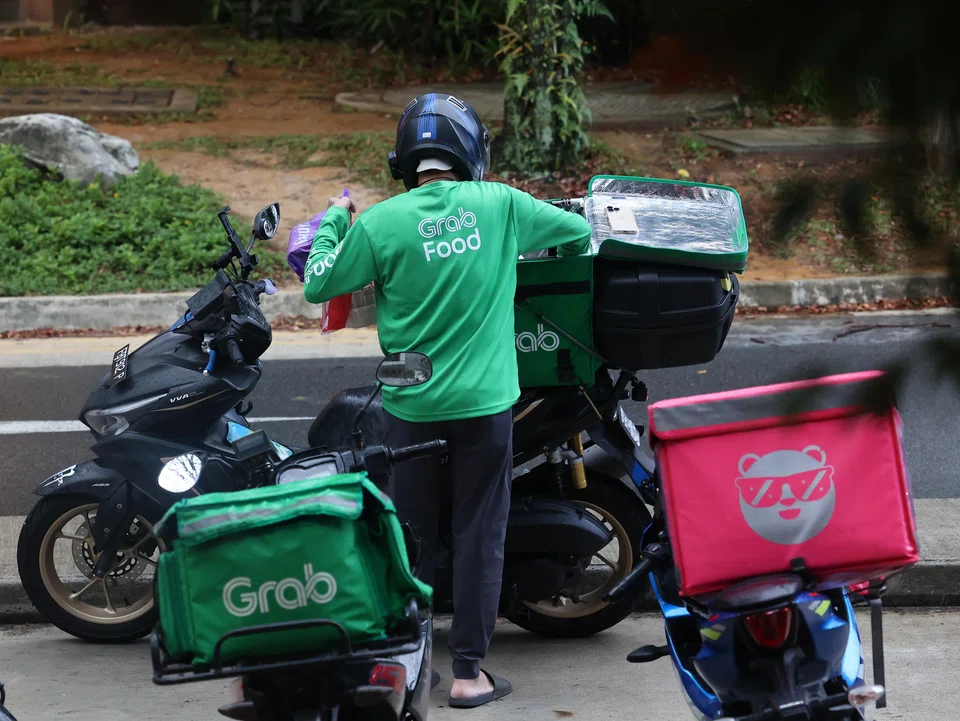
[SINGAPORE] Grab is acquiring foodpanda’s Taiwan business for US$600 million in cash, said foodpanda parent company Delivery Hero in a statement on Monday (Mar 23).
Delivery Hero and Grab have entered into a share-purchase agreement, which is expected to close by the second half of 2026, subject to regulatory approvals.
The news follows Uber’s termination of its US$950 million bid for foodpanda’s Taiwan business in March 2025, and Deliveroo’s exit from Singapore last month.
Berlin-headquartered Delivery Hero will use the proceeds from the sale to pay down debt, among other purposes.
In 2025, foodpanda in Taiwan generated a gross merchandise value (GMV) of 1.5 billion euros (S$2.2 billion) and positive adjusted earnings before interest, taxes, depreciation and amortisation.
Niklas Ostberg, chief executive officer and co-founder of Delivery Hero, said: “This divestment is a key first step in our ongoing strategic review, and underlines our commitment to a more focused global footprint.”
The acquisition marks Grab’s entry into the Taiwan market, its ninth overall and the first outside South-east Asia. Grab will be in 21 Taiwanese cities following the acquisition.
Grab CEO Anthony Tan said in a statement: “This is a natural next step for Grab, as our experience in South-east Asia is a direct fit for this market.”
Taiwan has an urban density 3.6 times higher than the South-east Asia average. After the deal closes, it will have the second-highest household incomes among the markets that Grab operates in, coming in behind Singapore.



Grab’s service addressable market for food delivery will be more than US$240 billion, comprising over US$200 billion from South-east Asia and more than US$40 billion from Taiwan.
“This is a compact, high-yield asset,” said Tan, adding that user penetration today is 10 per cent. “Having spent time on the ground, I can tell you the appetite for delivery services is enormous.”
Grab’s chief operating officer, Alex Hungate, said the company is acquiring an asset with a user reach of 67 per cent in Taiwan and a loyal platform base. Currently, one in three foodpanda users is a subscriber to foodpanda’s pandapro service; these users drive over 50 per cent of foodpanda Taiwan’s total GMV.
This shows foodpanda’s superior lifetime value and user loyalty in Taiwan, as pandapro subscribers order three times more frequently than non-subscribers, he said. Merchants who participated in the pandapro programme in 2025 saw up to a four times increase in order growth.
Chief financial officer Peter Oey said Grab’s food delivery margins will continue to improve even after the acquisition. The company expects the food delivery business in Taiwan to be profitable towards the end of 2027, after the front-loaded costs of migrating users and merchants onto the Grab platform in early 2027.
“We have the view that, beyond 2028, Taiwan has the potential to improve towards becoming a 4 per cent-plus market deliveries margin for us,” he said, adding that this is “very similar” to Grab’s other markets in South-east Asia.
Hungate said that, for now, Grab will concentrate on the foodpanda Taiwan integration instead of looking to expand services in that market to include mobility and financial services
Entering Taiwan will put Grab in direct competition with its largest shareholder Uber, which has mobility and food delivery services there. The companies have not been in direct competition since Grab bought Uber’s South-east Asia business in March 2018.
Tan said Grab’s relationship with Uber will remain unchanged, with the latter remaining a strategic partner. There should be no conflicts of interest between Grab and Uber after the transaction, he added.
“Our primary fiduciary duty is to all our shareholders, and driving long-term value creation for our ecosystem in all the countries that we serve.”
Natural expansion
Li Jianggan, founder and CEO of consultancy Momentum Works, commented that expanding to Taiwan after South-east Asia is a natural fit for Grab, given that Taiwan is a densely urban Asian market with good supply dynamics and strong consumer purchasing power.
“Food delivery players there have also proven a profitability model and competition is not fierce. Besides, Shopee has proven that a Singapore-headquartered tech platform can succeed in Taiwan,” he told The Business Times.
While opportunities and profitability in the core food delivery business is obvious for Grab in Taiwan, Li said he would be keenly watching whether Grab can extend its business beyond food delivery to other local and merchant services.
“On a macro scale, obviously, you can’t overlook the geopolitical challenges: Currently, Chinese platforms cannot enter Taiwan, but will that change?” he said.
For Grab to succeed in Taiwan, it would need to have the right leadership and talent, and allocate enough resources, including tech and marketing budgets, to the new market. Operationally, Grab will not have a language or cultural gap to operate in Taiwan, he noted.
Delivery Hero is committed to continuing foodpanda Taiwan’s operations, and has entered into an agreement with Grab to provide transition support services after the deal is closed.
Grab is targeting to complete the migration of users, merchants and drivers to its app by early 2027. This acquisition is expected to be accretive to the company’s 2026 revenue guidance range of US$4.04 billion to US$4.1 billion.
Decoding Asia newsletter: your guide to navigating Asia in a new global order. Sign up here to get Decoding Asia newsletter. Delivered to your inbox. Free.
Copyright SPH Media. All rights reserved.