Grab's asset-light model acquiring more of a physical flavour

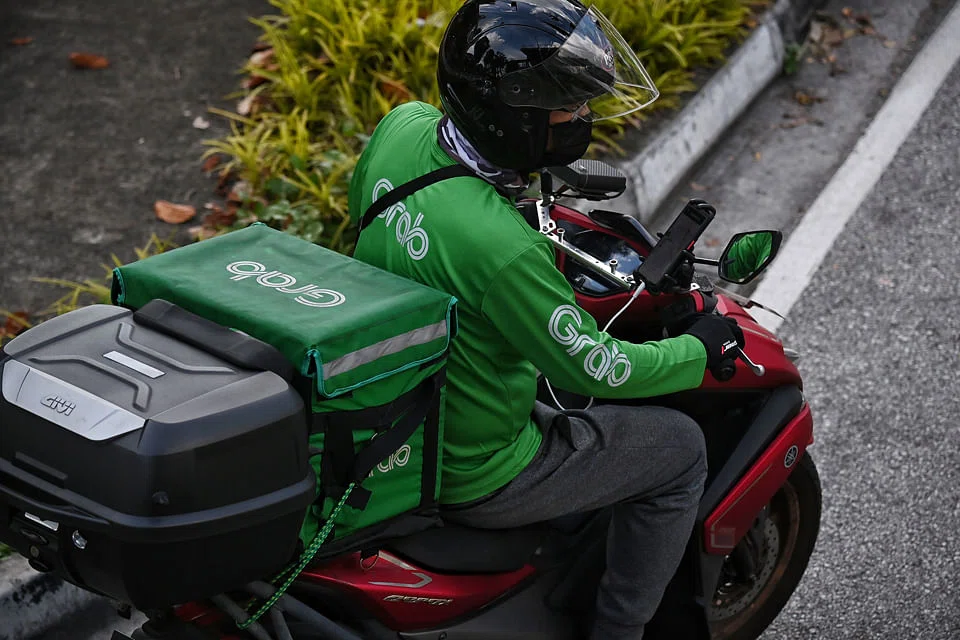
THE asset-light model is almost a mantra for tech startups in the business of providing a middle layer of software between end customers and providers of goods and services. This makes Grab's recent acquisition of Malaysian grocery chain, Jaya Grocer Holdings, a seeming contradiction.
Grab's role is to offer a platform for customers to transact with drivers and restaurants. And it charges both sides of the supply and demand equation for bringing them together.
The company's business model is touted as valuable and scalable partly because it doesn't own physical assets, which would weigh on the balance sheet as they depreciate. Its software and services can serve 1 million customers almost as easily and cheaply as they can serve 100 customers, which means there is potential for hefty profit margins.
For ride hailing, in particular, this asset light business model has given Grab an edge over traditional private car transport services - such as ComfortDelGro Corporation's taxi business. Grab does not own cars, which are depreciating assets that would begin to lose their value the moment they are driven off the lot.
In food delivery, however, Grab is increasingly finding it difficult to function without some physical assets.
In a perfect world, the distribution of food outlets and restaurants across residential districts would be equal and there would be enough food providers to cater to hungry diners ordering in. In reality, food outlets and restaurants aren't evenly distributed across residential districts. That means some areas of any market would be underserved.
Grab has dealt with this problem by building cloud kitchens. Called GrabKitchen, these are central kitchen facilities that only make food for Grab deliveries. Most of the GrabKitchens it operates are in Indonesia, although there are also 2 in Singapore.
So far, Grab has only leased the spaces for its kitchens. But actually owning physical assets might not prove much of a leap, especially when Grab is trying to grow its GrabMart offering. The latter product offers deliveries of groceries, food items and miscellaneous products such as skin care.
GrabSupermarket, its offering for groceries, is part of GrabMart. It is available in 4 markets: Singapore, Malaysia, Thailand and the Philippines. In Malaysia, Grab had in fact piloted its own delivery-only supermarket back in December 2020.
In the third quarter of FY2021, GrabMart's performance saw a 380 per cent year-on-year increase in gross merchandise value. Grab's co-founder and chief executive Anthony Tan was bullish about GrabMart's performance, as demand increased through all 3 quarters of 2021.
"The continued success of GrabMart gives us the confidence that groceries will be one of our key growth levers and we will continue to invest in this segment," said Tan at the time.
There are significant advantages to owning physical assets in the supermarket game. When dealing with groceries with perishables like fresh fruits, vegetables and meat, for instance, it makes sense to have smaller hubs serving smaller areas rather than a large hub serving a large area.
A lot of the advantages, as well as the margin in supermarket operations, also come from managing the upstream logistics: dealing with inventory, ensuring products don't run out of stock, and optimising space in distribution centres.
Grab has regional partners whose logistics expertise it leverages, and also works with various stores acting as distribution points. But as a mere distribution channel, its margins would be a lot slimmer. Moreover, within this region, some categories of groceries have protected prices. Grab's margins on these products would be negative.
Acquiring a supermarket chain also gives Grab the opportunity to use supermarket locations as distribution hubs for delivery riders, easing bottleneck issues and expanding the range of its grocery delivery product in one fell swoop.
Owning physical assets might be antithetical to Grab's startup roots, but is a necessary reality of its growing business verticals. In fact, this could be one of several other 180-degree turns that Grab will have to make as it morphs from scrappy startup to a publicly listed multinational company.