

Greenback heading for 9th month of gains
New York
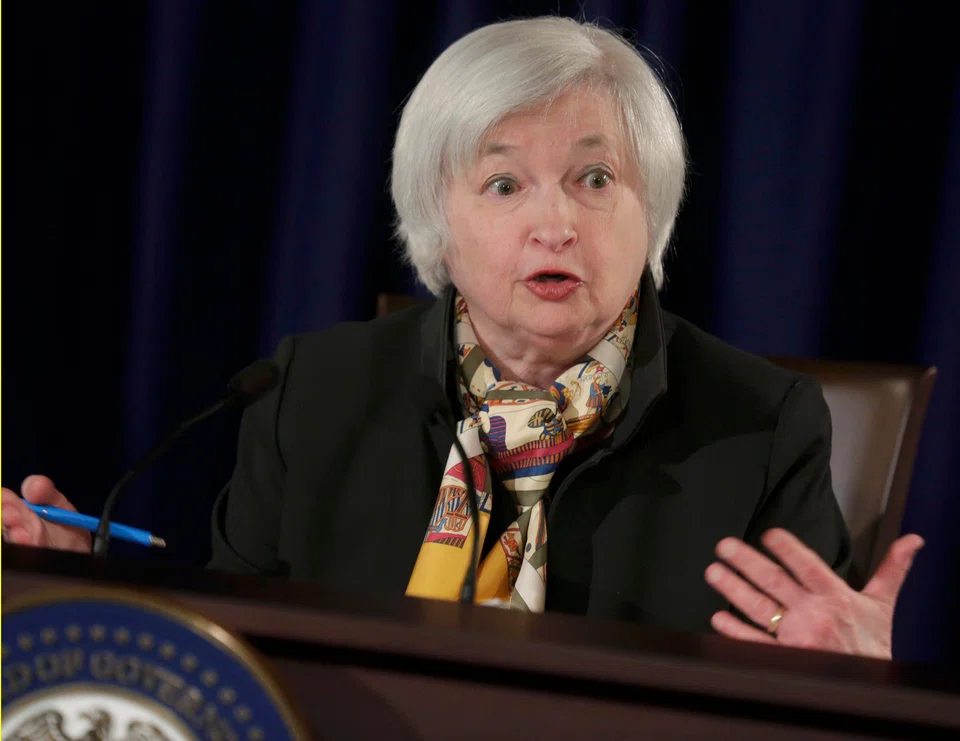
CALL it a reality check. After the Federal Reserve tempered market expectations for a mid-year interest rate increase two weeks ago, sending the US dollar to its biggest weekly decline since 2011, traders refocused on the bigger picture: the US central bank is still moving towards monetary tightening as global peers loosen policy. Fed Chair Janet Yellen said last Friday that she expects rates to rise this year, supporting the greenback, which is headed for its ninth straight monthly advance.
"The big policy story about divergence between the US and other economies is still coming through," Peter Dragicevich, a strategist at Commonwealth Bank of Australia in London, said last Friday. "It's really just a consolidation phase in the dollar and we should see it continue to strengthen."
The Bloomberg Dollar Spot Index has advanced 1.6 per cent in March to 1,190.89 in New York, pushing its climb this year to 5.3 per cent. The nine months of gains would extend what is already the longest monthly streak in data going back to 2004.
The US dollar's 2.7 per cent increase to US$1.0889 versus the euro in March would also represent a ninth consecutive month of gains, the most in the history of the shared currency. Only the yen bucked the trend, gaining 0.4 per cent to 119.13 per US dollar on the month amid an increase in haven demand as Saudi-led forces battled Shiite rebels in Yemen.
"I expect that conditions may warrant an increase in the federal funds rate target sometime this year," Ms Yellen said last Friday at a conference hosted by the San Francisco Fed. She and fellow policy makers "generally anticipate that a rather gradual rise in the federal funds rate will be appropriate over the next few years".
The US currency's long-term advance hit headwinds on March 18, when Fed policy makers reduced forecasts for interest rates and economic growth and indicated they were in no rush for the first increase since 2006.
"Most of the week, the dollar was still under pressure - this was the aftermath of the FOMC decision," Georgette Boele, a currency strategist at ABN Amro Bank NV, said from Amsterdam last Friday. Even after the slump, "investors are looking for a moment to get in, to get long dollar", and will probably buy if the greenback falls to US$1.09-1.10 per euro, she said.
Hedge funds and other large speculators expect more weakness for the euro, with net bearish positions on it rising to a record 220,963 contracts in the week to March 24, up from 193,774 in the previous period, according to data from the Washington-based Commodity Futures Trading Commission.
The yen gained last week as the escalation of conflict in the Middle East threatened to interrupt the flow of oil, driving crude prices to US$52.48 per barrel in New York, the highest level in more than a month. BLOOMBERG
TRENDING NOW

Who is Leo KoGuan, the Singapore-based billionaire backing Nvidia’s Jensen Huang?

Demand, tech capabilities position Apac and AI as Skyscanner’s next growth frontiers: CEO Bryan Batista

Higher rates, weaker spending: Is the Philippines entering stagflation?

South-east Asia has lost Nvidia’s best salesman

