

Gupta: Laggard lenders will vanish in a decade
DBS chief says Western banks in particular caught up with regulatory changes instead of tackling digital banking, changes in consumption patterns and data-privacy issues
Singapore
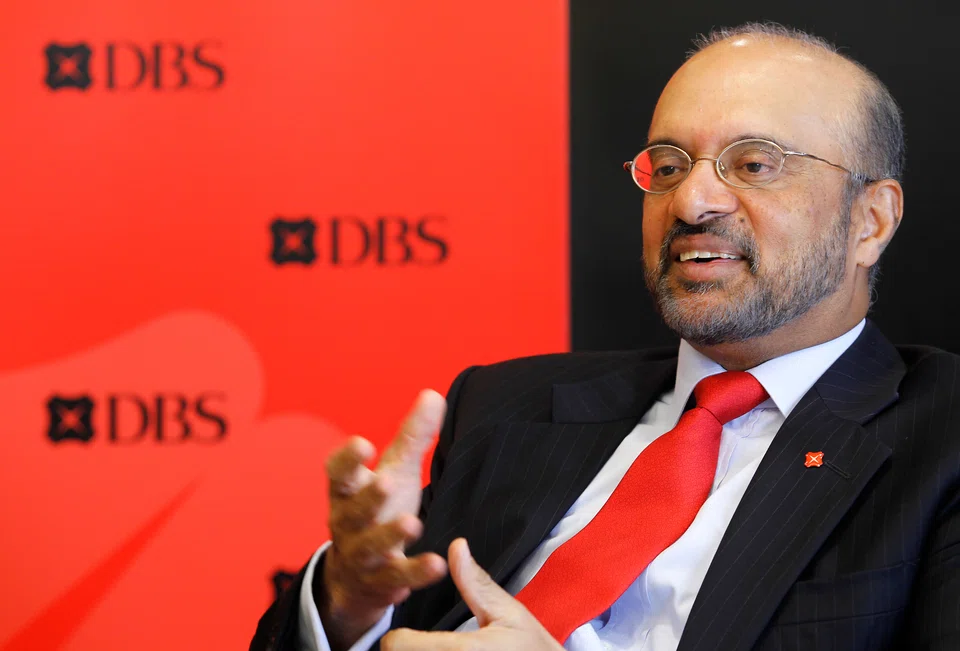
ONE decade is all the shelf-life some banks - especially those in the West - will have, DBS chief executive Piyush Gupta said on Wednesday.
He said these banks have been so caught up with regulatory changes that they have ignored the "profound" changes washing over the industry, such as the rise of digital banking, shifts in consumption patterns and the issue of data privacy.
Asian banks, left largely unscarred by the global financial crisis, are rolling with the changes more quickly and innovating, he said, even as they deal with competition from non-traditional lenders and a younger clientele who demand for digital services.
Speaking at a conference organised by the Sim Kee Boon Institute for Financial Economics, Mr Gupta said: "I believe quite strongly that we are at the cusp of momentous change in our industry. In the next five years, our industry is going to go through cataclysmic disruption, and within the next decade, I strongly believe there will be banks that will make the transition, and banks that will die."
He added: "Frankly, with a decade, I'm giving myself too much time."
He said of several Western banks that have been so absorbed with issues of capital and of liquidity in the last eight years: "They have been fighting these battles, as opposed to fighting the battles of tomorrow."
Among his examples of Asian banks that are successfully navigating these changes is Ping An Bank, which has started its digital-banking offshoot; DBS has also studied the innovations of South Korea's Hana Bank, which has done well in areas such as targeted marketing.
Meanwhile, China now tops the world in the peer-to-peer lending market, with CreditEase leading the charge, having originated about S$10 billion loans to date, he said.
Mr Gupta, noting that wealth management has also been commoditised, said non-banks such as Nutmeg - dubbed as UK's first online discretionary investment management company - have pledged to flatten their investment fees. "The intermediary mark-ups that you used to pay to mutual funds, the 2/20 that you would pay to hedge funds - increasingly, these are becoming history."
All of this is coming amid a shift in consumption patterns; the sharing economy has created "prosumers".
"One of the profound changes in the world today is that the notion of who is the producer and who is the consumer, has (been) completely distorted," he said, citing Uber, which allows consumers to provide taxi services, as an example.
To tap the "collective power of consumers", DBS has offered certain deposit rates in Hong Kong that would go up as more people put money with the bank.
DBS has also put its money on big data. It has "refined, to a nicety", where it should put its cash dispensing machines by using demographic data and looking at traffic at shopping malls, said Mr Gupta.
The bank is also training its IBM artificial intelligence computer system, Watson, to go through reams of data and make recommendations based on clients' risk preferences.
But Mr Gupta said banks will have to work harder at beating "black hats" in data security, and in thinking through data-privacy issues. He expects the privacy regime to move from the "notice and consent" model, as data become ubiquitous. Instead, data regulation in the future could resemble the way controls over the use of guns and knives are enforced.
He said: "For a gun - other than in the US, where they give guns away with bubblegum - in most other places, you'll have to register.
"For a knife, you don't register. If you use the knife to eat fruit, you're okay. If you stab someone, you'll get thrown into jail. So a knife is controlled through context and use."
TRENDING NOW

Once staunchly pro-China, Malaysian Chinese businesses are now distancing themselves from Beijing

‘How many will survive?’: Bubble fears arise as China’s humanoid robotics face reality check

Philippine power giant First Gen rebuffs foreign offers, plans up to US$2.6 billion in expansion

Indonesia imposes US$116 million in fines over manipulation of Sinar Mas, Prajogo-linked stocks

