Hafary gains from property boom, but higher interest rates may weigh on earnings

EVEN through the Covid-19 pandemic and lockdowns, residential property prices in Singapore have consistently trended higher.
The booming property market benefits suppliers in the ecosystem, and players such as mainboard-listed Hafary Holdings have recorded a growth in earnings over the past year.
Its valuations appear undemanding, and the company, which supplies building materials such as marble and stone, has opportunities for continued growth. But there are potential risks for the stock in this rising-interest-rate environment.
Revenue drivers
Hafary has 2 segments in its financial reporting: the general segment records revenue from customers served in its showrooms, while the project segment is for materials sold to property developers.
Total revenue jumped 54.3 per cent to S$130.1 million for the FY ended Dec 30, 2021 – coming off a lower base in the pandemic-hit FY20.
General segment revenue rose 53.6 per cent to S$82.7 million, partly supported by buyers of resale HDBs looking to avoid construction delays for new flats.
SRX data showed total HDB resale volume for 2021 rose 24.6 per cent to 29,182 units. The resale transaction volume for private residential units in 2021 also jumped, by 86 per cent on year, to 19,962, URA data indicates.
Revenue from projects, meanwhile, rose 60 per cent to S$43.3 million, reversing 3 years of decline. The better performance was attributed to pent-up demand from the construction and renovation segment.
Full-year net profit more than doubled to S$11.6 million – or S$0.027 per share – giving a net profit margin of 8.9 per cent. The company raised its dividend to S$0.015 per share, up from S$0.01 in each of the previous 3 financial years.
The market has rewarded this performance by sending Hafary's shares up from around S$0.14 in early 2021 to S$0.187 as at Wednesday (Jul 6).
Despite that appreciation, however, Hafary's price-to-earnings ratio is a modest 6.9. It has a price-to-book ratio of 1.1 and a trailing dividend yield of 8 per cent.
Property demand
Sustaining its financial performance is a possibility for the company, given Singapore’s property market dynamics.
Transaction in resale units has remained resilient this year, in 2022 and the pipeline several years into the future also looks healthy for both private and public housing markets.
The number of units available under the confirmed list of the H2 2022 Government Land Sales (GLS) Programme was up 75 per cent from H2 2021.
HDB has said it will ramp up the supply of build-to-order flats, launching up to 23,000 flats per year in 2022 and 2023 — a 35 per cent jump from units launched in 2021.
Meanwhile, older flats being upgraded by HDB under the home improvement programme would also require tiling supplies.
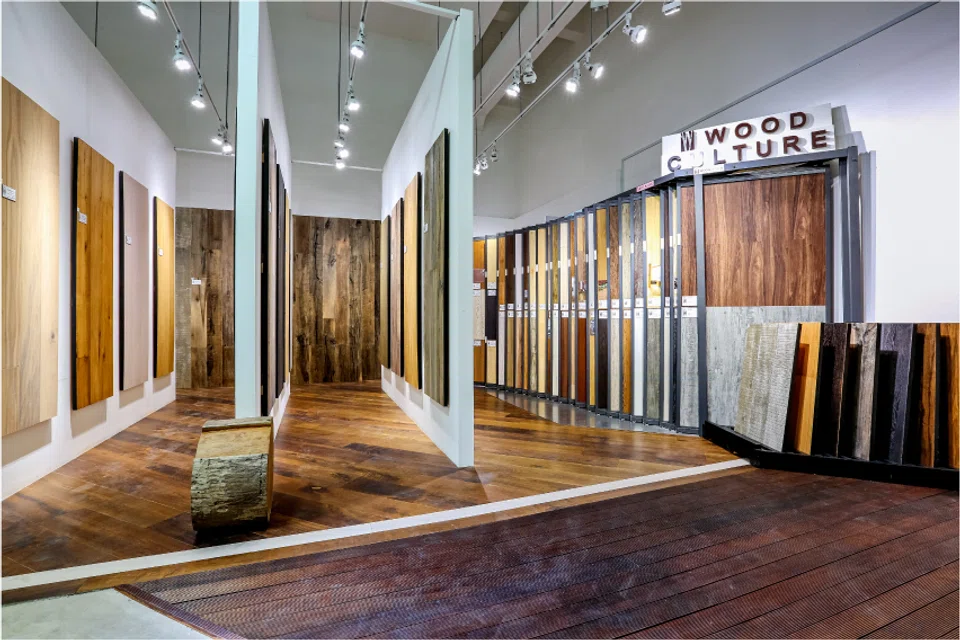
The company has also invested in a revamp of its showroom – the Hafary Gallery – to showcase the use of large-format porcelain tiles.
Rising Rates
The risk, however, is that rising interest rates might hurt the property market in a way that cooling measures have failed to do so far.
An increase in interest rates from 1 per cent to 3 per cent would raise the monthly repayments on a 30-year mortgage for a new home by 31 per cent.
This reduced affordability would weigh on non-essential demand, and could cause a correction in the property market.
Property owners may also tighten their purses for renovations, given the higher costs of financing the mortgage.
Hafary also faces higher financing costs.
In the low-interest-rate environment over the past 2 decades, low-cost debt would have boosted a company’s return on equity (ROE).
Hafary’s ROE was nearly 16 per cent in the last FY.
But as interest rates rise, higher finance costs might become a drag on its bottom line.
Bloomberg data showed that Hafary’s total debt rose from just S$12.9 million in 2010 to S$181.5 million in 2021.
Non-current financial liabilities rose from S$82.3 million in end 2020 to S$112.9 million in end 2021, while current financial liabilities rose from S$34.6 million to S$55.1 million in the last FY.
The company took on additional bank loans in FY21, which included S$40.6 million in loans to buy 2 leasehold properties for its own use in Changi and on Middle Road.
Almost 90 per cent of Hafary’s financial liabilities were pegged to floating interest rates, its financial statements for FY21 showed. In terms of interest-rate sensitivity, a hypothetical increase in floating rates by 100 basis points would have decreased pre-tax profit for the year by S$1.6 million.
Hafary had cash and cash equivalents amounting to S$6.1 million as of FY21.
Its net-debt-to-equity ratio stood at 2.3 times at the end of FY21, up from 1.7 a year prior. Hafary’s gearing was at 2 times or higher from 2017 to 2019.
The company’s interest cover was relatively healthy at 8 times in FY21, though investors need to consider whether this could be affected in a rising-rate environment.
Insiders buying
With a relatively small market capitalisation of S$80.5 million, and a significant chunk of its stock held by substantial shareholders, Hafary is thinly traded. Under 350,000 shares traded on average each month in the past 3 months.
Chief executive Low Kok Ann, one of the founders of Hafary Pte Ltd, is a substantial shareholder of the company. His son, Eric, is also a substantial shareholder, and a director of the company.
Eric Low, the company’s chief executive until January 2014, has been building his stake in recent months. In March, he raised his interest in the company from 16.2 per cent to 24.4 per cent after purchasing some 35.6 million shares for S$6.6 million (S$0.185 apiece) from former substantial shareholder Tee Wee Sien in a married deal.
Eric Low has continued to build his stake in subsequent market transactions, to 25.4 per cent as at end-May.
With insiders buying shares, undemanding valuations and strong growth drivers, Hafary may pique investors' interest. But prospective investors should also consider whether higher interest rates may adversely weigh on financials in the coming quarters before making their investment decisions.