Halcyon Agri eyes return to profitability amid stronger rubber demand, prices
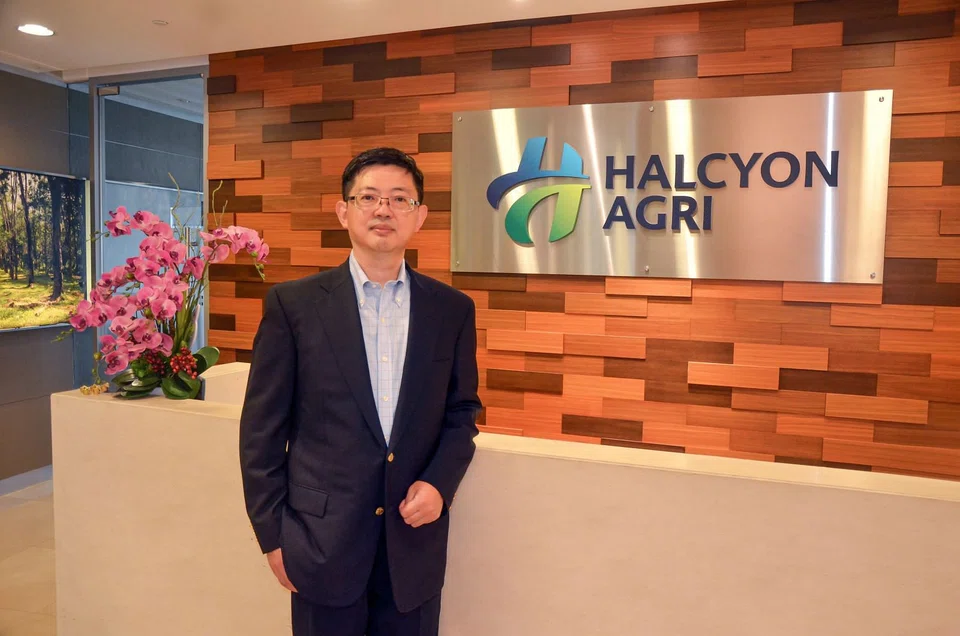
Chief executive David Li confident group will stay in the black, with trends such as EVs, medical gloves and masks stoking demand for rubber.

Singapore
NATURAL rubber supplier Halcyon Agri Corporation is on track for a turnaround. The company recently announced it is set to record a profit after tax for FY2021 ended December versus a loss in FY2020, thanks to an overall improvement in business conditions, particularly the recovery of downstream industrial activities.
Chief executive David Li told The Business Times in an interview that he "has confidence" that the profitability is sustainable, especially after the group refreshed its vision and mission to support sustainable growth.
Over 2021, the group has rejigged its portfolio by cutting out non-core assets through a "deleveraging plan". The proceeds raised through the disposal of non-core assets will allow the group to strengthen its capital structure and improve its operating liquidity, said Li.
Does the return to profitability also mean the potential for dividend payouts?
"The management is aware of shareholders' and investors' expectations with regards to dividends," said Li. "We aim to balance our internal resource requirement and provide shareholder return via dividend. We will inform the market of any update relating to the dividend proposal."
Li, who was appointed as Halcyon Agri's chief executive in June 2020, has amassed more than 20 years of experience in tyre, synthetic rubber and natural rubber businesses. Prior to Halcyon Agri, he held various positions at Sinochem International Corporation and GMG Global.
This, he said, has also put him in a good position to identify the key challenges and opportunities of the rubber industry - one which is typically "not easy to understand" due to price and demand fluctuations or supply chain issues.
Pandemic troubles
Like other commodities companies, Halcyon Agri was not immune to supply chain woes during the Covid-19 pandemic. Li recalled disruptions to logistics, as well as shipment delays or backlogs that posed problems for the company, which has a sizeable presence in the global rubber industry.
As at 2020, Halcyon Agri had a 9 per cent global market share of natural rubber and an 11 per cent share of tyre-grade natural rubber.
This, Li said, made it easier for the company to "mobilise (its) resources globally".
"We have our footprint in different locations in the world," he said. Halcyon Agri has 69,000 hectares of plantations across Africa and Malaysia. The company also has 38 production facilities with a total annual production capacity of 1.6 million metric tonnes in countries such as Indonesia, Malaysia, China, Thailand and the Ivory Coast.
With this web of production facilities, the group was able to shift its products around to meet pockets of demand that were popping up in certain countries. For instance, a portion of the company's Malaysia and Thailand production was shipped to China to meet the demand there "more efficiently".
"But I have to say that even after taking such methods, which were quite effective, we are still facing some challenges because of the delays and backlogs," said Li, adding that the shortage of containers was a critical problem for buyers of rubber.
That is where Halcyon Agri's long-term relationships with key customers came into play. The company held "open discussions" with its customers on potential delays or difficulties along the supply chain.
Bright spots
As the global economy recovers from the brunt of the pandemic, Li is hopeful that better days are ahead as the demand for natural rubber bounces back in tandem with a broad-based economic recovery. As far as specific geographies go, Li foresees strong demand recovery in China, India, Europe and the United States.
One potential driver is the "booming demand" for cars, particularly from new demand for electric vehicles (EVs). More people are also buying cars in general, said Li, as the Covid-19 pandemic has made people in certain countries more hesitant about taking public transport. People who can afford private transportation could be more likely to purchase cars now, he said.
The medical industry is also adding to rubber demand. For instance, Li estimates that the elastic strips on each medical mask use about 2 grams of natural rubber. And many countries have mandated the use of masks outside homes, noted Li. Glove usage also remains high in the medical and industrial sectors.
Halcyon Agri predicts consumption of natural rubber will reach 14.1 million metric tonnes this year. While demand is rising rapidly, the supply of natural rubber cannot be increased easily. Given stronger consumption trends, future demand is expected to exceed supply.
Rubber trees typically take around six to seven years to mature, and Li said existing supply may not be sufficient to fulfil surging demand. A lack of maintenance could also make rubber trees vulnerable to disease, which could affect yield.
Said Li: "I think this kind of imbalance in supply and demand will result in a price increase of natural rubber."
TRENDING NOW
Grab CEO’s wife Chloe Tong on life with Anthony Tan and finding her purpose
US trade chief to consider trade deal tariff caps in excess capacity probe
Bee Cheng Hiang customers’ e-mail addresses exposed in Singapore’s first case of AI-related data breach
DFI Retail to take over Starbucks business in Asia from Maxim’s Caterers