

Healthcare giant IHH remains in good health despite pandemic
The impact on business will be short-lived, and the group is well prepared to handle the virus outbreak, says CEO Kelvin Loh.

Anita Gabriel
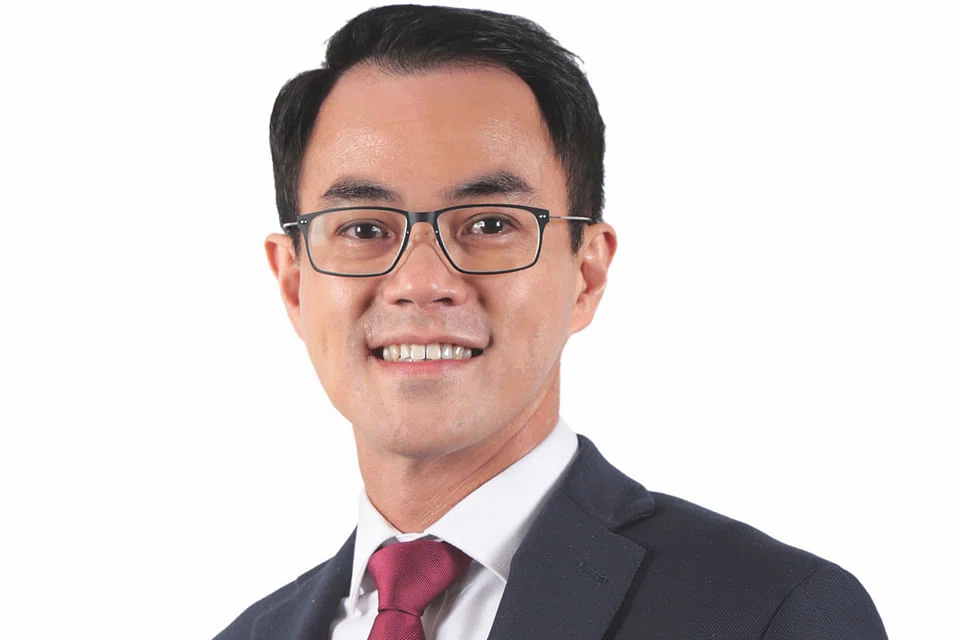
THE going must be tough for healthcare heavyweight IHH Healthcare as it faces the triple blow of withering medical tourism (once a sweet spot), overcapacity and lower volumes as many put off non-urgent treatments given travel bans and lockdowns to curb the Covid-19 pandemic.
Yet, chief executive and managing director Kelvin Loh, who took over the top job from long-serving chief Tan See Leng in January this year, is a picture of calm amid the unprecedented health crisis and insists that the setbacks will be short-lived.
"Definitely, there's some short-term business impact but the business remains resilient," said the 45-year-old healthcare veteran. It continues to search for opportunities to grow the business, he said.
According to Dr Loh, 90 per cent of IHH's patient volumes or admissions are local residents, be it in Singapore or Malaysia - its anchor markets - or other home markets such as India and Turkey. IHH is the world's second largest private healthcare firm by market value and operates a total of 15,000 beds across 80 hospitals in ten countries, including China and Eastern Europe.
"Clearly, medical travel is curtailed in all the countries that we serve right now, but one must remember that healthcare service delivery is predominantly local even though our brands attract medical tourism," he said.
Even so, dwindling foreign patients, albeit a short-term phenomenon, could still sting for the firm with a market capitalisation of some RM45 billion (S$15 billion). Last year, it posted a net profit of RM552 million, a 12 per cent drop from 2018 on the back of a 29 per cent jump in revenue to nearly RM15 billion.
According to Maybank Investment Bank, foreign patients in Singapore - its largest market - accounted for a quarter of total revenue last year. In Malaysia and Turkey, they accounted for 6 per cent and 16 per cent respectively in 2019.
It used to be also that IHH's hospitals, particularly in the mature home-grown markets, would enjoy an occupancy rate of 70-80 per cent. That may be less so now with the outbreak. Patient volumes are slowing as many defer non-urgent procedures and services amid the outbreak.
Most analysts expect IHH's second quarter to June numbers to reveal the full blow from Covid-19 although they expect the ensuing quarters to recover as travel and movement restrictions gradually ease.
Covid-19 patients
Within the three buckets of acute, elective and semi-elective cases, Dr Loh said that at least half of the group's patients involve the acute and semi-elective categories. Typically, the acute cases generate the highest revenue intensity per inpatient given their complexities.
According to him, there has been no drop in the acute procedures.
"The buckets are affected through different stages of the lockdown. So, the urgent cases definitely continue to come. The semi-elective ones get deferred for awhile but bounce back pretty fast... we are starting to see that recovery in many of the countries that we serve," he added.
IHH has also been treating Covid-19 patients in selected markets. In Singapore, some 256 patients have been decanted over from public hospitals while in Malaysia, 10 of its Pantai and Gleneagles hospitals there offer drive-through screening services. In India, nearly 1,600 suspected Covid-19 patients have been admitted as at May 5 at its Fortis hospitals. Its laboratories in these countries have also been running tests in the tens of thousands.
To limit the exposure to the virus and to work around the lockdowns, the light is now shining on remote care or online health services that are fast becoming a mainstream mode of patient interaction. IHH, with a fat cash kitty of RM4.7 billion as at end-2019, has set aside S$80 million to push innovative projects including investing in startups, said Dr Loh.
Just over a week ago, IHH rolled out a global telemedicine initiative, which is proving to be popular. In India, since the service was launched in late March, Fortis Healthcare, which IHH acquired two years ago, has done some 12,600 teleconsultations across 23 hospitals there. On average, it sees more than 370 patients online. In Turkey, the group's Acibadem hospitals have conducted more than 1,100 of such services since it went live end-March.
Recently in Singapore, telehealth app Doctor Anywhere raised US$27 million from a group of investors, including IHH.
"This is not to say that telemedicine is a replacement for our business. What we are trying to do is to make sure that we create the entire ecosystem of care for patients...it is especially pertinent during these times."
In February, Dr Loh unveiled a three-prong "refreshed" strategy for the group that includes seeking growth based on a cluster model in metro areas to drive economies of scale.
The healthcare giant is also reviewing its asset portfolio and hopes to redeploy capital to sweeten returns.
According to Dr Loh, IHH is aiming to double return on equity (ROE) in five years. In 2019, the group's ROE stood at 2.5 per cent from 2.9 per cent in 2018.
Covid-19 has changed none of these plans.
"It's interesting that when we look back at our refreshed strategy that we put in place before Covid-19 and ask ourselves if it is still relevant, the answer is 'absolutely yes'. We will double down on the (patients') trust and use our global reach to transform health care and touch more lives."
He is also least worried that the outbreak will hurt all the hard work that has been put into turning around India's Fortis, which is paying off well. Post-acquisition, Fortis chalked up its fourth straight quarter of pre-tax profits for the three months to December 2019 from a loss a year ago, owing to better revenue and higher interest and cost savings.
Dr Loh said: "There is some short-term impact, but overall, the longer-term trajectory remains intact. We are very happy with the acquisition and have made tremendous business improvements, restructured the balance sheet and put in new management."
Well prepared
This is not Dr Loh's first round at IHH. Between 2008 and 2017, he held several key executive posts in the firm till he left to head Columbia Asia Group before re-joining the group last year as CEO-designate.
If anything, IHH seems well prepared to take on this unprecedented health crisis, particularly after the Severe Acute Respiratory Syndrome (Sars) in 2003 and H1N1 outbreak in 2009.
He said: "We do drills on an annual basis on the possibility of a pandemic. So for us, it's like a fire drill. We are well prepared...in terms of equipment and PPE (personal protective equipment). We never ran out at any point."
TRENDING NOW

Peter Kwee’s Ridley Park bungalow on the market with S$100 million asking price
Motoring tycoon Peter Kwee is back in court: Here are his previous legal battles

Demand, tech capabilities position Apac and AI as Skyscanner’s next growth frontiers: CEO Bryan Batista

South-east Asia has lost Nvidia’s best salesman

