

Heeton sees significant revenue share from hospitality
However, the company will not slow down its property development activity, despite tougher cooling measures.
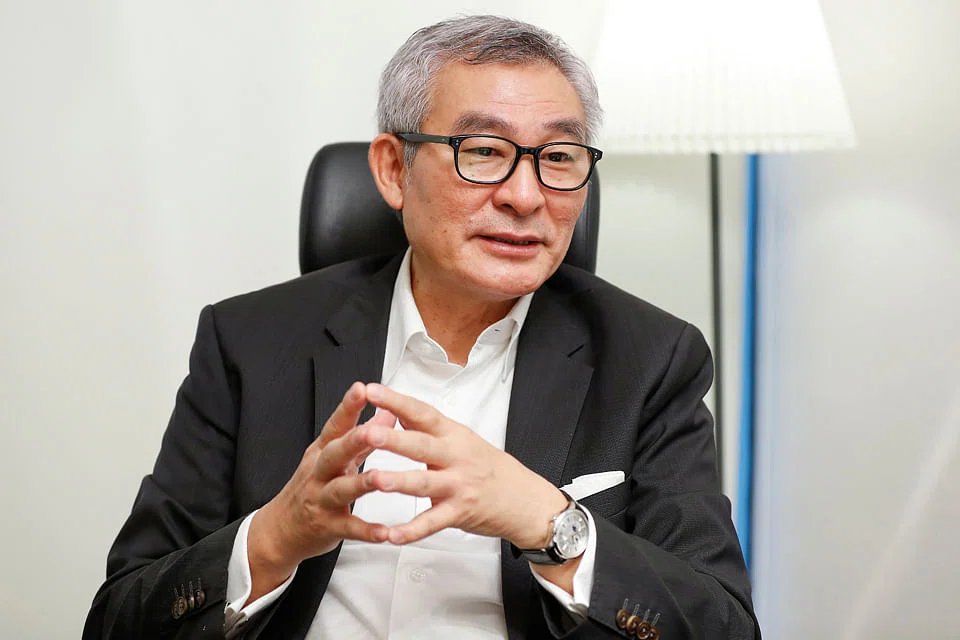
THE year 2018 has seen Heeton Holdings make steady strides into hospitality, and CEO Eric Teng believes that this segment can make up a "significant" part of its revenue share in the next few years, up from the 22 per cent in 2017.
In an interview with The Business Times, he acknowledges that shareholders have not displayed the most confidence in the company this year, with the share price down about 13 per cent to S$0.49 year-to-date, and hovering at a 60 per cent discount to its book value of S$1.3025 as at end-September.
Its hospitality division has been growing strongly, he says. Revenue contribution from the assets grew 31 per cent from S$9.83 million in 2016 to S$12.83 million in 2017, attributable mostly to the Luma-Hammersmith property in London, Heeton's pilot own-brand initiative that began operations in April 2017.
So far this year, it has acquired three new hotels - Smile Hotel Asakusa in Tokyo; Stewart Aparthotel in Edinburgh, Scotland; and Hotel Indigo in Glasgow, Scotland.
Most recently, it partnered KSH Holdings, Ho Lee Group and a Bhutanese investor to purchase a development site in the Paro district of Bhutan, a 15-minute drive from the country's international airport, to build a hotel-cum-resort.
Construction starts in the first quarter of next year, and it is expected to be completed in December 2020. Heeton plans to franchise it to international names, not just limited to those that it has worked with before such as Accor, Hilton and Intercontinental.
Opportunities for outliers
Heeton's 11 operating hotels are located in the United Kingdom, Japan and Thailand. The development site in Bhutan was in some ways an "opportunistic" investment, Mr Teng says, as the company was approached by local investors to invest in the hospitality industry there.
Bhutan does not quite fit the mould of the group's preference for "places with high visitorship". "But more importantly, we saw that there are opportunities for outliers," Mr Teng says. "I think Bhutan is a good outlier. When looking at specific resorts, other than the sun, sea and sand, I think in the case of mountains and the Himalayan hillside, there is still a sanctuary and serenity. It has potential; it is interesting."
He adds that there are few four- and five-star hotels in Bhutan, and tourists are required to spend at least US$200 per person per day when travelling there. This amount includes accommodation, transport, food and other guide and entrance fees. These conditions make it viable for Heeton and its partners to start a hotel there.
Besides its existing markets, Heeton is also looking for hotel investment opportunities closer to home in Malaysia and Indonesia. Mr Teng notes that hotel acquisition opportunities in Singapore are scarce due to the limited supply and intense competition in government tenders.
And while the purpose of expanding its hospitality business is partly to mitigate the increased risks that developers now have to take on due to higher stamp duties they have to pay for residential properties purchased for housing development, Mr Teng says Heeton will not slow down its property development activity.
Hospitality is good for providing an additional stream of recurring income and improving its cashflow, but development still yields a "fairly decent income depending on how you do your (return-on-equity) calculations", he says.
Banking on partnerships
"We would still be looking to acquire land through land tenders, both for commercial and residential property. In Singapore, we will still need our land bank because each country has a different risk allocation, so we still want to have a percentage of our holdings here. We also think that property buying sentiment would be more stable next year."
Heeton has had a history of working with a "band of brothers" - names such as Chip Eng Seng, KSH Holdings, Lian Beng and Oxley Holdings, because partnerships also help to mitigate the increased risks of doing business, he says. It's important to choose partners that you work well with too. On the evening the latest round of cooling measures was announced in July, Heeton and its partners, Chip Eng Seng's property arm CEL Development and KSH Holdings, had to expedite the launch of their condominium project, Park Colonial, in the Woodleigh area. They issued 310 option-to-purchase (OTP) out of its 805 units that night, before the cooling measures kicked in the next day. The government's announcement took them by surprise. Everything had to be done fast, but was possible because all the partners were already prepared to launch the project, having unveiled the showflat the week before.
Currently, Park Colonial is 65 per cent sold. Heeton also has one unsold semi-detached house at 121 Collection @ Whitley, and Onze @ Tanjong Pagar is left with three units out of 56 residential units, and eight units out of 13 retails units unsold.
Strong fundamentals
Some industry watchers have asked Mr Teng if he plans to privatise the company if its share price continues to languish, but he says it would not be fair to shareholders who had "signed up" with the company since day one at much higher prices, and stayed until now.
"It's not necessarily a win-win situation...whether you relist the company elsewhere, or you keep it and let it appreciate, it doesn't mean you will win. If you consider shareholders' interests at heart, they may also lose out because they don't get to enjoy the upside anymore. It's a lose-lose situation. With the whole Asian market slowdown, shareholders' expected valuation will also be hard to meet."
The bottom line, too, is that he believes the fundamentals of the company are still "very strong", so there is no real benefit to privatising, and he would rather wait it out to see the value of the company realised. "We want to give our shareholders a chance to grow with us," Mr Teng says.
TRENDING NOW

First Resources blames El Nino, outside fires for Kalimantan hotspots amid haze scrutiny

High Court rules against Julius Baer’s Singapore trust arm in US$50 million family trust dispute

Singapore key exports jump by higher-than-expected 68.4% in September, led by non-electronics

MSCI proposes downgrading Indonesia to standalone market status

