

Heliconia's assets under management tops S$1b, and it's still on the prowl
Temasek unit sees new business clusters in esports, entertainment; it has invested in over 30 companies so far
Singapore
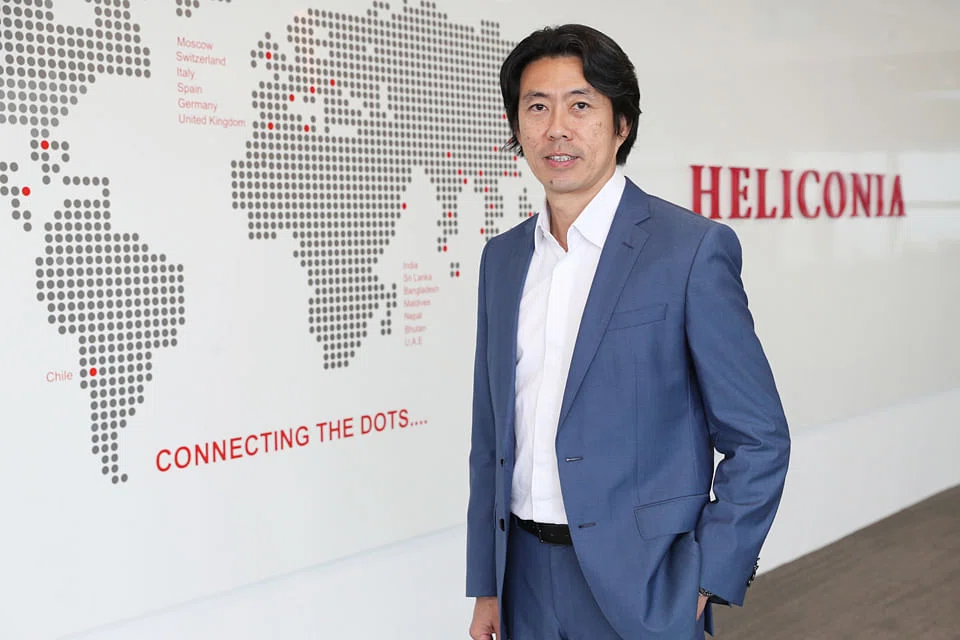
TEMASEK unit Heliconia Capital has amassed more than S$1 billion worth of assets under management, and has "significant" dry powder to deploy to growth companies that can take Singapore to the global stage, its top executive told The Business Times.
This comes as the investment firm - set up in 2010 - sees opportunity to build at least two new business clusters within a decade out of Singapore's emerging companies: esports, and entertainment, said Heliconia's CEO Derek Lau. It will also continue to invest in technology such as fintech and artificial intelligence.
"Singapore has gone past that generation of creating 'sub-contractors'. Today, it's about creating intellectual property," Mr Lau told BT in an interview, adding that the rise of technology - including the use of social media - would speed up the ability of growth companies to reach for global status.
Take Heliconia's bet in martial-arts media company One Championship. To Mr Lau, the investment would allow the sport of martial arts to be popularised around the world, amplified by social media.
This does, however, require more patient capital, if the intent is to showcase the brand via a well-oiled production, he acknowledged. "You go big, or you go home. The production quality has to be world-class."
Heliconia's other bet here lies in investing in two companies linked to e-sports: gaming accessories firm Razer, and more recently, gaming chair maker Secretlab. Having both companies in the bag now - with the founders of Secretlab coincidentally former interns at Razer, said Mr Lau - Heliconia thinks it can create an "ecosystem" to match up these two companies to sniff out more market share in this space.
"We'd like to encourage companies to hunt and eat as a pack."
To be sure, this approach doesn't work across all of Heliconia's portfolio companies, Mr Lau conceded, with the firm having invested in 30 companies so far, straddling a whole gamut of businesses ranging from a lasik operations clinic, Eagle Eye Centre, to a wastewater treatment company, Sanli Environmental.
These companies are also at different stages of growth, with the portfolio including Singapore F&B listings such as seafood restaurant Jumbo Group and coffeeshop operator Kimly Ltd. Heliconia is "less clinical" about whether these companies should be listed - or when they should go public - with Mr Lau saying Heliconia would hold its stake "long enough" for the companies to hit their "inflexion point", especially if they are expected to be global names.
These inflexion points can vary, said Mr Lau, depending on how nascent the market is.
For example, Heliconia has backed luxury bag marker Ethan K, set up by a scion of the Heng Long Leather family business. An Asian luxury brand may take more than a decade to take off, said Mr Lau, because there is a need for more craftsmen to develop and market bespoke products that will be hotly sought after by Asian - and global - wealth.
But while these companies fit "not so perfectly", Heliconia tries to link portfolio firms together by hosting networking events, to seed opportunities for these businesses to work together, said Mr Lau.
As another example, in 2017 Razer joined in the US$5.5 million funding round for a Heliconia portfolio startup CashShield, which focuses on fraud management. The potential there was in working with CashShield to secure online e-commerce for Razer customers, Razer CEO Tan Min-Liang had said in a press statement.
Razer's Mr Tan also separately invested in his personal capacity in another company in Heliconia's portfolio, Lucence Diagnostics, which sells a form of technology to enable a quick and non-invasive screening for cancer and infectious diseases, said Mr Lau.
To be clear, Lucence Diagnostics was started by Mr Tan's brother, Tan Min-Han and is also backed by venture capitalist Koh Boon Hwee. Heliconia has also invested in a fund sold by private equity firm Credence Capital, of which its chairman is Mr Koh. Mr Koh, in turn, was an early investor in Razer, beginning in 2006.
When a successful business founder goes on to help another SME, it creates an ecosystem of "mini-Heliconias", said Mr Lau. Heliconia also "taps shamelessly" on Temasek's ecosystem, he added.
Asked how Heliconia screens growth companies, Mr Lau said it comes down to the founders. While there are risks in putting faith in the founders - as the most recent WeWork controversy showed - the decision to back companies based on their founders comes down to whether the founder is "committed" but also willing to collaborate with partners.
Mr Lau takes a very hands-on approach to working with Heliconia's portfolio companies. He would go so far as to send immediate feedback to Chatri Sityodtong, the founder of One Championship, when he finds the sound quality of the production to be "not right". This fits with Mr Sityodtong's personal approach to branding the business, Mr Lau pointed out.
"He's putting his reputation on the frontline."
To keep in constant touch with the portfolio companies, Mr Lau has "WhatsApp relationships" with the founders of these firms, texting these founders three to four times a day, and understanding "their life goals".
"We've so far invested in 30 companies with 30 strong founders."






