Hibiki fund to vote against Accordia Golf Trust divestment unless price is raised
AGT's assets generate "significantly attractive cash flow", says Hibiki
Singapore
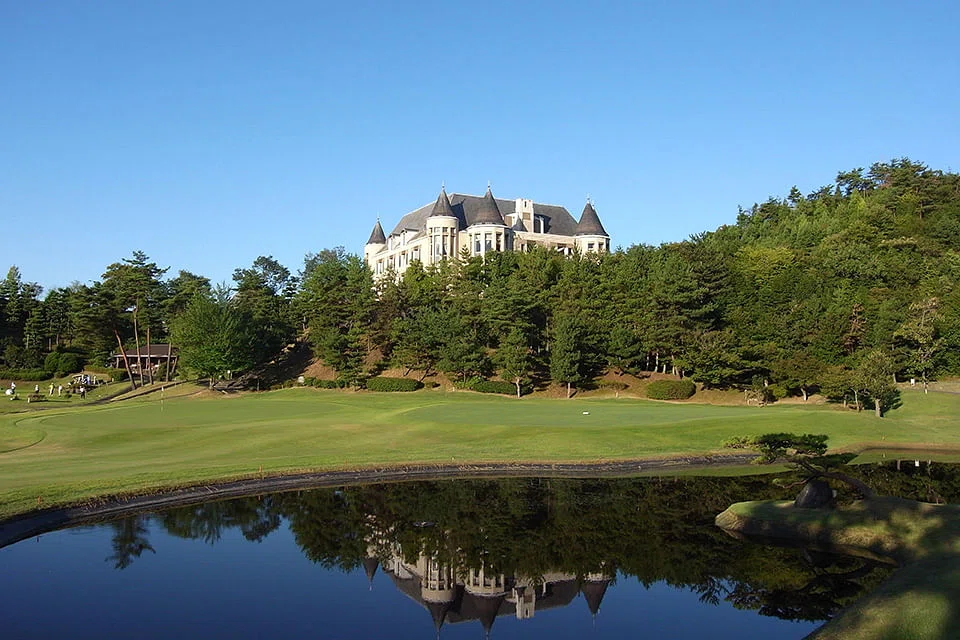
THE price offered by the sponsor of Accordia Golf Trust (AGT) to buy over the trust's golf courses is too low, as these assets generate "significantly attractive cash flow", the largest minority unitholder of AGT has argued in an open letter.
Hibiki Path Advisors, the largest non-conflicted unitholder of AGT with a 7.6 per cent stake, will also vote against the proposed divestment unless the price is revised higher, it said on Friday.
Last week, Accordia Golf, the sponsor of AGT, proposed to acquire the trust's 88 golf courses in Japan for 61.8 billion Japanese yen (S$804.1 million), or an implied consideration of S$0.732 per unit.
Hibiki Path Advisors said it is "disappointed with this price", for various reasons.
First, it is "uncomfortable" with the trustee-manager's argument that unitholders should cash out because AGT has traded at a substantial discount to NAV for a prolonged period of time, as a result of which AGT was unable to make accretive acquisitions.
"We feel that such discount was largely attributable to chains of questionable untimely disclosure and financial policies by the executives of AGT's trustee-manager over the past few years and not based on the fundamentals of the business itself," Hibiki, a Singapore-based value investor, wrote.
For example, annual dividends have been suppressed by "irregular subjective items being charged to unitholder funds", Hibiki said. Most recently in the fourth quarter ended March 30, AGT unexpectedly set aside 1.2 billion yen as special operating reserves. It later agreed to pay out these reserves to unitholders when challenged by Hibiki about how the amount was decided upon.
According to Hibiki's estimates, AGT actually has the natural capability to pay an annual distribution per unit (DPU) of between 5.5 Singapore cents and 6.0 Singapore cents, under normal weather conditions and at a healthy loan-to-value level.
AGT's actual DPU for FY19/20 was 4.30 Singapore cents, not including the additional 1.2 billion yen it has promised to pay at a later date.
If the 1.2 billion yen as well as project payment reserves are added back to distributable income and adjusted for tax, AGT's pro-forma DPU comes to about 5.75 Singapore cents, according to Hibiki's estimates. Using a DPU of 5.75 Singapore cents and assuming a 7 per cent dividend yield, the per unit value for AGT can be around S$0.821, it said.
Hibiki noted that the 7 per cent yield assumption it used is higher than the trailing dividend yield of 4.5 per cent for the Tokyo Stock Exchange Reit Index, since cash flows from golf courses are perceived to be more risky compared to other income-generating properties.
Second, Hibiki questioned if previous impairments to AGT's net asset value (NAV) have been more conservative than necessary.
It also noted that the appraisal value of AGT's golf courses declined by 2 per cent between end-2018 and end-2019, when in fact AGT had the highest number of visitors in FY19/20 since its listing, and similarly its second best annual Ebitda (earnings before interest, taxes, depreciation, and amortisation) of 11.9 billion yen.
Third, Hibiki noted that after AGT was approached by its sponsor with the divestment offer, an independent committee hired Colliers to assess the indicative valuation of its golf courses, which came to 136.4 billion yen as at May 31. This was lower than the last reported valuation of 138.0 billion yen as at March 31, which already represented a 2.7 per cent impairment from 141.8 billion yen as at Dec 31, 2019, indicating AGT was impacted by the Covid-19 outbreak.
"We have anecdotally observed that golf playing in Japan has recovered substantially in June," wrote Hibiki. quarter results.
However, AGT has discontinued the practice of quarterly reporting and will not be reporting its June "In order for unitholders to make a fair assessment of the bid (by looking at) the future potential value of AGT's golf business, we view that this April to June period quarterly financial information is critical," Hibiki said.
Finally, Hibiki has suggested that AGT's sponsor should pay a "control premium" to unitholders, to let them share in the fees that AGT will save on, upon consolidating AGT's assets and delisting the trust.
"Based on the golf course management agreement, AGT has been paying a substantial amount of fees to the parent company, around 5.7-6.0 billion yen each year, amounting to 11 per cent of total revenue. While it is difficult to judge the fair level of such fees, this fee seems to be positioned as a royalty and system usage fee for the business trust to be part of Accordia Golf Group. We are aware of similar types of management contracts with hospitality businesses and a generally perceived 'fair' range is around 15-30 per cent of gross operating profit (GOP). Our estimate shows AGT is paying approximately 33 per cent of GOP to the parent company. Internalising this fee stream would immediately create synergies between the two entities," Hibiki wrote.
"Additionally, if AGT is to be delisted and the trustee-manager to be wound up, fees to the trustee-manager and Daiwa Real Estate Asset Management will also no longer be required. These three fee items, combined, amount to 50-63 per cent of Ebitda each year, which is substantial, and we would like to request the parent company to share such synergies with the minority unitholders by paying a certain level of 'control premium' to NAV in order to facilitate the transaction," Hibiki added.
"We believe this to be a reasonable argument that the trustee-manager can bring up in its negotiation with the parent company."
Hibiki said that it is actively engaging the trustee-manager of AGT. The Business Times has reached out to the trustee-manager for comment. AGT units closed unchanged at S$0.69 on Friday.