

High fuel prices send SIA's Q2 profits tumbling 81%
A 40% jump in fuel price drove up fuel cost by 24%, overshadowing improvements in revenue and cost efficiency

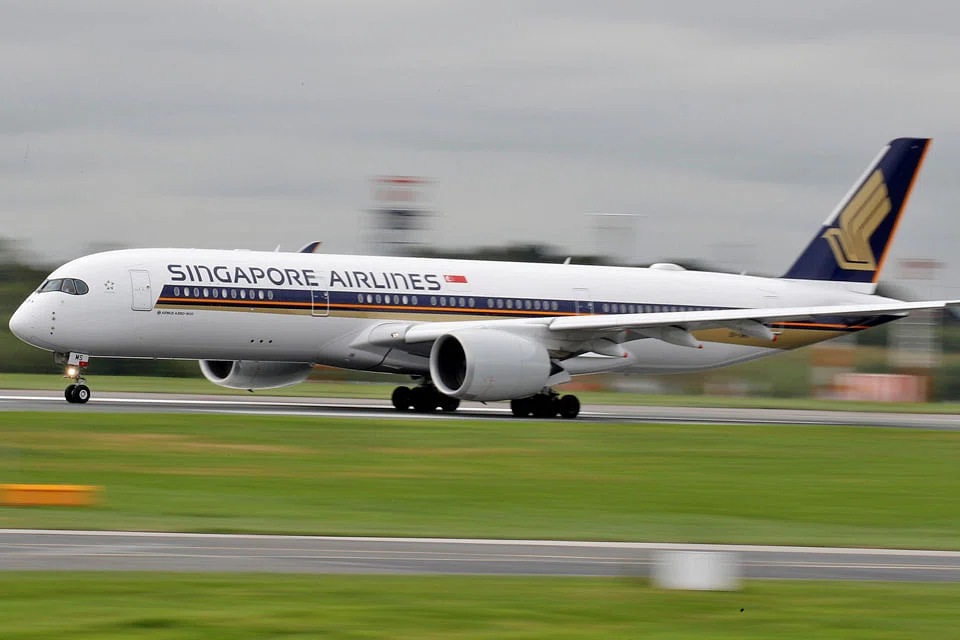
Singapore
NATIONAL carrier Singapore Airlines' bottom line headed south for the second quarter, with net profit tumbling to S$56 million from a restated profit of S$293 million a year ago, due to a combination of well-flagged, adverse factors by the analyst fraternity.
The group was hit by higher jet fuel prices and recognition of share of losses in an associated company.
A 40 per cent jump in fuel price, partly mitigated by the airline's jet fuel hedging, drove up fuel cost by 24 per cent for the three months to Sept 30, which overshadowed improvements in revenue and cost efficiency, said SIA in its results announcement on Tuesday.
Non-fuel expenditure for the quarter jumped 4.4 per cent, in tandem with the group's 5.3 per cent capacity growth.
SIA booked a one-off share of losses of S$116 million over the quarter for its 20 per cent-owned Virgin Australia, whose results were impacted by major, albeit non-cash, accounting adjustments. Excluding this, adjusted net profit fell 41 per cent to S$172 million.
Operating profit slid 35 per cent to S$233 million, as expenditure clicked higher by nearly 10 per cent, owing to elevated fuel prices and capacity injection. This overshadowed the group's 5.6 per cent jump in revenue to S$4.06 billion from a year ago.
Higher fuel costs left a mark across the group's airlines in the quarter, despite gains in flown revenue. While higher passenger carriage growth fuelled a 4.2 per cent rise in revenue for the parent airline company, this was largely offset by higher fuel costs. The same factor as well as expansion costs that outpaced revenue growth caused subsidiaries, SilkAir and Scoot, to suffer operating losses for the quarter.
SIA's cargo yields improved 10 per cent while passenger yields dipped one per cent. SilkAir's passenger yield also slipped by 3.6 per cent while Scoot's passenger yields saw an uptick by 1.8 per cent.
For the quarter, earnings per share fell to 4.8 Singapore cents from 24.8 Singapore cents a year ago. The group declared an interim dividend of eight Singapore cents per share for the period under review, down from 10 Singapore cents a year ago.
For the first-half year, net profit slipped 69 per cent to S$196 million on the back of a 2.5 per cent improvement in revenue to S$7.9 billion.
Revenue per available seat kilometer - a key top-line metric - for the group airlines came in flat over the quarter at 7.6 Singapore cents and grew by 1.3 per cent for the half year period versus the corresponding periods a year ago.
Passenger load factor for the group's airlines grew 3.1 per cent to 84.9 per cent for the quarter. The group said headwinds, chiefly, cost pressures from elevated fuel prices and competition in key operating markets persist but it remains committed to its three-year transformation plan to better customer experience, grow revenue and raise operational efficiency.
The carrier continues to hedge its jet fuel requirements; for the second half of the financial year, it has hedged 58 per cent of fuel requirements in Singapore jet kerosene (MOPS) at a weighted average price of US$71 a barrel against current price of US$87 a barrel.
The group has also entered into longer-dated Brent hedges with maturity extending to FY2024, covering 46 per cent of its projected annual fuel consumption at average prices ranging from US$56-US$64 per barrel versus prevailing price of US$73 per barrel.
SIA shares ended 17 Singapore cents or 1.8 per cent lower at S$9.42 on Tuesday. The results were announced after market close.
Rising fuel prices have weighed heavily on the counter, which has fallen 20 per cent from its S$11.80 peak around end May.
Another risk factor which could potentially hurt earnings, according to CIMB-CGS Research in a recent report, is whether the group will be able to pass on higher airport charges following the move by Changi Airport Group to raise aeronautical charges for passengers and airlines effective July 1, 2018.
The research house said: "The hike in Changi Airport PSC (passenger service charges) is untimely in the sense that the SIA group of airlines need the headroom now, in the face of rising oil prices, to increase their base fares and protect their margins.
"But the PSC increase has eaten into that headroom, and reduced the available space for airlines to raise their fares without causing an adverse reaction from passengers".
TRENDING NOW

Ex-Nvidia CEO Jensen Huang carried a secret for more than a year. It led to his downfall

Demand, tech capabilities position Apac and AI as Skyscanner’s next growth frontiers: CEO Bryan Batista

Jensen Huang after Nvidia: Will he ever be a CEO again?

Singtel group CEO Yuen Kuan Moon sells S$8.1 million worth of shares

