High yield a key factor in Soilbuild Reit's privatisation exercise, but will investors accept the deal?

AFTER weeks of watching Lippo Malls Indonesia Retail Trust (LMIRT) and Sabana Shari'ah Compliant Real Estate Investment Trust (Sabana Reit) make headlines for all the wrong reasons, the privatisation offer for Soilbuild Business Space Reit (Soilbuild Reit) announced earlier this week was probably something of a breath of fresh air for many investors.
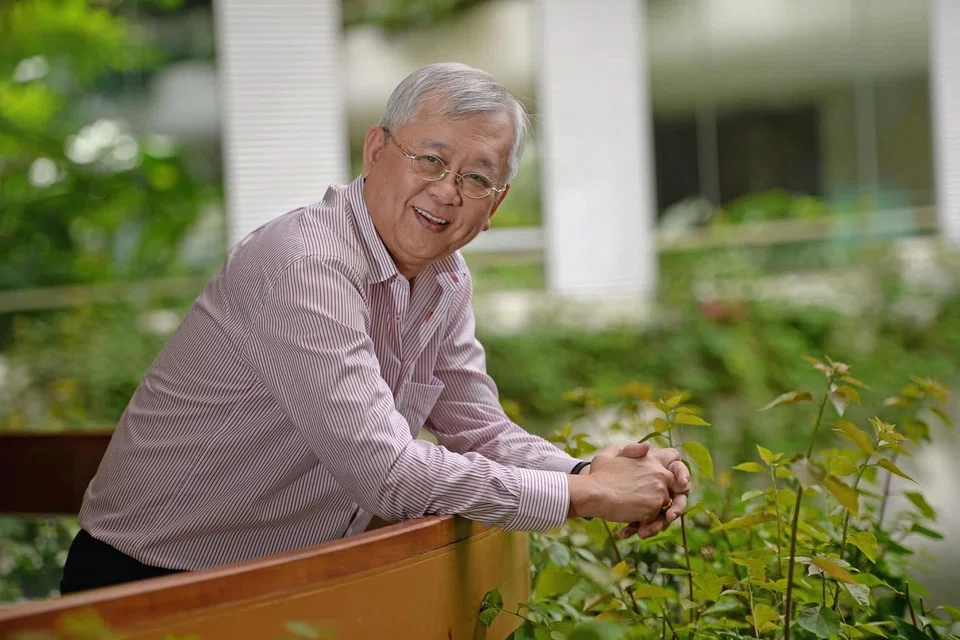
The deal, which involves Soilbuild Group's executive chairman Lim Chap Huat teaming up with Blackstone Real Estate to acquire the holdings of minority investors, is being done at a seemingly reasonable price of S$0.55 per unit, which is close to Soilbuild Reit's book value.
More importantly, in explaining the rationale for the deal, the manager of Soilbuild Reit displayed a degree of perspicacity that its counterparts at Sabana Reit and LMIR Trust plainly lack.
Soilbuild Reit's manager noted that Soilbuild Reit's ability to grow by making acquisitions that would be immediately accretive to its distribution per unit (DPU) has been limited by the high DPU yield at which its units trade.
Highest DPU yields may not deliver highest total returns
Indeed, Reits that trade at the highest DPU yields do not necessarily deliver the highest total returns. The reverse is often the case.
While Soilbuild Reit has traded at DPU yields in excess of 8 per cent for years, it has actually provided unitholders with a total annualised return of only 1.6 per cent from the point of its IPO in 2013 to the end of 2019, before Covid-19 became an issue.
The Straits Times Index delivered a total annualised return 3.5 per cent over the same period.
Reits that face such limited investor appetite tend to be incapable of remaining effective securitisation platforms. In 2019, a preferential offering by Soilbuild Reit ended up being only 82 per cent subscribed despite the new units being priced at a discount to the market and offering a trailing yield of nearly 9.6 per cent.
In these situations, trying to enlarge the Reit through acquisitions funded by capital raisings is likely to drive the market price of its units ever lower - which seems to have happened at LMIRT.
On the other hand, transactions like mergers or privatisations only work if investors can be convinced they are being offered a fair price, which Sabana Reit learned the hard way.
For its part, the manager of Soilbuild Reit said it had considered "potential strategic transactions" with parties ranging from private equity firms, real estate funds and property development firms before bringing the deal with Blackstone to minority investors.
Reason for scepticism
Nevertheless, many investors might not be immediately convinced that what's currently on the table is the best possible deal.
For starters, coming in the midst of the Covid-19 crisis, the timing of the transaction seems opportunistic.
The updated valuation of Soilbuild Reit's portfolio is S$34.4-S$50.9 million lower than their previous carrying value as at Sept 30, 2020.
This effectively lowered Soilbuild Reit's net asset value as at Sept 30, 2020, by 2.7-4 cents per unit, to 55-56.3 cents per unit.
Moreover, Mr Lim is choosing to remain invested in most of the Reit's portfolio alongside Blackstone, suggesting that he is expecting to be able to extract attractive long-term returns after the privatisation exercise.
Mr Lim and his family currently own 30.28 per cent of Soilbuild Reit. Under the deal, Mr Lim will end up owning 30.28 per cent of the offeror with Blackstone owning the remaining 69.72 per cent.
In conjunction with the deal, Soilbuild Reit will also sell its Australian properties to Blackstone on terms that would result in a net loss of A$31.2 million (or almost S$30.5 million).
In short, Mr Lim will retain his family's proportionate exposure in the Singapore assets of Soilbuild Reit's portfolio.
When approached for comment on how value might be added to the Singapore portfolio after the privatisation, a spokesperson for the offeror said a review of Soilbuild Reit's operations and portfolio will be conducted.
"The privatisation will dispense with general constraints of being listed, such as debt headroom and development limits," the spokesperson added.
The offeror downplayed the significance of the sale of the Australian assets, referring to it as a mere "structuring step" within the whole scheme. "The sale of the Australian assets is solely intended to effect the proposed acquisition in the most time efficient manner which gives unitholders maximum clarity," the spokesperson said.
No future for small Reits
Whether unitholders of Soilbuild Reit are persuaded by the specific terms of its privatisation, they should keep in mind that their interests and those of the Reit's manager and sponsor are fundamentally misaligned, which will make for an unhappy business relationship over the long term.
As with Sabana Reit and LMIRT, the stubbornly high yield at which Soilbuild Reit trades makes it impossible for the manager and sponsor to achieve their overarching goals of raising funds and expanding its portfolio.
Taking the struggling Reit out of the public market at a price close to its net asset value makes a great deal of sense for all parties involved.
It would enable the manager and sponsor to experiment with strategies to create value that are not possible for a small Reit in the public market.
It would also enable unitholders to redeploy their capital with Reits that have the necessary heft, access to high quality assets and management talent to thrive in the public market.
This is not a call for unitholders of Soilbuild Reit to accept the privatisation deal in front of them, but to recognise the big picture.
Even if they decide to test the willingness of Mr Lim and Blackstone to pay more, they should keep in mind that small Reits trading at high yields do not have much of a future.