Higher cost of capital a challenge for SGX IPO landscape as Reits, Spacs face lower valuations

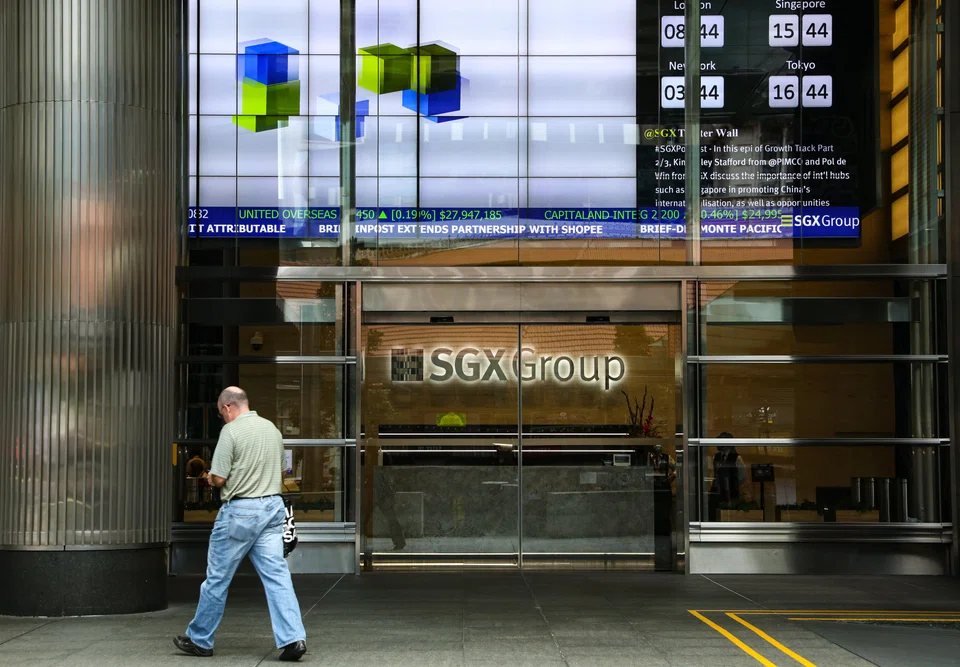
INITIAL public offering (IPO) activity on the Singapore Exchange (SGX) could remain muted in 2023 as real estate investment trusts (Reits) adjust to the realities of lower valuations in a higher interest rate environment.
SGX welcomed 11 new listings in 2022. The companies raised a total of S$580.3 million, according to bourse data.
The number of IPOs was more than the eight seen in 2021, but most of the listings last year took place on the junior Catalist board.
The amount raised, meanwhile, fell short of the S$1.7 billion and S$1.4 billion raised in 2021 and 2020, respectively.
Darren Ng, disruptive events advisory deputy leader at Deloitte Singapore, said the muted activity was “largely driven by the global market – high interest rates, political instability in other countries as well as impact from the Russia-Ukraine situation as well”.
The slowdown in Singapore mirrors global trends. According to an EY report published on Dec 14, global IPO volumes fell 45 per cent in 2022 and proceeds were down 61 per cent year on year.
Eng-Kwok Seat Moey, group head of capital markets at DBS, noted that deal activity picked up early on in 2022. But this lasted only a few weeks before fears over global macroeconomic conditions impacted risk appetite.
“I would say that we do have quality deals in the pipeline, but the macro environment and the resulting increased market volatility were just not supportive for many issues to come out,” she said.
Performance for the year
There was a notable absence of activity coming from Reits, an area of strength for SGX.
It was the first year since 2009 with no Reit listings.
Ng said potential Reits are “probably adopting a wait and see approach, waiting for recovery of market sentiment”.
Market participants noted there were Reit IPOs planned for the year that never materialised.
Rising interest rates have weighed on Reit valuations, while increasing borrowing costs have meant that such vehicles would face challenges.
Tham Tuck Seng, capital markets leader at PwC Singapore said: “The global interest rate environment has upward pressure. Because of that, it makes any Reit listing a bit more unattractive.”
The absence of such listings last year also took away “a big chunk of the fundraising”, he added.
Instead, the biggest listings were three special purpose acquisition companies (Spacs) – Vertex Technology Acquisition Corporation, Novo Tellus Alpha Acquisition and Pegasus Asia – that tapped SGX’s framework to list on the mainboard in January.
Activity on the mainboard stalled after that.
The remaining eight listings were all on Catalist, raising an aggregate S$52.2 million.
PwC’s Tham noted that 2022 was a “challenging year” for SGX.
“There were only two bright sparks – the first was the listing of Spacs, and the second would be the secondary listings,” he said.
There were two large secondary listings on SGX in 2022: Chinese electric vehicle manufacturer Nio listed in May, while Philippines liquor giant Emperador made its trading debut in July.
Nio’s listing on SGX followed listings in New York and Hong Kong, and it was the first Chinese company in the world to be triple-listed.
Emperador joined Singapore’s market barometer, the Straits Times Index (STI), on Sep 19, booting out ComfortDelGro Corporation.
Deloitte’s Ng noted that these listings followed the debut of Thailand’s Sri Trang Gloves in 2021, and are a “positive sign” that Singapore is attractive and competitive as a destination for secondary listings.
Valuation reset
Tham expects 2023 to also be a challenging year, with the “long list of uncertainties” such as interest rates, recession fears and geopolitical instability continuing.
“We should expect volatility to continue in the market, (which) will adversely impact IPO activities,” he said.
But he believes there may be opportunities during the year as stock markets worldwide correct. “We should see a capital markets reset, which will bring a return to fundamentals,” he said, adding that this could benefit SGX.
Vineet Mishra, head of investment banking for South-east Asia at JP Morgan, is looking to the United States Federal Open Market Committee (FOMC) position on rates.
“Impacting sentiment right now is not just the interest rates, but the messaging by the FOMC, which remains focused on combatting inflation,” he said. “Once they shift focus to managing growth, we should start seeing more demand for deals with clearer outlook for financial markets.”
He added that investors should start seeing more settled markets some time in the second quarter, and hence increased deal activity.
Even so, interest rates should remain elevated, which will have to be reflected in valuations.
“I don’t think we will see the yields or valuations (we saw) when capital was much cheaper. In some ways, it is also issuers accepting a slightly different valuation environment.” he said.
The environment is not expected to be conducive for the Spacs either.
“It’s going to be a challenging environment for de-spacs in Singapore and Hong Kong. As we are seeing in US, it’s possible Spacs will end up returning capital in Asia as well,” Mishra said.
Deloitte’s Ng noted that the first batch of Spacs in Singapore have a 24-month deadline to complete a business combination.
“Successful de-Spacs will encourage more Spacs listings and applications to come on board,” he added.
DBS’ Eng-Kwok still believes IPOs for companies with strong fundamentals will have a “very good chance to get completed in Singapore (this) year.”
With investors being more selective, deals would initially have to come in at a more “market-friendly valuation” supported by a larger percentage of cornerstone investors, she said.
“While markets have performed poorly and investors remain at full alert for any additional shocks, global fund managers are still holding on to a historically high level of cash, which we believe will have to be deployed at some point soon.” she said. “We have to prepare and be ready for when markets present the next window of opportunity.”