

H&M reports Q2 profit miss as tighter inventory hit sales
Operating profit was flat year on year at 5.91 billion Swedish crowns (S$786.7 million)
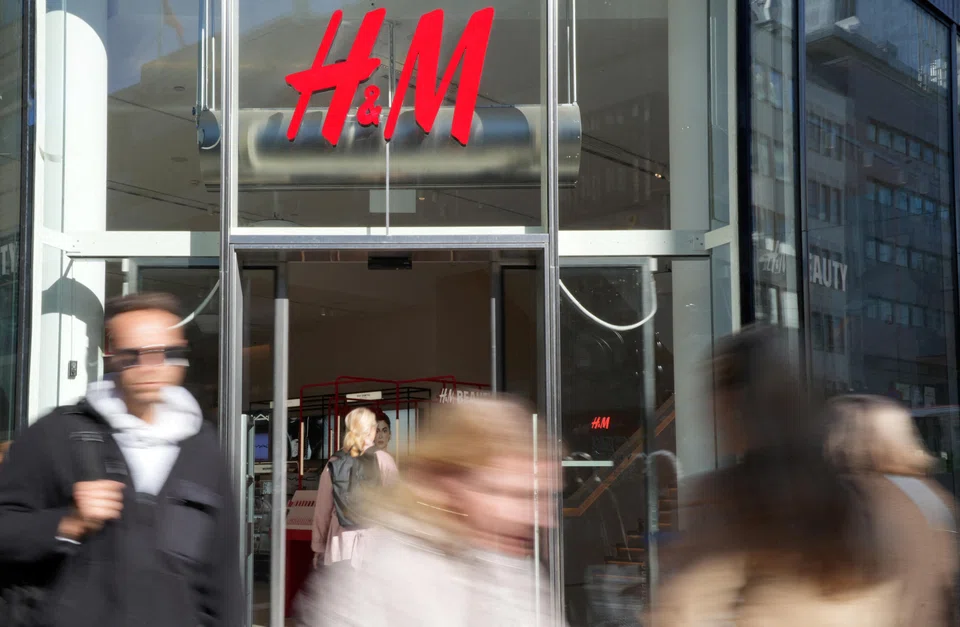
[STOCKHOLM] Swedish fashion retailer H&M reported on Thursday (Jun 25) a smaller-than-expected March to May profit as it was unable to fully meet demand after reducing the amount of clothing it keeps in stock, and predicted unchanged June sales.
In May, the company announced layoffs of Singapore staff as part of its relocation of its South-east Asian headquarters from the Republic to Kuala Lumpur.
Operating profit in H&M’s fiscal second quarter was unchanged year on year at 5.91 billion crowns (S$786.7 million), having risen three quarters in a row, against a mean forecast in an LSEG poll of analysts of 6.38 billion crowns.
Sales measured in local currencies were roughly flat for the quarter, and H&M predicted flat local-currency sales also in June on a year-on-year basis. Chief executive officer Daniel Erver said in a statement that quarterly sales were somewhat lower than planned.
“The profitability improvement and increased inventory productivity are in line with our long-term work to lay the foundations for sustainable and profitable growth. The tighter inventory management has, however, in some cases affected our ability to fully meet demand,” he said.
Excluding a one-off restructuring cost of 679 million crowns, related to organisational changes, operating profit rose 11 per cent. The quarter was closely watched for how H&M weathered the Iran war’s impact on consumer confidence and costs.
Profit margins held up, with the gross margin widening to 56.6 per cent from 55.4 per cent a year earlier against an expected 56.5 per cent. H&M said it expected markdowns in the third quarter to be on a similar level to a year ago.
Erver is trying to attract more shoppers with trendier styles and overhauled marketing. On May 7, H&M launched a collection in collaboration with designer Stella McCartney.
While H&M’s profit margins have been improving, sales have been more sluggish as cut-price online retailers like Shein compete for price-sensitive customers while Inditex’s Zara dominates the upmarket end of fast fashion. REUTERS
Decoding Asia newsletter: your guide to navigating Asia in a new global order. Sign up here to get Decoding Asia newsletter. Delivered to your inbox. Free.
Share with us your feedback on BT's products and services
TRENDING NOW

8 public officers referred to police over property buys near unannounced MRT stations: Chan Chun Sing

Grab CEO’s wife Chloe Tong on life with Anthony Tan and finding her purpose

Retrenched PMETs who return on lower pay see median 25% wage cut

Hao Mart owner resisting OG’s mortgage foreclosure on his Tanglin GCB

