Holiday season, supply chain issues bolstering demand for warehousing
Pandemic-linked shipping delays drive need for additional space to house goods, while firms in certain industries are keeping extra stock on hand

Singapore
AS THE festive season approaches, demand for warehousing and storage space is picking up, with some operators expecting to reap a bump in revenue.
Aside from the usual demand that comes with the year-end period, supply chain woes arising from the pandemic and construction delays for homes are also fuelling the need for space.
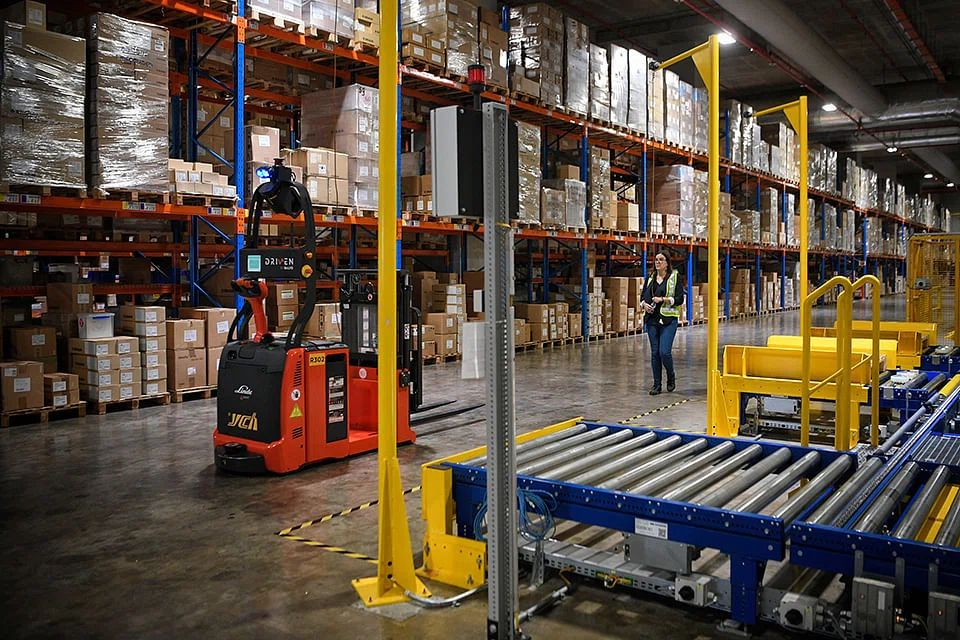
"We are already over-capacity currently and still having our customers request for more warehousing space to support their year-end volume peak, especially for those dealing in the fast-moving consumer goods (FMCG) and e-commerce sectors," said Khoo Ngiap Seng, country general manager for YCH Group, adding that demand is higher compared to the corresponding period last year.
Pandemic-linked shipping delays are driving the need for additional space to house goods, while firms in certain industries - such as healthcare and electronics - are keeping extra stock on hand, either to circumvent supply shortages or to cater to national and regional clients.
YCH, which offers a variety of services ranging from warehousing to supply chain management, is banking on a 30 per cent bump in revenue this year. It presently manages over 2 million square feet (sq ft) of warehousing space across 13 locations in Singapore and is looking to lease another warehouse in January to support one of its customers from the healthcare industry. In addition, it is in talks to re-develop and double - at least - the capacity of one of its existing warehouses.
Andrew Sim, chief executive of J&T Express, said: "As we head into the year-end gifting season, sellers have started to prepare for the year-end shopping sales and are looking for extra warehousing space to stock their products. We have seen a growing demand for warehousing solutions from businesses, and we expect an increase in demand during the year-end season."
Earlier this month, J&T announced the opening of 2 new warehouses at Penjuru and Changi Airfreight Centre. In particular, the 82,000 sq ft fulfilment centre at Penjuru is slated to cater to e-commerce while the Changi Airfreight Centre warehouse will facilitate trans-shipment across its Asian network.
According to Sim, demand for warehousing and fulfilment stems largely from small and medium-enterprises (SMEs) as well as home-based businesses across sectors such as fashion, electronics and FMCG.
Sim added: "(Since) the pandemic, smaller and home-based businesses are scaling up their operations to fulfil and support the rapid increase in orders for their online businesses."
The latest report from industrial land and infrastructure agency JTC showed that warehouses continued to do well in the third quarter of 2021 as warehouse occupancies hit a 5-year high of 90.1 per cent, rising from 89.7 per cent and 89.1 per cent in the second quarter of 2021 and Q3 2020 respectively. Analysts say that e-commerce, online grocery shopping and stockpiling are helping to underpin demand, which nudged warehouse rents up 1.7 per cent quarter-on-quarter in Q3 2021.
For Extra Space Asia, there is typically a 20 to 30 per cent jump in enquiries for storage space ahead of Christmas from both individuals and companies.
"During festive seasons, we usually see a 5 per cent increase in revenue," a spokesperson for Extra Space Asia told The Business Times. The spokesperson added that some businesses who store their inventory with Extra Space Asia have upsized their storage units as they order goods in bulk to avoid supply chain snags.
About 30 per cent of its client base are small businesses, which are seeking the flexibility to scale up their business without having to ink long-term contracts.
Meanwhile, personal storers - who make up the balance - tend to use storage as a way of decluttering their homes, especially as many employees continue to work from home.
Extra Space Asia presently has 11 facilities in Singapore, many of which which are running at an occupancy rate of above 95 per cent. Its overall occupancy rate stands at 93 per cent, up from 87 per cent in 2019 prior to the pandemic.
Similarly, StorHub Self Storage has seen enquiries spike by over 40 per cent year on year, and it expects enquiries to gather pace heading into the holiday season.
Luigi La Tona, chief executive officer of StorHub, said: "Demand is driven mostly from individuals, as the pandemic has made us rethink the use of space at home. Besides individuals, we have seen an uptick in micro enterprises as more business owners are moving their small businesses online, thus forgoing expensive commercial or retail space." Eighty five per cent of its customers are individuals, some of whom are taking up storage space for their micro-enterprises.
In Singapore, StorHub has about 1.5 million sq ft of space across 13 locations, after it added 2 new facilities in Yishun and Kallang Avenue to its portfolio in March this year. It plans to launch 2 more facilities in early 2022.
Meanwhile, over at Lock+Store, business has remained flat as demand from some quarters picked up and others, waned. Costs including manpower and cleaning costs have also risen as a result of the travel curbs between Singapore and Malaysia over the past 18 months or so.
"Demand is coming from new home owners who need temporary storage space due to delays in the development of build-to-order (BTO) flats, and from expats who are stranded overseas," said Helen Ng, chief executive of Lock+Store. "As for SMEs, demand has dipped by about 10 per cent among those who cater specifically to the festive crowd. The dip has somewhat been offset by the rise of e-commerce storers."
Lock+Store has 12 locations in Singapore and recently expanded 3 facilities in Bukit Merah, Ang Mo Kio and MacPherson by 28 per cent to meet demand and to lock in lower rentals.