

Hong Kong ETFs lure record US$4.4b on stock rebound bets
 Add BT as a preferred source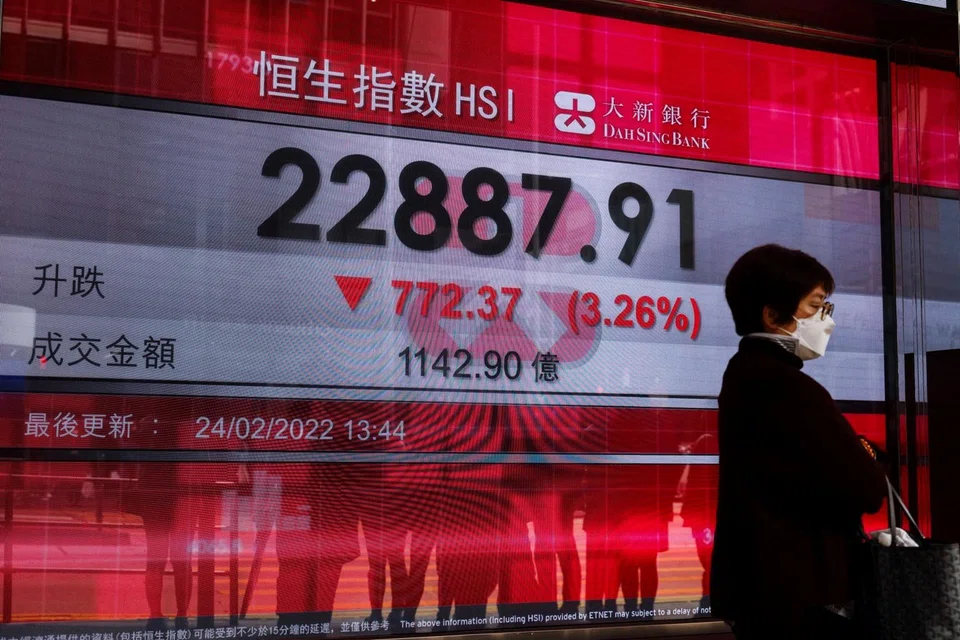
DeeperDive is a beta AI feature. Refer to full articles for the facts.
[HONG KONG] Stocks in Hong Kong attracted record inflows via exchange-traded funds in March, as retail investors took advantage of a historic dip and an ensuing rebound to bet on further gains.
Some 60 equity ETFs tracking the city's indexes added US$4.4 billion since end-February, the most in monthly data compiled by Bloomberg going back to 2000.
The Tracker Fund, the city's first and largest ETF mirroring the benchmark Hang Seng Index, lured US$1.5 billion, more than 3 times the net inflow for February. The piling in of money suggests retail investors are sanguine about Hong Kong's equity market outlook despite volatility.
A growing diversity of products, including those focused on the metaverse, also likely helped ETFs gain traction. The Hang Seng Index has rebounded more than 20 per cent from a mid-March trough, following Beijing's pledge to end a regulatory crackdown and stabilise markets.
"We have seen retail buying through ETFs when foreign institutional clients were selling in panic," said Melody He, deputy chief executive officer at CSOP Asset Management. "It's a more transparent and efficient way of tactically trading the market."
The surge in flows into ETFs tracking Hong Kong stocks, many of which are mainland firms, comes as strategists remain split on the outlook for China equities.
Navigate Asia in
a new global order
Get the insights delivered to your inbox.
Skeptics are hesitant to turn bullish barring more policy clarity from the Chinese government, especially on the back of lingering regulatory risks and growing lockdowns in China's big cities.
Stocks in Hong Kong are yet to recoup this year's slump despite recent gains. The Hang Seng Index is down 5 per cent this year, while the Hang Seng Tech Index - which includes Alibaba Group and Tencent as members - has lost more than 18 per cent. Both gauges are on track to post monthly losses for March.
Still, another sign of investor optimism can be witnessed in stock purchases via the southbound trading links. Mainland Chinese traders have been snapping up Hong Kong's beaten-down shares through the links, with net inflows reaching HK$48.9 billion (S$8.5 billion) so far in March, set for the biggest monthly figure since December.
The inflows to ETFs signal that the rebound "may have staying power", said Rebecca Sin, an analyst at Bloomberg Intelligence. "Chinese technology stocks may finally be on the road to recovery after government pledges revived the market's risk appetite."
The ETF market in Hong Kong has a relatively short history, with the first product launching in 1999 and its market capitalisation equivalent to less than 1 per cent of the overall stock market. It's also smaller than the value of ETFs listed in Japan, China and South Korea exchanges, Bloomberg data show.
But it's been growing fast of late, with a range of thematic products focusing on tech and ESG helping draw cash. The total market capitalisation of 153 listed products on the Hong Kong exchange, including inverse and leveraged funds, reached HK$429 billion in 2021, expanding almost 50 per cent from 3 years ago.
As of February, the average daily turnover has risen to HK$8.9 billion, up 15 per cent from the previous year. Regulators are also planning to include ETFs in the stock connect schemes between Hong Kong and mainland bourses, potentially boosting liquidity in the local ETF market.
"We expect the inflows to continue given more product offerings, diverse issuances and greater connectivity with the mainland," said CSOP Asset Management's He. She added that the depth of Hong Kong's ETF market "will improve over time". BLOOMBERG
Decoding Asia newsletter: your guide to navigating Asia in a new global order. Sign up here to get Decoding Asia newsletter. Delivered to your inbox. Free.
Share with us your feedback on BT's products and services
TRENDING NOW

Shelving S$5 billion office redevelopment plan proved ‘wise’ as geopolitical risks mount: OCBC chairman
OCBC is said to emerge as lead bidder for HSBC Indonesia assets

Middle East-linked energy supply shocks put Asean Power Grid back in focus

Eurokars Group introduces rental car franchises Enterprise Rent-A-Car, National Car Rental, and Alamo to Singapore

