


Hong Kong poised to reclaim top global IPO ranking in 2025
Geopolitical tensions and regulatory backlash in the US against Chinese stocks are working in the city’s favour
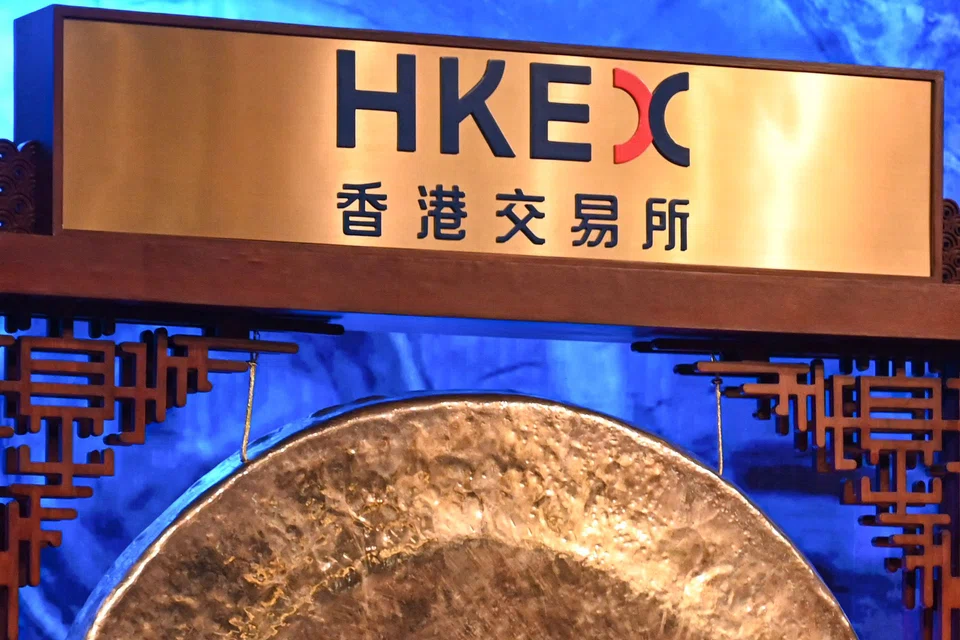
[HONG KONG] Hong Kong is well on track to finish 2025 as the world’s top initial public offering (IPO) market, leaving the New York Stock Exchange in the dust.
The catalysts behind this unexpected rebound from a prolonged lull are not lost on Cheah Cheng Hye, a prominent investor in Chinese stocks and, for the past eight years, an independent board member of Hong Kong Exchanges and Clearing, the parent company of the Hong Kong Stock Exchange (HKEX).
Cheah, who is also a co-founder of Hong Kong-based investment firm Value Partners, traced the resurgence to the first week of November last year, when Donald Trump secured his second term as US president.
Later that same month, Chinese Vice-Premier He Lifeng visited Hong Kong to deliver a landmark speech reaffirming Beijing’s commitment to preserving the city’s role as a global financial hub.
“Building, consolidating and developing Hong Kong as an international financial centre is not only necessary for Hong Kong, but also important to the country,” said Cheah, echoing the points made by He.
“This clearly relates to the growing US-China decoupling. China needs its own international financial centre, and Hong Kong is the only one within Chinese sovereign territory. Strengthening it is a priority.”
The impact was immediate. A wave of Chinese companies began preparing for listings in Hong Kong, including firms already listed in Shanghai, Shenzhen and New York.
“They can slow down listings if they want or speed things up. In this case, they chose to hit the accelerator,” said Cheah.
Hong Kong has raised US$24 billion in the year to October, nearly trebling the amount recorded in the same period last year.


This surpassed the US$18.5 billion raised by the New York Stock Exchange and the Nasdaq’s US$16.5 billion. The US, however, still leads in total IPO proceeds, based on data from financial services company Dealogic.
Two jumbo deals – Contemporary Amperex Technology (US$5.3 billion) and Zijin Gold International (US$3.7 billion) – accounted for more than one-third of Hong Kong’s total.
Keeping the pace
Still, the city’s momentum may not be sustainable. Analysts caution that geopolitical tensions and China’s unpredictable political climate could slow the pace.
These concerns echo recent remarks by HKEX chief executive officer Bonnie Chan, who warned that geopolitical and economic risks could jeopardise Hong Kong’s IPO dominance.
For now, the city remains the preferred destination for Chinese companies seeking foreign currencies to fund overseas expansion, thanks to China’s capital controls.
About half of Hong Kong’s 76 stock listings this year are secondary listings by Chinese companies from the domestic A-share markets, said Perris Lee, the head of global convertible bonds and Asia-Pacific equity capital markets at Ion Analytics, the parent company of Dealogic.
“For corporates who need access to foreign capital, Hong Kong is no doubt the place to go,” he noted.
Investor enthusiasm is evident in the strong debut of these stocks, which have risen by an average of 9 per cent this year – reversing the gloomy performance of recent years, said Cheah.
He and other analysts attribute this to pent-up demand from China’s vast pool of private savings seeking alternatives after the collapse of the property market.
HKEX has more than 300 companies in the listing pipeline as at Oct 31.
“This clearly relates to the growing US-China decoupling. China needs its own international financial centre, and Hong Kong is the only one within Chinese sovereign territory. Strengthening it is a priority.”
Cheah Cheng Hye, independent board member of Hong Kong Exchanges and Clearing
“It takes time for everyone to digest the pipeline. And that’s only if regulatory approvals continue at the current pace,” said Lee, noting that one unnamed bank alone has 100 listing candidates.
“A lot of advisers and banks are operating at full capacity to handle all these applications.”
Hong Kong has been preparing for this moment.
Cheah highlighted a series of reforms since 2018, including relaxed listing requirements for loss-making tech and biotech firms, expanded eligibility for mainland investors to access Hong Kong-listed stocks via closed-loop channels, and a planned move to settle trades within one day – among the first in Asia.
Today, mainland investors account for as much as 26 per cent of Hong Kong’s average daily trading volume, while Chinese stocks make up 80 per cent of HKEX’s market capitalisation.
David Chan, managing director and partner at Boston Consulting Group, notes that healthcare, biotech and specialist technology listings raised the most IPO proceeds in the first half of 2025.
Paradoxically, geopolitical tensions, combined with regulatory backlash in the US against Chinese stocks, have so far worked in Hong Kong’s favour.
“The Chinese government now embraces the idea of building Hong Kong as an international financial centre,” said Cheah.
“New York has become less welcoming to Chinese listings, pushing more companies to return home. New Chinese firms that once preferred New York are now choosing Hong Kong.”
Decoding Asia newsletter: your guide to navigating Asia in a new global order. Sign up here to get Decoding Asia newsletter. Delivered to your inbox. Free.
Share with us your feedback on BT's products and services






