

Hot stock: SingPost rises 2.1% on news of postal rate hike

Michelle Zhu
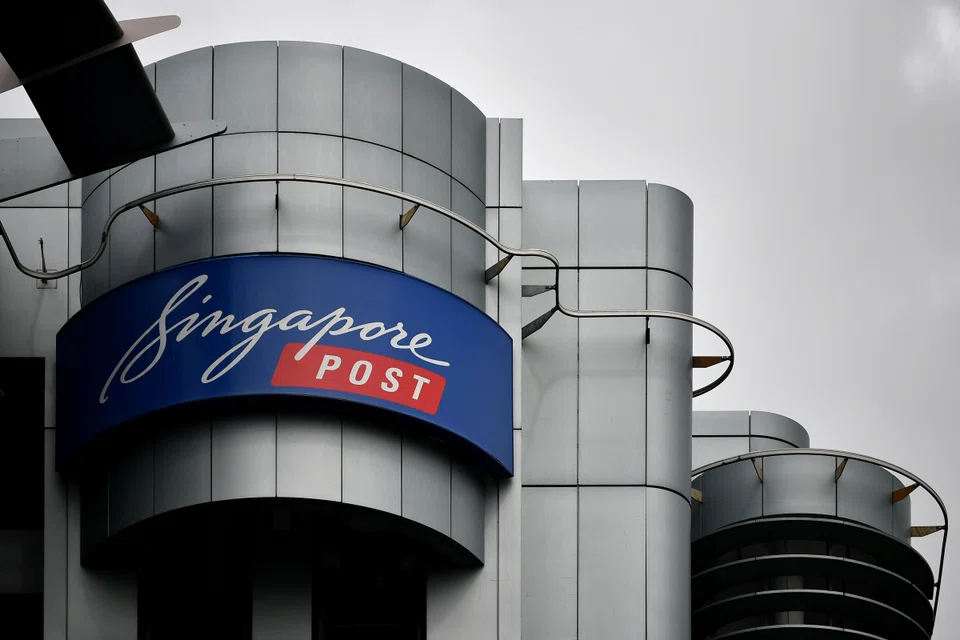
SHARES of Singapore Post (SingPost) closed 2.1 per cent higher on Tuesday (Sep 19), after the group announced it was introducing a significant rate increment for the first time in almost a decade.
The counter rose as much as S$0.025 or 5.2 per cent to S$0.51 in early trade on Tuesday. It eventually eased to its closing price of S$0.495, up S$0.01, after 10.5 million shares changed hands. This far exceeded the stock’s 2.7 million average. No married deals were recorded, according to ShareInvestor data.
From Oct 9, the postal service provider will increase its standard regular mail rates by S$0.20 or 65 per cent to S$0.51, from the current S$0.31. The last significant rate increment was in 2014, when postage increased to S$0.30 from S$0.22.
Ahead of market hours on Tuesday, SingPost said that its latest rate increment reflects the escalating costs of maintaining the postal service.
“SingPost has been absorbing inflationary costs and essentially kept our postage rates constant since 2014. With the intensifying cost pressures and challenging business landscape, it is inevitable that we raise our prices to remain commercially sustainable so that we can continue providing the essential postal service for the nation,” said Neo Su Yin, the group’s Singapore chief executive.
The move comes amid a global structural decline in postal volumes over the last decade, which SingPost attributed to digital disruption which impacted the commercial viability of postal firms globally. It noted that its mail volumes have declined more than 40 per cent between FY2018/19 and FY2022/23.
For the fiscal year ended March 2023, SingPost’s post and parcel segment revenue amounted to S$521.3 million, comprising over a third of the group’s full-year revenue. This also marked a 16.2 per cent year-on-year decline from the previous year’s topline, bringing the segment to its first-ever full year operating loss of S$15.9 million.
Revenue contributions from the domestic post and parcel fell 9.3 per cent on the year, while international post and parcel revenue fell 20.5 per cent.
While the group said it “made inroads” with e-commerce volumes over the year, it noted that the progress was not enough to offset the impact of mail declines.
SingPost said that the rate adjustment will help address the loss caused by a persistent decline in postal volumes coupled with costlier labour, utilities, fuel, and higher conveyance expenses. “This rate increment is necessary for SingPost to continue serving its obligations as Singapore’s public postal licensee while allowing further exploration of a more sustainable postal business model in the long term, balancing the need to remain viable while safeguarding the interests of its shareholders,” added the group.
SingPost will also issue a first local stamp booklet of 10 stamps from end-October to each household to help manage the postage increase.
Going forward, it will further introduce changes to simplify the domestic postage rate structure, including the elimination of the weight criteria. This is expected to make postal services more user-friendly by enhancing the customer experience and provide greater convenience, it added.
Earlier in July, Minister of State for Communications and Information Tan Kiat How announced in Parliament that adjustments to domestic postage rates will have to be of a “sufficient degree to allow SingPost’s business model to remain viable, without requiring direct government funding”. The Infocomm Media Development Authority (IMDA) is in the midst of conducting a review into SingPost’s costs and operations.
While Lim & Tan Securities acknowledges that the impending rate hike is “a much-needed shot in the arm” for the group’s postage business, the research house does not think it will be sufficient to address the structural decline in mail volumes and business.
This is given the “existential threat” to the group’s mail business posed by digital disruption, said Lim & Tan’s research team in a Tuesday report. “We believe the strategic review would be more important to address the valuation issue of SingPost.”
At the stock’s Monday closing price of S$0.485, the brokerage said that SingPost is valued at S$1.1 billion and trades at a consensus forward price-to-earnings ratio of 24 times. This implies a dividend yield of 1.2 per cent and a price-to-book ratio of one time.
Lim & Tan noted that Bloomberg’s consensus one-year target of S$0.52 implies a potential upside of just 6.1 per cent.
CGS-CIMB, however, upgraded its rating on SingPost to “add” from “hold”, while lifting its price target to S$0.60 from S$0.52 to factor in the higher postal rate assumptions. The brokerage has assumed a 50 per cent hike in the group’s base rate effective FY2023/25, which would translate to an annual Ebit (earnings before interest and taxes) uplift of about S$20 million. “We think the upcoming postage rate hike could help SingPost plug its widening postal losses, enabling investors to focus on its growing logistics business,” said analyst Ong Khang Chuen.
Beyond this, Ong also believes the group’s FY2023/24 earnings recovery will be anchored by the group’s international business – with its recent introduction of cross-border offerings to boost customer acquisitions and enable SingPost to better manage its margins for this business.
CGS-CIMB estimates that there are S$1 billion worth of non-core assets that are “ripe for capital recycling”, including SingPost Centre and minority-stake investments.
“We also believe SingPost should consider leveraging third-party capital to scale its fast-growing Australian logistics business and unlock shareholder value,” said Ong. He values the group’s key unit in Australia, Freight Management Holdings, at between S$750 million and S$1.1 billion.
TRENDING NOW

Once staunchly pro-China, Malaysian Chinese businesses are now distancing themselves from Beijing
Stocks to watch: HPL, Aims Apac Reit, Zico, Advanced Systems Automation, ComfortDelGro

‘How many will survive?’: Bubble fears arise as China’s humanoid robotics face reality check
Smaller board lots can’t fix a market run by three banks

