

Hot stocks: UOB adds S$4 billion to value as Singapore banks break share price ceilings
Three married deals took place for UOB, and none for DBS or OCBC

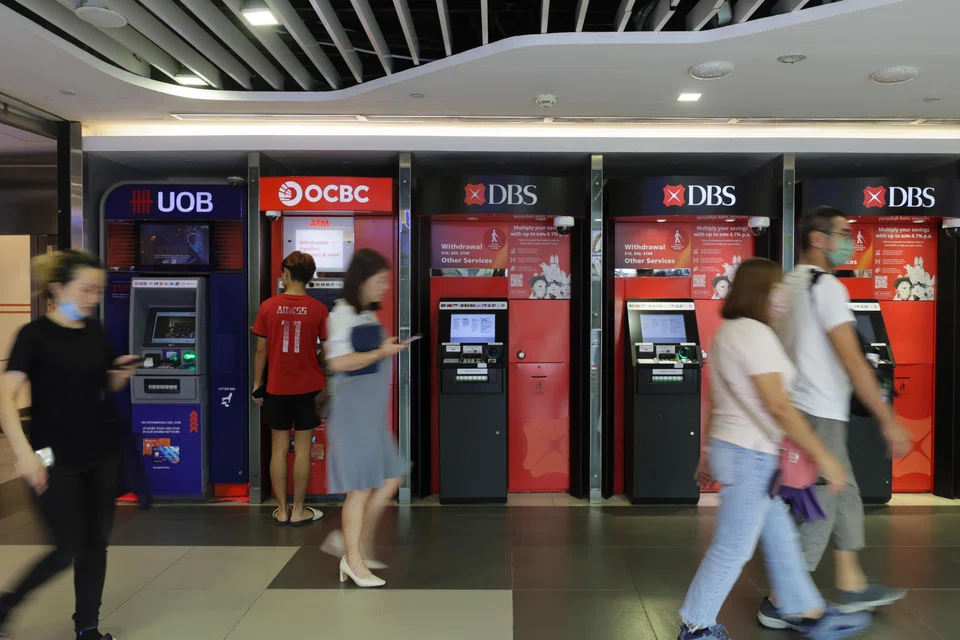
SHARES of UOB and OCBC leapt to levels never seen before, with both lenders surpassing street consensus estimates in their third-quarter net profit figures released Friday (Nov 8).
As at 11.05 am, UOB had risen 6.7 per cent or S$2.24 to reach S$35.54 after 6.6 million shares worth S$228.9 million changed hands. It was the top-traded counter by value at the time.
Data from ShareInvestor showed that three married deals took place for the bank.
The first was executed at 9.26 am, with 34,000 UOB shares transacted at S$34.29 apiece, and another at 9.49 am, traded at S$34.975 a share with a volume of 10,800. At 10.22 am, 4,400 UOB shares went for S$35.185 each.
OCBC was up 0.7 per cent or S$0.11 at S$15.99 after climbing as much as 1.4 per cent or S$0.22 to S$16.10 earlier at 10.23am.
Meanwhile, DBS extended its rally in early trade, rising 1.3 per cent or S$0.54 to reach S$42.24 as at 11.05 am on Friday, after having ended trading the day before at S$41.70.
At the time, this was an all-time high for Singapore’s largest lender, which crossed its S$40-per-share mark on news of its positive third-quarter results in conjunction with the launch of a new S$3 billion share buyback programme.
No married deals took place in early trade for OCBC nor DBS.
UOB closes ratio gap
UOB’s share price movements came after its net profit of S$1.61 billion for the third quarter ended September 2024 beat Bloomberg consensus estimates, as did OCBC with a quarterly net profit of S$1.97 billion posted the same morning.
Notably, UOB’s CET-1 ratio increased to 15.2 per cent on a fully loaded basis. Citi analyst Tan Yong Hong highlighted this as a “key positive surprise”.
In a report on Nov 8, Tan said the rise has enabled UOB to close the ratio gap with its peers, with DBS’ CET-1 ratio at the same percentage and OCBC’s at 15.6 per cent.
“This was ahead of market expectations, and likely could see possible expectations for capital management upside into Q4 FY2024,” said the analyst.
Looking ahead, Tan expects UOB to report high-single-digit loans growth above consensus expectations of 5 per cent, and double-digit fee growth in 2025.
He also forecasts the bank to turn in a cost-income ratio of 41 to 42 per cent in the year ahead, with credit cost at 25 to 30 per cent.
TRENDING NOW

DBS, OCBC, UOB rout lops billions off STI as inflation, rate concerns spook investors

Grab CEO’s wife Chloe Tong on life with Anthony Tan and finding her purpose

OCBC sheds S$8 billion in value as shares close nearly 6% down; analysts cautious on banks

Deal between tycoon friends sparks scrutiny of Philippine power sector

