

Hotels target staycations, as every bit helps
Analysts acknowledge pent-up demand for holidays, but say staycationers' impact on hotels may not be substantial
Singapore
HOTELS in Singapore are rolling out promotions for locals looking for a staycation, and are confident of interest among locals for a holiday away from home.
This came as the Singapore Tourism Board announced last Friday that hotels here may apply to reopen for staycation bookings.
Equity analysts said this latest development will give the hotel industry a much-needed boost, but cautioned that the financial impact may not be substantial.
Indeed, while some locally listed plays that could benefit from the loosening of restrictions have had a lift this past week, the price action has mostly been modest.
The strongest gainer has been Frasers Hospitality Trust (FHT), which is up 4.2 per cent since Friday. Far East Hospitality Trust (FEHT) has gained 2.9 per cent, while Ascott Residence Trust is up 2 per cent. CDL Hospitality Trusts (CDLHT) is not far behind, having gained 1.9 per cent since Friday.
Smaller gains were seen at UOL, up 0.3 per cent, while OUE Commercial Real Estate Investment Trust (Reit), is flat.
Rolling out the red carpet
Singapore's hoteliers have not been idle during the "circuit breaker" months. Pan Pacific Hotels Group (PPHG), a unit of UOL, had managed to keep its portfolio occupancy above 80 per cent as a few of its hotels were used to house returning residents.
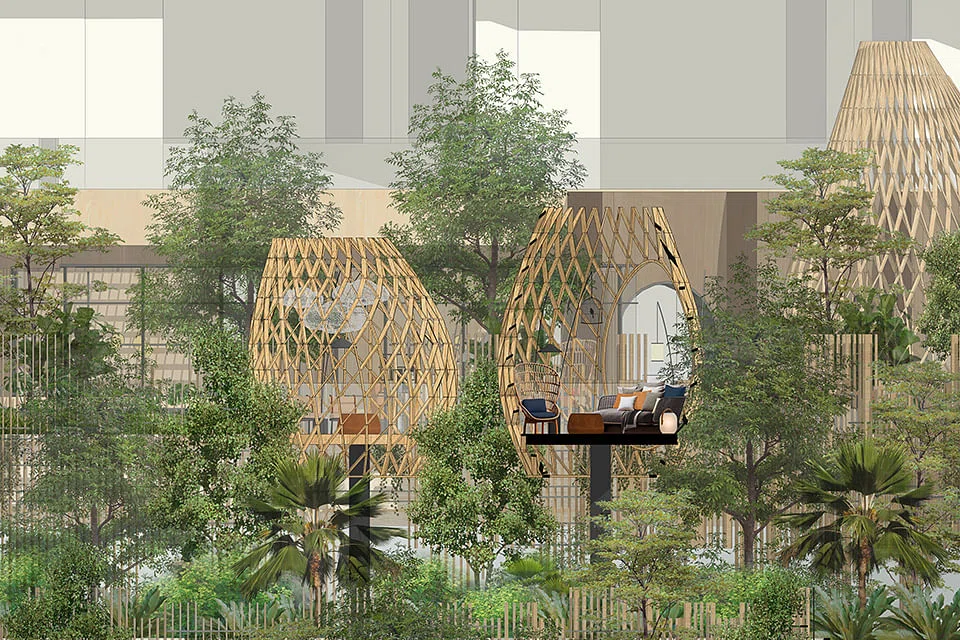
Cinn Tan, chief sales and marketing officer at PPHG, added that the hotel group also used the downtime to renovate its Parkroyal Collection Marina Bay into a "hotel-in-a-garden".
Nevertheless, the group is eager to begin marketing its staycation offers here. These will include special room rates, complimentary breakfasts and parking, and dine-in discounts. It also has special rates and discounts for healthcare workers.
Most of PPHG's hotels in Australia, Canada, China, Malaysia, Myanmar and Vietnam have already opened or are preparing to reopen, Ms Tan said, and are working hard to lure back domestic guests and corporate clients.
"We are already seeing strong pick-up of the staycation promotions and weekend businesses for our Australia hotels and resort in Penang since their roll-out in June," she said.
The ability to attract locals may depend somewhat on a hotel's location.
OUE Commercial Reit, whose properties include Crowne Plaza Changi Airport and Mandarin Orchard Singapore, told The Business Times that it had been receiving booking enquiries for staycation packages at the latter hotel even before the start of Phase 2 of Singapore's reopening.
"People are keen for some leisure experience that offers some semblance of normalcy which takes them away from being cooped up at home," said a Reit manager spokesperson.
OUE Commercial Reit said it intends to offer staycation packages for both its hotels, and is implementing some changes to keep guests safe. For instance, its traditional buffet spread will be replaced with "live" cooking stations.
Besides Orchard, another location likely to be popular is Sentosa. FEHT CEO Gerald Lee said the trust is applying to resume staycation offerings at some of its hotels and believes that resort-hotels such as its 40-key The Barracks Hotel Sentosa will align well with staycationers' demands for a unique and private stay.
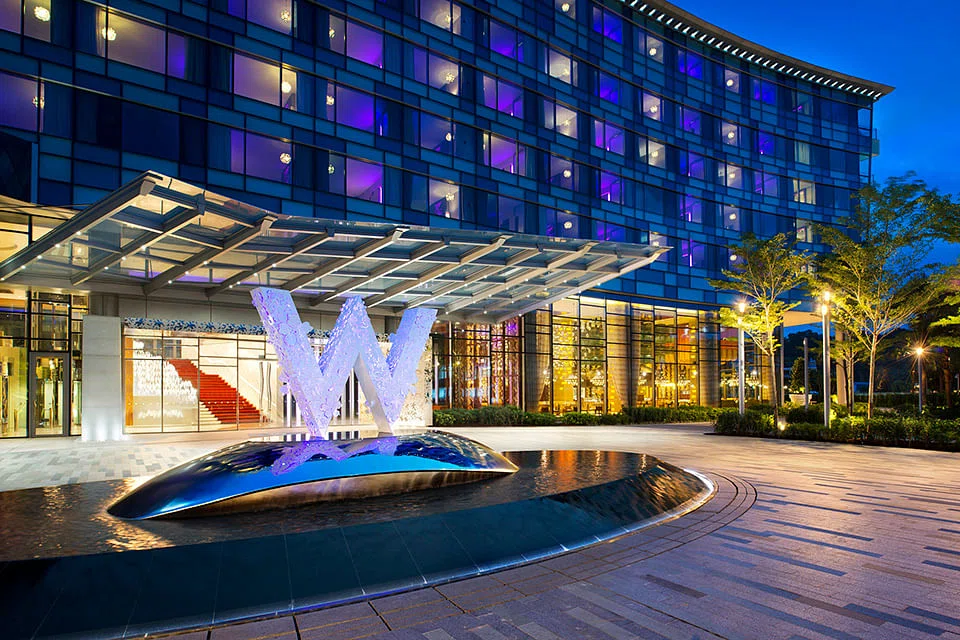
Meanwhile, CDLHT says it expects to see a "positive response" for rooms at its Orchard Hotel as well as W Singapore - Sentosa Cove. The latter is a new acquisition and will only become part of its portfolio this month.
Even Ascott Residence Trust, whose portfolio consists of serviced residences rather than hotels, is getting into the staycation game.
Ervin Yeo, Ascott's managing director for Southeast Asia, said the firm has applied to accept staycation bookings and is ready to roll out special rates and complimentary parking.
Mr Yeo said Ascott has received several enquiries on staycations since the start of Phase 2 and is expecting an uptick in bookings.
It has also partnered local businesses to offer exclusive discounts and activities for guests.
Modest expectations
Even the best efforts of the hoteliers, however, will not be enough to make up for the dearth of tourists. OCBC Investment Research head Carmen Lee said any real recovery for the sector can only occur after travel curbs are lifted. And there is little clarity when that might happen.
Notwithstanding the opening up of green channels and "travel bubbles", the outlook remains cloudy with the limited visibility to the lifting of travel curbs, Ms Lee said.
CGS-CIMB analyst Eing Kar Mei also has doubts about Singaporeans' interest in local staycations. The brokerage's survey of 502 respondents found that 71 per cent would rather wait for the green light to go overseas than do local staycations.
On the plus side, the hospitality Reits are still reflecting this cautious sentiment. Most are down on a year-to-date basis, with declines ranging from 21 per cent (Ascott Residence Trust) to 75 per cent (Eagle Hospitality Trust).
"Current prices also reflect the near-to-medium-term bleak outlook for the sector and the lack of share price and revenue drivers," said Ms Lee of OCBC.
Analysts mostly see CDLHT and FEHT as the main beneficiaries of the new staycation rule. CDLHT owns six local hotels while FEHT owns nine.
RHB Research analyst Vijay Natarajan said: "Between the two, FEHT could benefit more given its larger exposure to the leisure segment."
Mr Natarajan said that while staycations anecdotally make up less than 10 per cent of hotel stays in Singapore, any incremental occupancy uplift for hoteliers is helpful in these challenging times.
"We expect hoteliers to get creative and provide attractive family stay and other targeted packages to fill the void of tourists in the near-term."
Multiple revenue sources
Hoteliers could also resume other types of business in time. FEHT's Mr Lee told BT that meetings, incentives, conferences and exhibitions "typically bring in a higher yield for us compared to staycations".
"With training and professional development activities now permitted to be held in this Phase 2 period subject to the safety measures put in place, we hope that restrictions around small conferences and corporate activities will gradually begin to ease," he said.
Meanwhile, some hotels can continue to count on revenue from government-mandated stays as well as food and beverage (F&B) operations.
FHT said that within its portfolio, the InterContinental Singapore still serves as a dedicated facility for returning residents on stay-home notices. And the hotel's F&B outlets, Man Fu Yuan and the Lobby Lounge, have resumed dine-in service with safe distancing measures implemented.
READ MORE: Don't hold breath for fire sales by owners of Singapore hotels
TRENDING NOW

Looking beyond looming CEO succession, should UOB potentially pursue a transformative merger?

Once staunchly pro-China, Malaysian Chinese businesses are now distancing themselves from Beijing

Family offices ‘kept captive’ by relationship managers turn to independent advisers, direct deals
MAS holds monetary policy settings, pausing after two straight tightenings

