

How to become a savvier retail investor
There are various ways in which investors can seek to better educate themselves

Michelle Quah
Having spent much of my journalistic focus on investor education, I could not have been more pleased than to hear that retail investors in Singapore are becoming more financially savvy and making their voices heard (BT, Aug 13).
The challenge in growing awareness and aptitude of Singapore's retail investor base has always been its fragmented nature - a handful of very savvy investors sit alongside a larger mass of those who prefer to rely on hearsay rather than research when investing.
But a more enlightened investor base all round - made up of individuals who attempt to educate themselves on investing issues and strategies, who work hard to look into the background, financial data, industry landscape and geopolitical environment of the entities they invest in, and who actively engage their investment targets - would do much to improve the overall workings of the market, as well as the companies in it.
Needless to say, a better-informed investor has a deeper understanding of the entity he is investing in, how that entity fits into his investment strategy, and how that strategy fits into his overall approach to income or wealth.
He is also better able to spot warning signs or red flags that arise from either his investment target or the environment it resides in, and would know how to alter his investment plans as circumstances change.
There are various ways in which investors can seek to better educate themselves on such issues, and various resources that they can tap. But it's also important for the market to realise that achieving a more sophisticated investor base is a collective effort that requires the input of other stakeholders.
In our Monday report, we started off by saying that investor relations (IR) professionals typically deal more with buy- and sell-side analysts and big institutional investors. Their interaction with retail investors is mostly limited to around the earnings reporting season through queries from some retail investors.
To be sure, there are signs the situation may be changing, with some IR professionals noting a rise in small shareholders writing in or calling, all year round to ask about everything from specific charts in financial reports to topical issues such as the impact of the US-China trade tension on company operations. Their questions at annual general meetings (AGMs) have also become more intelligent and probing.
For those who missed the article, the IR professionals shared some ways in which investors can better educate themselves:
I would add a few more actions to the above list.
Unlike institutional investors who tend to have more frequent access to the management teams of their investment targets, retail investors are typically able to engage the board and management only at AGMs and other similar company meetings. This means they should make the best use of these opportunities to learn more about their companies and to have their questions answered.
I would say that turning up at AGMs and other company meetings, and engaging the board and management with well-informed questions (as opposed to just showing up for the food), is a must for any investor serious about his investment.
Investors can also meet other investors beforehand to discuss the questions they intend to raise and the concerns they might have, and collectively bring these to the companies' attention.
This would be a useful strategy for investors who are afraid to speak up and would also help to prevent the same question being asked repeatedly at the same meeting, which would use up the time for other questions or areas of discussion.
It's equally important that investors listen to each other during such meetings instead of being focused solely on their own concerns.
For new investors or those who aren't sure of what to ask, this could bring them up to speed on the main or pressing concerns affecting their investment target. For others, it might draw their attention to an area or matter they previously were unaware of.
Investors, however, need to listen with an informed ear, having done their own research into their investment targets and being cognisant of their own personal investment strategies.
Recognise that not all shareholders are necessarily on the same page. A short-term trader may push an agenda that is detrimental to a long-term shareholder.
Building a savvier retail investor base also requires effort from other stakeholders in the eco-system.
Companies have a large part to play in this.
They should put out timely and comprehensive announcements on their websites and on the Singapore Exchange's website on material developments; they should have a well-displayed IR contact number or address, where calls/emails/letters are can be received and properly dealt with; and they should engage shareholders at AGMs in a respectful and open manner, encouraging questions and seeking to inform and educate. Directors and key management should attend such meetings and make themselves available to shareholders' questions.
Regulators also have a part to play, by being more transparent.
The Monetary Authority of Singapore recently said that while it does not reveal information about ongoing investigations until they are concluded, it also recognises the need to put out more information on its investigation outcomes and of its enforcement approach - for example, through online and press updates - and enhanced disclosure of enforcement statistics.
These actions would help to build a good rapport, through better understanding, among all stakeholders, and benefiting each in turn.
TRENDING NOW

He built the Vingroup empire. Now South-east Asia’s richest man is handing some key roles to his sons
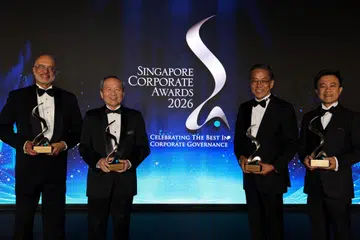
32 companies, 6 individuals bag accolades at Singapore Corporate Awards 2026

Can a first-time homebuyer couple earning S$18,000 a month afford a new EC unit?

Floods compound Philippine growth woes from public-works scandal

