How to make Singapore equities great again? Step up investor education, says Chee Hong Tat
Guardrails will be put in place where necessary to protect against downside risk, the Monetary Authority of Singapore deputy chairman adds

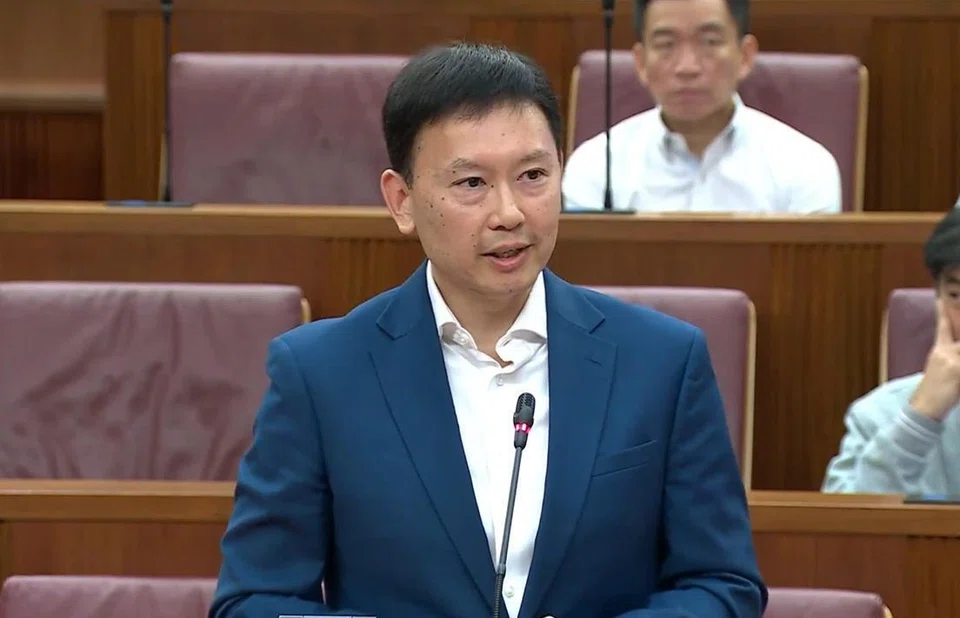
[SINGAPORE] Singapore will devote more resources to public and investor education as part of efforts to revitalise the equities market, said Monetary Authority of Singapore deputy chairman and Minister for National Development Chee Hong Tat in Parliament on Tuesday (Feb 3).
This will include working with partners such as SGX Academy and the Securities Investors Association (Singapore) to help investors understand the trade-offs between risk and return amid a more volatile market.
“As we push boundaries and take bold steps to try new ideas, we will put in place guardrails where necessary to protect against downside risk,” added Chee.
He noted that this reflects the need for policy innovation to involve calculated risk-taking, adding that MAS had adopted an approach that allows for greater risk-taking in its review of the equities market.
MAS’ Equities Market Review Group announced the completion of its review last November, following the introduction of proposals and measures throughout 2025. It was set up in 2024 to revive interest and increase liquidity in Singapore’s capital markets.
Chee said that as Singapore shifts towards a disclosure-based regulatory regime that is focused and facilitative, it will continue to seek high-quality listings and ensure investors have adequate and timely information to support decision-making.
He added that key stakeholders across the ecosystem must play their part, with initial public offering (IPO) professionals and research analysts expected to uphold high standards of due diligence and analysis.
MAS will also take steps to strengthen investor confidence, he noted. This entails encouraging transparency and shareholder engagements through initiatives under the Value Unlock programme, while enhancing investor protection mechanisms, especially for retail investors, such as strengthening their options for recourse against misconduct.
Calls for more disclosure
Chee was responding to feedback from the Workers’ Party on strengthening Singapore’s equities market.
SEE ALSO


Workers’ Party Member of Parliament Louis Chua had moved an adjournment motion on making Singapore equities “great again”.
Chua, who is also an equity analyst at a financial institution in Singapore, said that the “current recommendations by the review group may be necessary but not sufficient to truly drive permanent change”.
He proposed instituting “mandatory value-up disclosure requirements” immediately, starting with formal board-level assessments of capital costs, profitability and market valuation for all listed companies.
He also noted that while the Equity Market Development Programme (EQDP) channels capital through fund managers, companies invested in by these funds face limited pressure to demonstrate how they will strengthen fundamentals.
In addition, Chua proposed that companies disclose quantified return-on-equity and return-on-invested-capital targets over medium to long-term horizons, together with specific plans and annual progress reporting.
While acknowledging that value creation is the responsibility of boards and management rather than regulators, he said regulators have to “maintain standards that protect investor confidence, ensure fair and timely disclosure and enforce meaningfully against wrongdoers”.
In response, Chee said he acknowledged Chua’s point that some requirements may need to be mandatory, but cautioned that not all value-enhancing measures should be prescribed.
He noted that companies have strong commercial incentives to enhance their market value in order to maintain trust and confidence in Singapore’s markets.
Chee added that MAS and the relevant authorities will continue to work closely to ensure robust investigations, market surveillance and timely enforcement against breaches of disclosure requirements and market misconduct.
Chee also responded to Workers’ Party Member of Parliament Jamus Lim’s call for broader macro-financial reforms, noting that Singapore’s financial markets still fall short in raising funds for doing business.
Lim proposed enhancing stock market liquidity beyond public-sector incentives by drawing in family offices, and exploring further incentives to encourage greater participation by retail investors.
Chee replied that it is important to examine how markets can better facilitate companies, adding that strong shareholder returns are essential to achieving this outcome.
He pointed out that the two objectives are not mutually exclusive and go hand in hand.
“With the right incentives and a clear focus on quality and sustainability, I am confident that Singapore’s equities market will grow in depth, resilience and attractiveness in the years ahead,” said Chee.
Decoding Asia newsletter: your guide to navigating Asia in a new global order. Sign up here to get Decoding Asia newsletter. Delivered to your inbox. Free.
Copyright SPH Media. All rights reserved.