How a seasoned hotelier built an agentic AI tool for hotel management
Drawing on more than two decades in hospitality, Saurabh Prakash developed PHAL OS to bring together fragmented operational data and recommend management actions
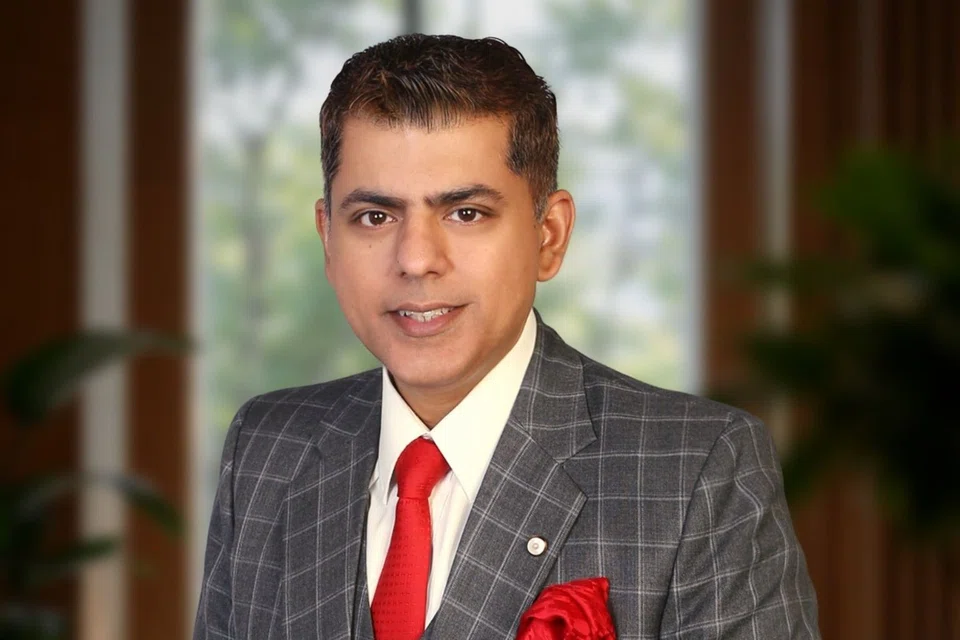
WHEN profits started sliding at a hotel restaurant managed by Saurabh Prakash, the immediate response was to reduce manpower. However, the profits fell further.
He was puzzled and spent days collecting and poring over data from different teams. Finally, he found the answer in customer reviews: Table service was slow, and reducing manpower had only exacerbated the problem.
Prakash, who has been in hotel management for more than two decades, says: “When teams only look at half the information, that is where the problem starts.”
Years of wrestling with fragmented information convinced him there had to be a better way.
Earlier this year, he left corporate life and set up PHAL, short for Prakash Hospitality Advisory Pte Ltd. His firm developed PHAL OS, which he describes as the world’s first “total hotel agentic AI” solution. Users can connect hotel data, identify possible causes of problems and receive suggested follow-up actions through the dashboard.
Within six months of launch, Prakash says that three of the world’s top 10 hotel groups have selected PHAL to develop custom solutions for their operations.
The decades of experience that shaped PHAL
Prakash began as a management trainee in Marriott’s development programme for fresh graduates, then spent the next 15 years in revenue management.
“My life was about looking at data points and what they meant for the business,” says Prakash.
That data-driven mindset took him from trainee to the C-suite. He held leadership roles at TSA Solutions (now FPG) and Radisson Hotel Group, working in six cities across Asia, before his last corporate role as global interim chief operating officer and chief commercial officer at Millennium Hotels and Resorts.
Over the years, Prakash gained experience in strategy, operations, finance and human resources across hundreds of hotels worldwide. He drew on that wealth of experience to build what he calls “an operator’s brain” for PHAL OS.
“That operator’s brain is my knowledge of the hotel industry from the nuances of how a business hotel works to how a resort hotel works, what happens on weekdays and weekends, and what happens at the front desk at three in the morning,” he says.
“When PHAL OS is looking at data, it is referring to that brain to ask what a hotel operator would do in those cases.”
How PHAL connects the dots
Instead of analysing each hotel department separately, PHAL OS brings together the four Ps – performance, profit, preference and people – that are integral to hotel workflows.
Watch how PHAL can help hotel operators with its agentic AI solution, PHAL OS:
PHAL OS also spans six stages of a hotel’s lifecycle, from deciding whether to take on a property through pre-opening and daily operations to budgeting, capital expenditure and asset management.
To strengthen cybersecurity and keep humans in the loop, PHAL OS runs inside the client’s infrastructure. The numbers are always checked against their sources, and the AI recommends while humans decide.
Building PHAL OS required Prakash to develop a different set of skills. Much of his AI learning was self-directed, through courses, reading documents from AI companies and constant experimentation.
“Being a hotelier, there’s a concept called on-the-job training where we would roll up our sleeves, clean the bathroom or man the front desk. I use the same approach with AI to learn, experiment and do it myself,” he says.
That hands-on approach led him to develop a customised system capable of processing large volumes of hotel operations data and generating reliable recommendations. A patent application for PHAL OS is pending with the Intellectual Property Office of Singapore, and its design is registered.
Prakash also applies the scalable mindset to running PHAL, a lean company supported by a fleet of AI agents.
“I have hundreds of AI agents that are helping me. I have a marketing agent, a finance agent and a coding agent,” he says. He also has a team of engineers that he calls upon when he needs to scale PHAL OS across many hotels.
Prakash says PHAL OS is not meant to replace hotel workers. By taking over time-consuming tasks such as spreadsheets, reconciliations and reports, it aims to free staff to spend more time with guests and make each stay memorable.
“If it is used correctly, AI will make hotels more human because now you have the ability for better experiences,” he says.
Visit phal.sg to find out more about PHAL OS.

Share with us your feedback on BT's products and services