

How will Trans-Cab make its comeback?
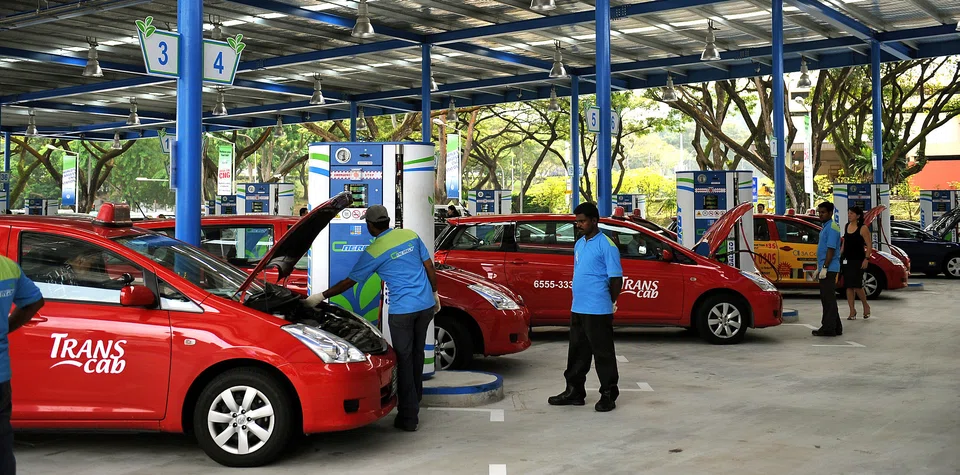
IT WAS a fiasco that left no one smelling like a rose. Just a day before the keenly-anticipated initial public offering (IPO) of taxi operator Trans-Cab closed on Nov 18, the company pulled the plug on its plans to raise S$100 million as word surfaced about a yet-to-be invoiced additional insurance premium amounting to an estimated S$1.8 million.
Now, investors are left wondering if there is more than meets the eye. It is unclear whether the insurance adjustment refers to the same insurance issue mentioned in the letter from purported whistleblower "S. S. Phoa" to the Singapore Exchange (SGX) - the one that claimed that Trans-Cab owed some S$50 million.
It is also unclear whether the preliminary estimate of S$1.8 million could balloon to a larger, more significant amount.
The problem is understandable from the company's standpoint. After all, the sum had yet to be invoiced. It is difficult to predict whether Trans-Cab drivers will crash into Toyota Camrys one year and a bunch of Lamborghinis the next - as a fund manager put it colourfully to The Business Times.
But the issue goes beyond the S$1.8 million. The uncertainty over future costs is certainly significant enough for an IPO to be aborted in this manner. Still, it is a remarkably rare occurrence. Most IPOs are held back in the earlier stages of the process because of market conditions; few are cancelled after the pricing has been confirmed and the public offer opened.
Trans-Cab has some disclosure work to do should it seek a return to the capital markets. After all, it has already warned in its prospectus under its risk factors that "our cost of insurance may increase significantly", depending on the severity of the road accidents its drivers get into. Surely, investors could have digested a range of uncertainty around the additional cost and the IPO still proceeded - unless larger unforeseen sums are involved.
The investment bankers behind the deal, DBS - the sole issue manager, bookrunner and underwriter - would be none too pleased. It is the job of experienced professionals to ensure that material issues are not disclosed at the 11th hour. An IPO cancellation hurts the confidence of investors that they would have tried so hard to persuade. Trans-Cab had said that it was previously unaware of the additional premium.
A number of notable cornerstone investors are involved in this IPO: Insurer Prudential's asset management arm Eastspring Investments, the Hong Kong arm of American fund powerhouse Fidelity, OCBC's Lion Global Investors and an investment company that is part of J.P. Morgan Asset Management. They and their stakeholders must be pondering: "Did we lose out on a chance to make money on the yearned-for first-day IPO pop - or did we just avoid a bomb?"
For some retail investors, the IPO pullback could be a blessing in disguise.
In this particular IPO, cornerstone investors were not to have been subjected to a lock-up period. In a confidence slump, heavy selling would have hurt those who had bought the stock for its defensive qualities.
How will Trans-Cab make a comeback? Two precedents from recent memory are not encouraging: In 2010, China shipbuilder New Century Shipbuilding dramatically withdrew its S$666.4 million IPO the night before its offer closed; the SGX had received a complaint on material inaccuracies about its prospectus. Despite subsequent plans to list in Hong Kong, it does not appear to have done so yet.
In 2006, marine fuel supplier Chemoil Energy called off its first IPO here due to falling oil prices. It relaunched month later, but it was a much smaller offer and at almost half the market price it had initially set. But go back even further, and investors might remember that CapitaMall Trust (CMT), the first real estate investment trust (Reit) in Singapore, listed in 2002. In its first incarnation as SingMall Property Trust the year before that, CMT was also a canned IPO. But the Reit cut the size of its offer, improved asset performance and lowered the price, giving investors sweeter yields. Today, nobody is arguing with its success.
There is hope yet for Trans-Cab. Despite the embarrassment from the insurance-premium incident, the company can still come back. Demand to own a growing business like this should stay strong. Everybody, after all, takes taxis at some point; in fact, people complain there aren't enough of them on the roads.
But retail investors should treat this as a wake-up call and a cautionary tale when investing in smaller, family-owned companies that are going public. It is never easy for a private company to face the glare of the public eye. Owners are quizzed on sensitive business plans and criticised by analysts who have spent fewer years alive than the owners themselves have been doing business. They have to prepare themselves to meet more stringent disclosure standards, and square up to the strains of quarterly reporting.
Investors still keen on Trans-Cab should use the reprieve to pore through its financials. They will have a better base of knowledge when IPO excitement hits them again and they get a new set of figures.
Data is readily available. Investors can contrast Trans-Cab's current operating margins with the historical taxi margins of those of its listed competitors, ComfortDelGro and SMRT, and ask whether margins - if they appear higher - are sustainable.
Whether Trans-Cab will relaunch its IPO soon, and at what price, is unclear. The company appears keen to list, and knows people want a piece of it. It will price its shares accordingly once investor confidence is repaired.
As retail investors get some breathing space, they should think more carefully about the price they are willing to pay.
TRENDING NOW

KKR founders among investors buying 42% of Peter Lim’s Valencia; club valued at US$1.4 billion

Singapore’s central gas buyer affirms Indonesia’s role as ‘important partner’ amid export review warning

Why the biggest business decision about AI isn’t which model to choose

NEA issues notices to 10 Singapore-based companies, including Wilmar and APP, over haze

