

If SIA needs more cash, it should tap travellers instead of investors

Ben Paul
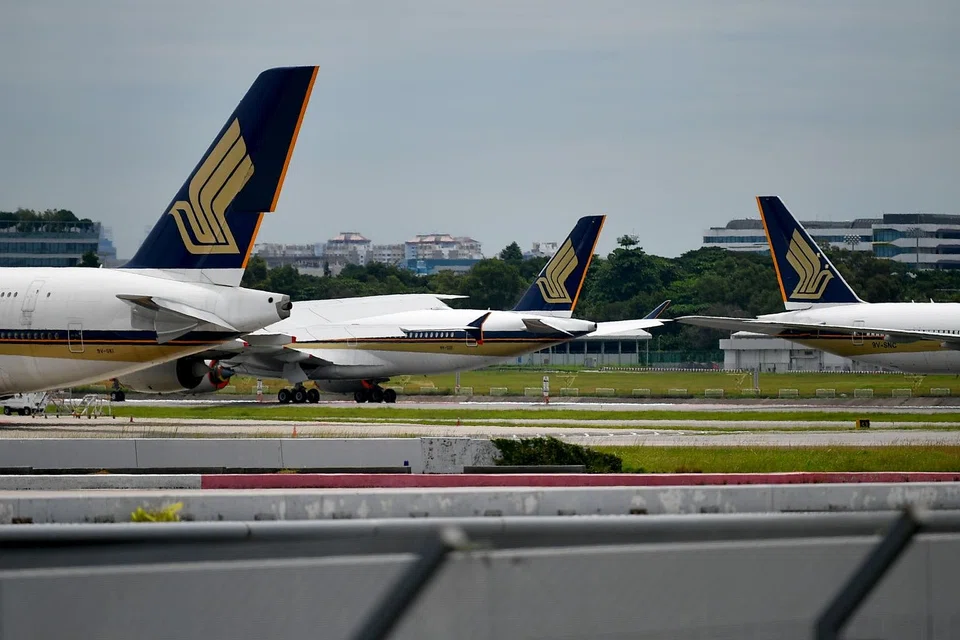
FORGET the three-hour lunches aboard an A380 aeroplane, and the 30-minute flight simulator experience.
If Singapore Airlines (SIA) wants to generate revenue from its customers, it should offer to sell vouchers that its customers can exchange for deeply discounted tickets once international air routes reopen.
"Should this be considered, it would be wildly beneficial to SIA shareholders and bondholders as it would eliminate another round of highly dilutive funding," said Nicolas Van Broekhoven of CrossASEAN Research, who publishes on Smartkarma, in a research note in August.
"It would also be a real show of love to (SIA's) customers and be highly appreciated," he added.
Specifically, Mr Van Broekhoven suggested that SIA offer its customers vouchers that can be exchanged for tickets priced at 50-75 cents on the dollar until 2023 without restrictions.
SIA could, for example, sell a voucher for S$1,000 that entitles the customer to S$1,500 worth of flights. Or, the airline could sell a voucher for S$5,000 that entitles the customer to S$10,000 worth of flights. "It has to be really attractive so it has the maximum buy-in from (SIA's) customers," he said in the research note.
How much could SIA raise from such discounted forward tickets?
A major guidepost is the fact that Singapore has a population of 5.7 million people, and that international visitor arrivals in 2019 topped 19.1 million people.
Mr Van Broekhoven also noted SIA's frequent flyer programme "Krisflyer" had 4.6 million members in 2019. "A high proportion of these 4.6 million members globally would seriously look at any attractive offer," he said.
Assuming that 10 per cent of Singapore's population and potential international visitors were inclined to stump up S$1,000 each for vouchers that offer discounted flights, SIA could take in nearly S$2.5 billion.
A much more aggressive assumption of 30 per cent of Singapore's population and potential international visitors purchasing S$5,000 worth of vouchers would see SIA taking in more than S$37 billion, Mr Van Broekhoven indicated in his research note.
To put these numbers in proportion, SIA chalked up revenues of nearly S$16 billion for FY2020 ended March 31, and just over S$16.3 billion for FY2019.
Cash burn may rise
When contacted last week, Mr Van Broekhoven said recent developments have only reinforced his view that SIA should proactively engage its customers with offers of discounted forward fares.
Many governments around the world are learning how to bring Covid-19 infection rates under control, and efforts are underway to establish safety protocols to enable a re-opening of international travel.
Last week, Transport Minister Ong Ye Kung said in parliament that reviving Singapore's air hub is a national priority and that the government is looking to establish travel bubbles with other countries that have managed to arrest the spread of the virus.
Yet, in spite of any likely pick-up in the volume of international flights over the next few months, the whole air travel sector is likely to remain a shadow of its former self. Mr Ong said in parliament last week that Changi Airport is currently serving only 1.5 per cent of its usual passenger volume and 6 per cent of the usual number of passenger flights.
If anything, efforts to establish travel bubbles and green lanes could initially result in SIA having to put more planes in the air that are only partially filled. "This means the cash burn will go up," Mr Van Broekhoven warned.
For Q1 FY2021 ended June 30, SIA saw a 79.3 per cent year-on-year decline in revenue to S$851 million. SIA reported an operating loss of just over S$1 billion for the quarter, and a net loss of more than S$1.1 billion. For Q1 FY2019, SIA reported an operating profit of S$200 million, and a net profit of S$111 million.
More optimal approach
SIA could, of course, tap its shareholders again.
In June, with the support of Temasek Holdings, SIA raised S$8.8 billion through rights issues of new shares and 10-year mandatory convertible bonds (MCBs). Temasek has agreed to back a further rights issue of S$6.2 billion worth of MCBs.
But there is clearly limited appetite in the market for more of these MCBs, which come with zero coupon and are redeemable semi-annually at the option of SIA - at prices designed to deliver a yield to call of 4-6 per cent.
The initial rights issue of MCBs was only 59.6 per cent subscribed. Even the chairman and CEO of SIA shunned their entitlements. Temasek mopped up the 40.4 per cent unsubscribed portion and ended up holding 95.9 per cent of all the MCBs issued.
The MCBs are currently trading 10 per cent below par.
At this point, tapping its customers rather than its shareholders may be the more optimal approach for SIA to raise any further cash.
Indeed, over the years, SIA has arguably been more successful at impressing air travellers with its cabin products and service than investors with its stock returns.
While SIA has managed to stay in the black and pay dividends for every full financial year prior to FY2020, its shares weren't making anyone rich. From end-2009 to end-2019, before Covid-19 became a concern, shares in SIA delivered a total return of minus 13.3 per cent, according to Bloomberg data.
Furthermore, while efforts to create travel bubbles probably won't lead to a major recovery in the air travel sector immediately, many companies may begin anticipating more travel by their staff and see the sense of locking in some discounted fares with SIA now.
The government's unwavering commitment to keeping SIA afloat, while doing nothing to excite investors, could assure customers of SIA that the airline will be able to honour the sale of any discounted forward tickets.
Indeed, proving to the market that it is capable of generating revenue today from future ticket sales may well lift the market value of SIA's shares and MCBs, making some further capital raising possible too.
TRENDING NOW

Once staunchly pro-China, Malaysian Chinese businesses are now distancing themselves from Beijing

Grab CEO’s wife Chloe Tong on life with Anthony Tan and finding her purpose

Could stablecoins be the future of money?
ST Engineering opens tech-focused aircraft maintenance facility in Changi; to create over 500 jobs

