

IHH Healthcare set for next chapter under new CEO
Anita Gabriel
Singapore
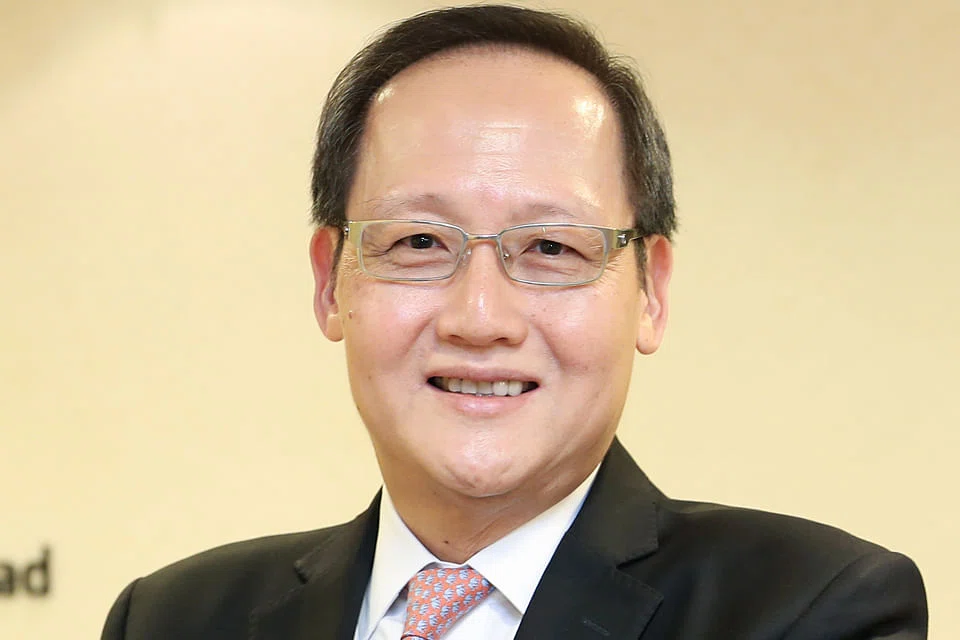
FROM Turkey to India, Malaysia and Singapore, Asia's largest private hospital operator IHH Healthcare expects its hospitals to capitalise on booming medical tourism even as it ramps up operations in these core markets plus Greater China, said outgoing chief executive Tan See Leng.
The healthcare stalwart that is dual listed in Malaysia and Singapore with a market value of some S$17 billion also has its heart set on two new markets - Indonesia and the Philippines, where it has "found one or two good and reliable partners" - said Dr Tan in an interview with The Business Times.
All that will be "inherited" by Dr Kelvin Loh, Dr Tan's successor who this month assumed the posts of CEO-designate and executive director before he takes the reins in January 2020.
"If you look at IHH's journey, there is no better time for me to retire, especially at this inflection point... (it's) beginning to go into another platform - to reinforce, consolidate and integrate what has been built," said Dr Tan.
The group's Malaysia and Singapore operations remain the "twin engines" for the group that made RM11.5 billion (S$3.8 billion) in total revenue in 2018.
Over in India, following the much-publicised takeover of troubled Fortis Healthcare last year - one of Dr Tan's biggest M&A triumphs as the asset was coveted by four others - IHH has consolidated the group's footprint in the subcontinent.
Meanwhile, startup losses at Gleneagles Hong Kong which opened two years ago have been narrowing, with analysts hopeful that profitability could ramp up by next year.
IHH boasts sizeable operations - 83 hospitals in 12 countries including some of the world's medical tourism sweet spots - thanks to its penchant for buyouts mingled with greenfield investments to augment growth. Much of this was under the helm of Dr Tan, 54, who will step down in December as CEO and managing director, posts he held for five years after holding key positions since 2004 at the group.
The announcement of his departure surprised the market and came several months after Japan's Mitsui & Co scooped a bigger slice of IHH from the healthcare firm's other key shareholder - Malaysia's sovereign wealth fund Khazanah Nasional - to be majority owner. "There has not been much change since (Mitsui emerged as IHH's single largest shareholder). It is still a management-led, board-guided company. We work very well together."
Dr Tan said he played a role in Mitsui's original RM3.3 billion investment in IHH back in 2011 by introducing the firm to Khazanah, which then wholly owned IHH and was open to a strategic partner. In 2012, IHH made its debut on the stock exchanges of Malaysia and Singapore with a 10 per cent premium close over its offer price.
Several key trends such as better purchasing power, longer life expectancy, greater cross mobility plus weaker currencies against the greenback in certain core markets and quality options are behind IHH's big hopes that more foreigners will pair travel with treatments at its hospitals.
Singapore, one of four home markets, which Dr Tan deemed a "strong market" and draws medical travellers for its quality healthcare - particularly those involving complicated procedures - saw revenue from foreign patients contribute 25 per cent to total revenue from its operations.
For Malaysia, where operations are being ramped up, that number is 5 per cent and growing, as patients from Indonesia, Singapore, the Middle East, Bangladesh and Indo-China seek treatment there.
Turkey, where IHH's 90 per-cent-owned Acibadem operates (Acibadem's 22 hospitals are also in Bulgaria, Macedonia and the Netherlands) foreign patients contributed 16 per cent to total revenue. There, while the falling Turkish lira has pushed up revenue contribution from 9 per cent previously, it has also led the group to suffer forex losses.
"We think it (medical tourism) will speed up. Today, it's just Turkish citizens working overseas, but we are also seeing people from the Balkans such as Bulgaria and Romania and also from Iraq, Libya and North Africa drawn to Acibadem for treatments such as cancer, cardiovascular, stroke as well as organ transplants," Dr Tan said.
Indiais a key part of IHH's goal, too, with Fortis Healthcare serving as a "huge springboard". "It (Fortis) is not just an Indian story. It will complement the global franchise across South, Central Asia and Indo-China as the single largest platform for medical tourists seeking tertiary and quaternary care.
Things are unfolding in China, too. IHH's 350-bed Gleneagles Chengdu Hospital has been completed and is expected to soft launch in October or November this year. Gleneagles Shanghai Hospital in Hongqiao, with 450 beds, is scheduled to open in the second half of next year.
"That's significant. All this was planned earlier on... in 2013 and 2011... and we have been negotiating for the entire period," said Dr Tan.
"That's why we are at an inflection point. What I'm handing over, the major implementation risk is already all done and cleared.
"I don't have any unfulfilled aspirations with IHH. I personally couldn't imagine this was possible... it has exceeded my wildest dreams."
What next? Walking. Lots of it, on an ancient trail linking Tokyo with Kyoto. And then to Spain and Portugal, with his wife.
And this: "The next phase of my life, I am looking forward to helping society and giving back by volunteering and building some social equity".
TRENDING NOW
One-third of Singapore-listed firms at risk in severe AI downturn: MAS

‘Not done’: Keppel CEO Loh Chin Hua transformed the group, but says there’s ‘still a lot to do’

He built the Vingroup empire. Now South-east Asia’s richest man is handing some key roles to his sons

‘We don’t want to stay as we are’: CEO Patrick Ng builds a more resilient Huationg

