

India Supreme Court approves payment plan for telcos including Bharti Airtel
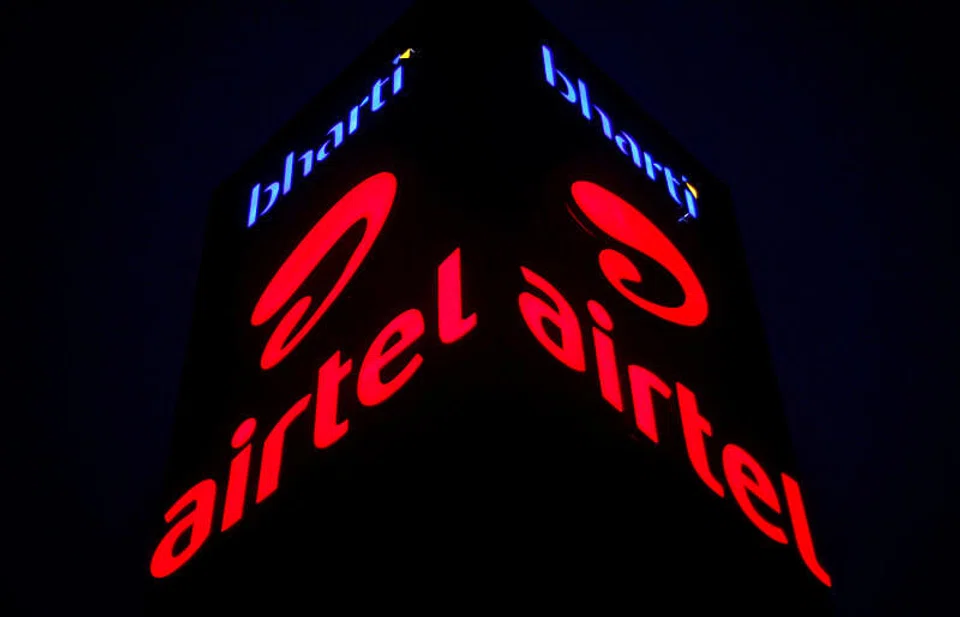
[NEW DELHI] India's top court approved a 10-year payment plan for telecom companies to clear combined back-fees worth 1.4 trillion rupees (S$25.83 billion), a ruling that comes as only a partial relief for cash strapped Vodafone Idea.
The Supreme Court on Tuesday rejected the 20-year payment timeline as proposed by Prime Minister Narendra Modi's administration and supported by telecom companies, but allowed the federal government to collect the amount in installments. The three-judge panel headed by Justice Arun Mishra said 10 per cent of the dues must be paid in the first tranche.
While the ruling is not the most desired option, it is still a relief for operators such as Singtel associate Bharti Airtel and Vodafone Idea. Vodafone is particularly struggling with mounting losses and more than US$14 billion of debt. Billionaire Kumar Mangalam Birla, the chairman of the local joint venture with UK's Vodafone Group, warned in December that the company was headed toward insolvency in the absence of any aid.
Shares of Bharti Airtel gained as much as 5.1 per cent after the verdict while Vodafone Idea plunged 15 per cent. Representatives for the companies declined to immediately comment.
"This is positive for Bharti Airtel and Reliance Jio and negative for Vodafone Idea," said Gurmeet Chadha, strategist at Complete Circle Consultants in Delhi. "Telecom is a gruesome business and when 5G comes you will have to pay more for spectrum. Eventually, unless Vodafone Idea raises significant capital or gets a strategic partner, we are headed for a duopoly." The case that meandered through the Indian legal system for almost two decades saw the bill Vodafone Idea faces ballooning to US$7.8 billion after government officials submitted new calculations to the court in March. Vodafone Idea has paid a little over US$1 billion against its dues so far. Airtel, which now faces US$5.9 billion in total payments, has cleared US$2.4 billion.
The case centres around a dispute between the government and mobile carriers on how licence and spectrum fees are calculated. In October, the court sided with the administration and ordered that the full amount be paid within three months. When the companies dithered and filed pleas, it threatened to start contempt proceedings for non-compliance.
PRICE WAR
Vodafone Idea and Bharti Airtel are the two non-state survivors of a brutal price war sparked by the debut of billionaire Mukesh Ambani's Reliance Jio Infocomm in 2016. As the new entrant lured 380 million users in about three years with free calls and cheap data, rivals struggled. Many incumbents exited the market, merged or filed for bankruptcy.
Although Ambani spent almost US$50 billion - most of it in borrowings - to roll out his 4G network, the tycoon's technology pivot with Jio at the centre of his ambitions has been luring investors from Facebook and Google to KKR & Co. The digital assets he's creating under Reliance, called Jio Platforms, has managed to secure US$20 billion from a string of partners in two months, helping his efforts to pare debt of the parent company.
The massive fund raising by Jio has now turned the spotlight on the two telecommunications rivals and their plans to raise capital. Reuters reported in June that Amazon.com was in preliminary talks to buy a US$2 billion stake in Bharti Airtel. Airtel denied such talks.
The government said in March that out of the total demand worth 1.69 trillion rupees, 1.4 trillion rupees remains to be paid by all telecom companies, including those that have shut down or are under bankruptcy resolution such as Aircel and Reliance Communications.
BLOOMBERG
Decoding Asia newsletter: your guide to navigating Asia in a new global order. Sign up here to get Decoding Asia newsletter. Delivered to your inbox. Free.
Share with us your feedback on BT's products and services
TRENDING NOW

What role can Japan play in Asean’s future?

IOI Properties and CapitaLand Investment closer to acquiring One Raffles Place in joint bid
AI bubble may burst soon amid financing concentration, rising rates: Ray Dalio

OCBC sheds S$8 billion in value as shares close nearly 6% down; analysts cautious on banks

