India's potential still on investors' radar screen
Singapore
AS foreign investors continue to shy away from China's volatile financial markets, they remain confident in the potential of a slower rival - India.
India has demographics on its side, they say. The ongoing commodities slump provides a gift to the government as savings on oil imports can now go into infrastructure, and damagingly high inflation rates ease.
However, demographics can be a double-edged sword, analysts say. India's fractious democracy can also be in the way of growth.
India's population is likely to surpass China's within 10 years, and the workforce is growing faster than the overall population, said a DBS Group Research report on July 27.
"While Japan, China and many Western countries grapple with ageing populations, India's dependency ratio is declining," it said.
"But ... growth needs to be inclusive and employment-generating. Labour needs to be absorbed more rapidly, skills need to be upgraded and fragmented labour markets need to be unified," DBS said.
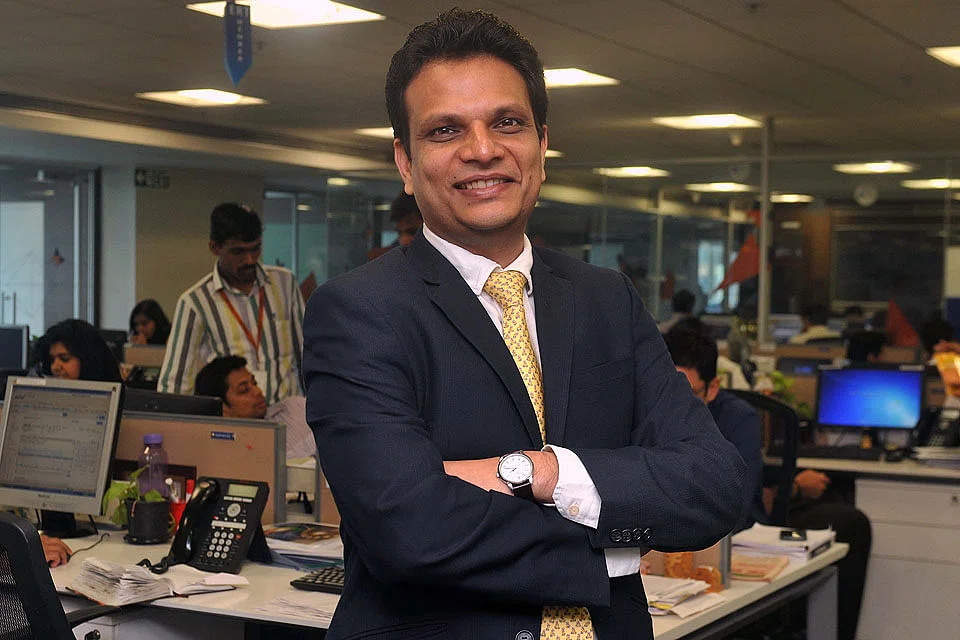
Nitin Jain, CEO of global asset and wealth management at Mumbai-headquartered Edelweiss Financial Services, told The Business Times: "Even if we sleep through, we should grow at 5-6 per cent a year (in real terms). If we can capitalise (on opportunities), we can grow at 8-10 per cent."
Since the government led by Indian Prime Minister Narendra Modi took power, he said he has seen real changes on the ground.
"We were developing only 3km of road every day just two years back. Now we're doing 12-13 km of roads a day and projecting to build 30km a day in six to seven months from now," he said.
India used to produce 450 million tonnes of coal a year, and is now doing 500 million tonnes and aiming to double that by 2019 to meet energy demands, he said.
"These are big structural challenges that Modi is fixing. Sometimes I worry when people say nothing's been happening on the ground. A lot has happened."
However, Mr Jain admits that India's vibrant democracy can sometimes slow the country down, when compared to China.
"Our country has more than 20 countries within itself. You can't go into one state and try and replicate what's happening in another state," he says.
Another stumbling block is the ability of the government to acquire land for development. Mr Modi is currently fending off charges that a revised land acquisition bill, which the government is trying to push through, benefits industry instead of farmers.
Yet another issue is how the cost of capital is still high, with interest rates at 7.25 per cent and 10-year bonds trading at close to 8 per cent.
But a shift in political climate, aided by an influx of younger voters, has occurred, he said.
"The public has understood, the parties have understood, that now you can only win with a developmental agenda," he said.
Mr Jain invests in private debt, negotiating structured deals with business owners to capitalise companies in industries like renewable energy, fashion retail, textiles and cable TV distribution.
On public markets, he said that while earnings ratios are not cheap, high returns on equity (ROE) justify valuations. Indian companies tend to be in high-ROE industries like tech and services, he said.
India was a top performer among global stock markets in 2014, when it was up 30 per cent on the election of Mr Modi. This year, Indian stocks are flat, but they still outperformed most emerging markets.
A July 21 report by Credit Suisse noted India's ROEs appear to be bottoming from a low of 13.7 per cent in March to 14.1 per cent now.
"With India being a domestically driven economy, we have highlighted previously that the big driver of ROE is India's nominal gross domestic product (GDP) growth. With consensus economists looking for nominal GDP growth in India to rise from 11.7 per cent in 2014 to 11.9 per cent in 2015 and to 15.6 per cent in 2016, we believe further rises in ROE are likely," it said.
Yet valuations imply that a recovery is already priced in, with stocks trading at an implied ROE of 19.8 per cent, the bank said.
Edelweiss' Mr Jain believes the country will be fine as long as it does not "slip back to the earlier mindset of being overly socialistic" with large subsidies and government distributions.
"India is a poor country, you have to take care of your people. But if you're significantly, economically left, you can have long term structural consequences," he said.