



Indonesia’s consumer companies to ride on election spending, populist policies

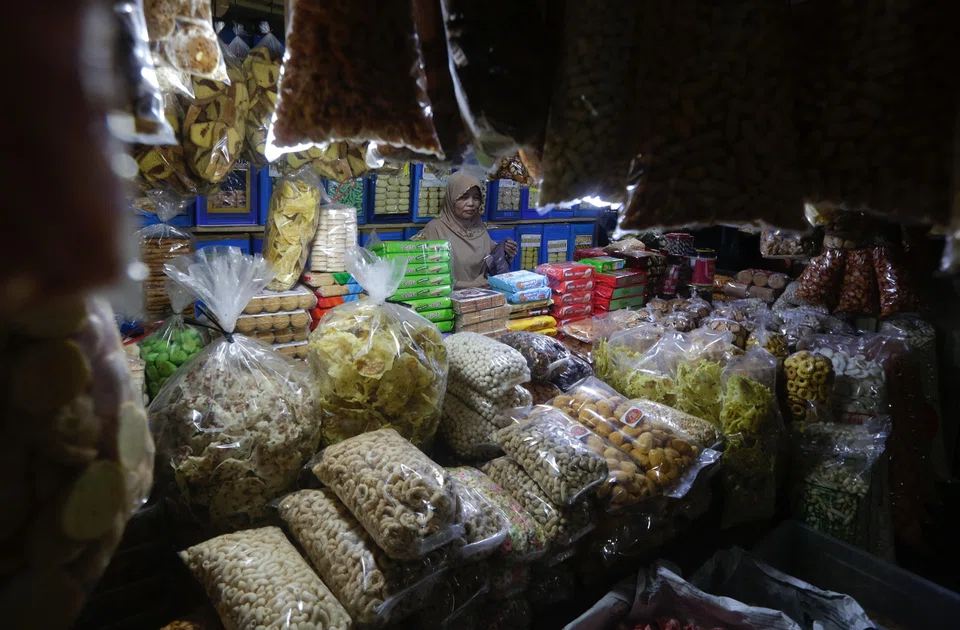
DESPITE rising inflationary pressures, consumer companies in Indonesia are expected to be lifted by election-driven spending and a likely continuation of the government’s populist policies, analysts said.
Within the consumer sector, staples such as food and beverages as well as fast-moving goods will benefit the most from direct cash assistance and other measures introduced by the government to preserve the purchasing power of low to middle-income families.
Fitch Ratings expects handouts and social safety measures, which were rolled out from the fourth quarter of 2023, to maintain stable demand for the grocery, packaged food and poultry sectors.
The research house noted that the scale of the upcoming election is “unprecedented” and could stoke public spending and consumption.
According to Indonesia’s finance ministry, some 30.4 trillion rupiah (S$2.6 billion) has been set aside for election-related spending, with more funds committed for the 2024 fiscal year.
“We expect these trends to counterbalance pressure on purchasing power from rising interest rates and weak commodity prices,” Fitch Ratings said in a recent note.
Despite the amount poured into the election, UOB economist Enrico Tanuwidjaja believes that, relative to historical precedence, the multiplier effects to the overall household consumption demand is “not as large as in previous elections”.
This is largely due to the effects of the Covid-19 pandemic, he noted.
“In Indonesia, the full-blown inflationary repercussions from supply-side tardiness did not really take place during the recovery period,” Tanuwidjaja said. “In other words, domestic household consumption demand has not returned to the pre-pandemic rate of growth.”
The pandemic had also caused several micro, small and medium-sized enterprises to wind up, resulting in job losses for a large proportion of Indonesia’s labour force and leading to dampened household consumption, he added.
Sub-sector beneficiaries
That said, Tanuwidjaja sees certain sub-sectors benefiting from the elections. These include food and beverage, fast-moving consumer goods and clothing.
To a smaller extent, telecommunications and financial services supporting consumption will also see some uplift, he noted.
“Digital payment-related services and consumer-focused fintechs are likely to see some good upside growth as well during the campaign and ahead of a possible two-round election,” he said.
DBS Group Research analyst Cheria Widjaja anticipates that demand for consumer staples will gain strength as sales volumes increase due to election spending.
The research house’s preferences include food processing company Indofood Sukses Makmur, as well as its consumer products business Indofood CBP Sukses Makmur, which makes instant noodles Indomie.
Meanwhile, retailers focusing on higher-end consumers, such as department store operator Mitra Adiperkasa, are likely to maintain earnings resilience amid prolonged inflation and outperform their lower-end peers, she said.
Maybank Sekuritas analyst Willy Goutama reckons that earnings growth in consumer companies “will depend on their ability to expand their business presence and address competition”.
Alongside Indofood CBP, he sees Mayora, the maker of coffee candy Kopiko, as a top pick. Both companies, he said, are mass-consumption plays that will benefit from positive election impact.
In a note, Citi reiterated a positive view of the Indonesian market on the back of faster fiscal spending and an expectation of a “smooth election”. This is given the recent poll popularity of Prabowo Subianto and his running mate Gibran Rakabuming Raka, who is also the son of President Joko Widodo.
Citi analysts said the election cycle would support domestic demand, particularly in the first half of the year. Some beneficiaries include Mayora and convenience store Alfamart owner Sumber Alfaria Trijaya.
Analysis from RHB Research found that Mayora and Sumber Alfaria Trijaya, as well as Singapore-listed confectionery manufacturer Delfi , have shown positive year-over-year growth in the quarters preceding the last two elections.
Alfie Yeo, senior equity analyst of RHB Singapore, said Delfi is likely to be boosted in some way from an increase in demand from middle and lower-income consumers for branded packaged food products. “With its market leadership in chocolate confectionery and products with discretionary and out-of-home nature, Delfi is well-positioned to capitalise on increased consumer spending.”
Persisting populist policy
UOB’s Tanuwidjaja said it is “reasonable” to believe that the usual populist policies will continue post-election, with the handouts possibly being in kind – such as waivers for public-related services – instead of direct cash transfers.
Citi also expects government spending to continue into the second half of FY2024, given the likelihood of the Prabowo-Gibran pairing and Widodo wanting “to leave his legacy”.
Tanuwidjaja said: “The key assumption is that the fiscal position will have to remain adequate.” He also noted that Indonesia has a cap on the fiscal deficit at 3 per cent of its gross domestic product.
“Depending on the consumption elasticity of the fiscal multiplier, some areas of consumption would have more limited room for growth.”
Despite this, some analysts believe higher consumption will be on the cards for the second half of FY2024, with the continuation of policy and other factors spurring consumption recovery.
DBS’ Widjaja said the purchasing power of lower-income consumers may rise with higher minimum wages and additional assistance programmes.
“We also anticipate a stronger consumption recovery in H2 2024 due to potential interest rate cuts, which typically benefit employment,” she noted.
“Meanwhile, middle to upper-income consumers are expected to remain resilient.”
TRENDING NOW

Philippine power giant First Gen rebuffs foreign offers, plans up to US$2.6 billion in expansion

Cliff Tan has 7 million followers and a 4-month waitlist. Why won’t he expand his business?

Could stablecoins be the future of money?

From finance aspirant to Asean CEO: TUV SUD’s Jonas Strahberger on finding people who believe in you

