OUTLOOK 2025

Industrial stocks lead the way in 2024; analysts upbeat on banking, tech sectors this year

The benchmark STI has risen 16.9% in 2024, marking its best year since 2017, though market watchers believe there is more room to grow

Summarise
Ranamita Chakraborty
Published Mon, Jan 13, 2025 · 05:00 AM
    • Across the broader market, Singapore’s 100 most traded stocks delivered strong performance, with average double-digit returns for the year.
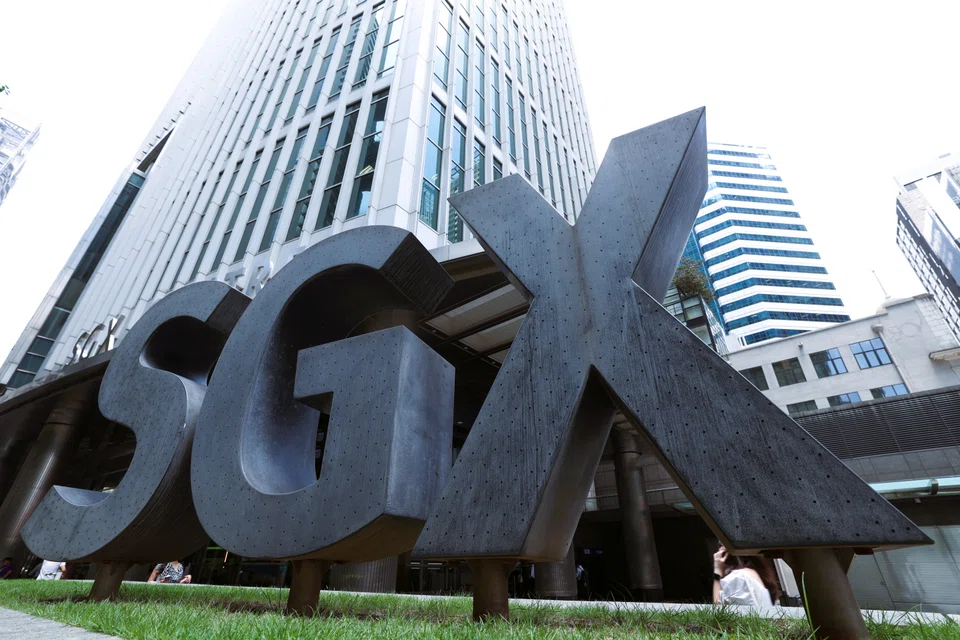
    • Across the broader market, Singapore’s 100 most traded stocks delivered strong performance, with average double-digit returns for the year. PHOTO: BT FILE

    INDUSTRIAL stocks listed on the Singapore Exchange (SGX) had substantial gains in 2024 while performance across other sectors such as banking and real estate was varied. Market watchers attributed this divergence to global macroeconomic conditions and internal factors such as corporate restructuring.

    Oiltek International led the charge among industrial stocks, emerging as the second-best performer with a remarkable 368.2 per cent rise in its share price last year. With dividends reinvested, the counter generated a total return of 402.6 per cent.

    The surge was fuelled by strong demand for its biodiesel and oil refinery solutions, with analysts issuing “buy” calls on the back of its solid order book and the growing demand for sustainable aviation fuel.


    Thilan Wickramasinghe, head of equity research at Maybank Securities, noted that corporate restructuring in sectors such as industrials, telecommunications, and the Internet helped unlock value and enhance competitiveness.

    “This contributed to higher valuations across sectors, but most prominently in industrials, telcos and (the) Internet,” he said.

    Alongside Oiltek, other industrial stocks such as Beng Kuang Marine, Soilbuild Construction Group, GS Holdings, XMH Holdings, Wee Hur Holdings, Hor Kew Corporation, Grand Banks Yachts and Yangzijiang Shipbuilding also achieved strong performance.

    However, the standout performer on the SGX was Pharmesis International, a healthcare stock, which surged by 486.7 per cent, making it bourse’s top performer of the year.

    Energy stocks also had notable gains, with Salt Investments rising 300 per cent to become the third-best performer of the year.

    This growth in this sector was part of a broader trend influenced by the resurgence of the offshore and marine cycle. Wickramasinghe attributed this to “tight conditions created by high demand from elevated oil prices and increasing transition to alternative energy intersecting with low supply from years of under-investment”.

    He further noted that rising tensions in the Middle East are likely to provide additional support for offshore and marine stocks.

    In line with this trend, marine player Beng Kuang Marine, another energy stock, climbed 267.2 per cent.

    Similarly, Ng Xin-Yao, investment director at abrdn, highlighted strong demand in the shipbuilding industry, driven by an under-supplied market due to energy transition and emission control. He also noted that leading shipyards are fully booked till 2028.

    For instance, Samudera Shipping’s share price climbed 24.2 per cent while Yangzijiang Shipbuilding had a remarkable 99.3 per cent rise.

    The latter also led the benchmark Straits Times Index (STI) in 2024, with total returns of 106.9 per cent. Since the beginning of 2017, the shipbuilder’s share price rose more than sevenfold, reaching S$2.99 by the end of 2024. It also led the STI in both 2021 and 2022.

    “Investors should be warned that valuations in technology-related firms have risen significantly. Being more selective and having strong diversification globally and across different sectors will be key in the coming years.”

    Eugene Tan, senior investment manager at St James’s Place

    Meanwhile, analysts also highlighted strong demand for semiconductor stocks, which benefitted from the surge in demand driven by the artificial intelligence (AI) boom. However, performance in this sector was mixed in 2024.

    Grand Venture Technology, a manufacturing service provider, had a 36.7 per cent increase in its share price, while semiconductor and machine manufacturer Frencken Group had a 17 per cent drop and semiconductor testing equipment manufacturer AEM Holdings experienced a sharp decline of 59.1 per cent.

    Eugene Tan, senior investment manager at St James’s Place, pointed to the possibility of the semiconductor sector continuing to do well as US-China relations may deteriorate following Donald Trump’s re-election, resulting in China seeking more regional supply chain integration and imports sourcing.

    He said: “By the same token though, investors should be warned that valuations in technology-related firms have risen significantly. Being more selective and having strong diversification globally and across different sectors will be key in the coming years.”

    Macroeconomic effects

    Singapore-listed real estate investment trusts (S-Reits) faced significant challenges in 2024, with analysts pointing to the impact of rising interest rates on their performance.

    The sector ended the year in the red, as the iEdge S-Reit Index posted a total return of -6.1 per cent, including distributions. Currently, the sector is trading at a price-to-book ratio of 0.84, reflecting a discount of approximately 16 per cent compared to its net asset value.

    “Reits are likely to struggle until there is better clarity on deeper interest rate cuts,” Wickramasinghe said.

    Lorraine Tan, director of equity research at Morningstar, expects US interest rates to eventually ease, though at a more gradual pace than previously anticipated.

    “The higher interest cost could constrain acquisition opportunities and also limits the relative attractiveness of Reits,” she said.

    The macroeconomic conditions, on the other hand, were particularly favourable for banks, driving strong performance in the banking sector. DBS shares climbed 44.4 per cent, while OCBC rose 28.5 per cent and UOB added 27.8 per cent.

    Carmen Lee, head of OCBC Investment Research, said: “Banks benefited from the still high interest rates environment, and also the strong improvement in fee income from wealth and credit card operations.”

    Tan echoed this sentiment, citing stronger-than-expected earnings and attractive dividend payouts from banks. 

    “With market expectations for US interest rates to stay higher for longer, the more shallow pace in interest rate cuts should help buoy banks’ interest margins,” he added.

    James Ooi, market strategist at Tiger Brokers, is also positive on banking stocks. “The net interest margin (NIM) compression for Singapore banks is likely to be more gradual than initially expected, due to smaller-than-anticipated Fed rate cuts. Higher loan growth should also help offset the moderation in NIM,” he said.

    Robust performance

    For the full year of 2024, the STI rose 16.9 per cent, enjoying its best year since 2017. Meanwhile, the FTSE ST All-Share Index, which tracks the performance of the top 98 per cent of SGX-listed companies, ended the year up 14.1 per cent.

    SGX market strategist Geoff Howie noted that the STI delivered total returns of 23.5 per cent, “representing its best performance in over a decade”. Despite reaching new highs in 2024, the index’s price-to-book ratio stood at 1.3 times.

    “This was significantly lower than the 2.5 times levels observed in October 2007, indicating a more conservative valuation despite the index’s robust performance,” added Howie.

    He also pointed out that Bloomberg’s 12-month consensus estimate target price for the STI is around 4,210. The STI closed at 3,801.56 on Jan 10.

    Across the broader market, Singapore’s 100 most traded stocks delivered strong performance, with average double-digit returns for the year.

    Going into 2025,  Daphne Tan, director of business development at CMC Markets Singapore, forecasts strong performances from the banking, financials, and technology sectors, particularly in fintech, data centres, and AI.

    “Sectors which may have dampened performance include consumer discretionary, industrial and materials and traditional energy; due to slower global growth, slowdown in global demand and geopolitical risks,” she added.

    Meanwhile, Wickramasinghe remains optimistic about sectors undergoing restructuring, particularly industrials and the Internet. He expects these areas to continue performing well, driven by the anticipation of higher capital returns in the fourth quarter.