

Infrastructure funds seek value in fossil-powered gencos, nascent SE-Asia markets
Infrastructure’s steady yields are luring private capital investors to a space that was once almost exclusively the purview of institutional investors

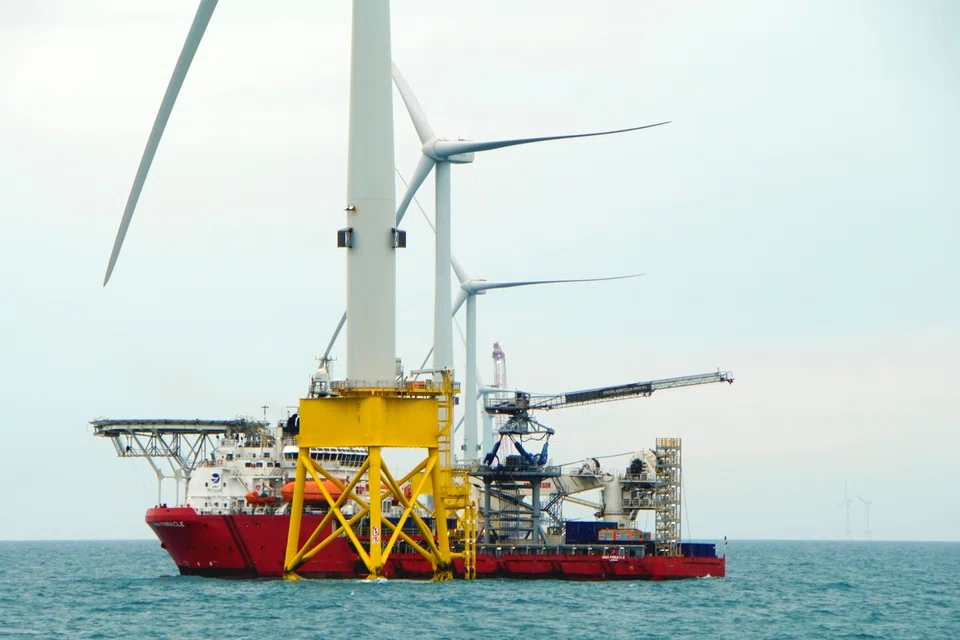
TRADITIONAL power assets and nascent South-east Asian markets are among the targets of infrastructure funds seeking value in an increasingly popular space.
Hamilton Lane, for instance, is pursuing more opportunities in the small- to mid-market space, where valuation multiples are anywhere from half to a fifth of what they are at the top end.
“We’ve seen consistently better entry values,” said Brent Burnett, its head of infrastructure and real assets. He defines small companies as those with enterprise values below US$500 million, while those in the mid-market could be as large as US$1 billion.
“A lot of the value has already been wrung out (of larger platforms),” Burnett added.
He is also finding value in the less sexy sectors made up of traditional power generation companies (gencos) and midstream energy service providers, where valuation multiples range from six to eight – down from 10 to 12 times previously.
The discount is due to uncertainty about whether those assets can be sold on in the future. “There is some risk of obsolescence if the renewable transaction accelerates,” Burnett said.
He believes, however, that the exit uncertainty is more than made up for by predictability of cashflows – assets can be cheap enough to offer a high double-digit return from the cashflow alone.
Infrastructure’s steady yields are luring a range of private capital investors to a space that was once almost exclusively the purview of institutional investors.
Preqin data shows that infrastructure funds raised US$55.1 billion in the first half of this year. This is more than double the US$20.9 billion raised in H1 2023, although it is still far from the US$122.5 billion raised in H1 2022.
Investors are also finding favourable economic fundamentals in the infrastructure space.
“Higher than global growth in Asia and younger demographics have magnified global megatrends for green energy, ageing transport infrastructure and data demand, requiring significant private capital investments in critical infrastructure in South-east Asia,” said Edwin Low, partner at Global Infrastructure Partners (GIP).
In a report last month, KKR partner and global head of infrastructure Raj Agrawal noted that growth is slowing while inflation is likely to remain elevated. “History shows that private infrastructure has outperformed in similar environments in the past,” he said.
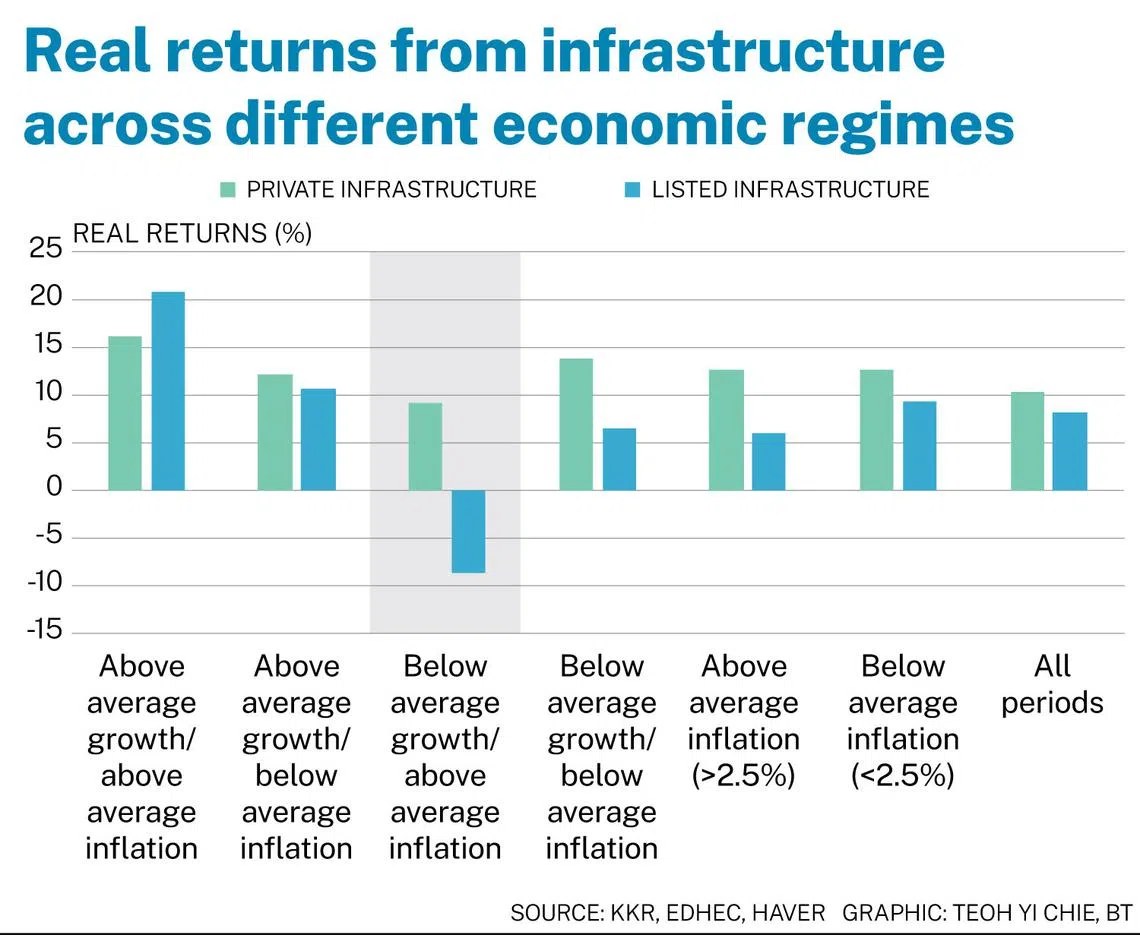
MSCI data on private markets funds showed infrastructure was the second best performing asset class in the Asia-Pacifc in the first quarter of this year, after distressed private credit.
The amount of money seeking deals, however, is raising the competitive heat.
GIP in March closed a US$2.1 billion emerging markets fund, targeting 11 countries in Asia and Latin America. KKR in March closed a US$6.4 billion Asia-Pacific infrastructure fund.
Renewable energy infrastructure and data centres have been particularly big draws.
Preqin data shows US$808.8 billion has been raised since 2019 by private market funds with exposure to renewable energy. Of this amount, 71.6 per cent has gone into infrastructure. A record 59 per cent of private infrastructure deals in 2023 were in renewable energy.
Data from Linklaters, meanwhile, shows US$22 billion was invested in data centres in the first five months of this year. Last year’s investment figure was US$36 billion, making it the second-largest investment year on record.
Most of that money is going into developed markets. Data centres require reliable power supply in spades, which is harder to secure in developing markets. Renewable energy infrastructure is only profitable to own if tariffs are stable and price increases possible, which is not always the case in developing markets.
Singapore-headquartered private equity firm Seraya Partners is focused on precisely those hotspots – data centres and renewable energy – but has set its sights on markets where it believes it will have an edge.
“China and India may be too obvious, hence we like to focus on developed countries such as Japan and (South) Korea that require a lot of language skills,” said James Chern, Seraya’s managing partner and chief investment officer.
The fund is also looking at South-east Asia investments – a market that remains relatively untouched by the bigger fund. “The local view is always different from what we call the tourist view,” Chern said.
Seraya is also concentrating on value-add investments, which means it buys assets or companies that need work to turn around or grow.
“The biggest story is that the definition of infrastructure has changed,” Chern said. While interest rates were low, infrastructure investors could generate returns with leverage. “Our view is that we have to generate returns by generating revenue growth.”
Suhasini Ranganathan, a partner with the deal advisory practice at KPMG in Singapore, sees more infrastructure funds doing the same as the industry continues to attract investment dollars.
“The models are evolving from a private capital perspective,” she said. Global infrastructure funds, which have traditionally been more interested in buying the so-called brownfield or established assets, are increasingly establishing their own platforms and making significant investments in greenfield assets as well, she said.
“We see large global infrastructure funds interested in participating in operating portfolios.”
The appeal of infrastructure is likely to continue. Goh Hui Yang, Asia head of alternative investments at Pictet Wealth Management, said infrastructure provides “long-term stability, predictable income streams and inflation-linked distributions”.
“The potential for positive social impact is also an appealing factor, making it popular among pension funds, insurance companies and high net worth investors.”
TRENDING NOW
32 companies, 6 individuals bag accolades at Singapore Corporate Awards 2026

He built the Vingroup empire. Now South-east Asia’s richest man is handing some key roles to his sons
URA to review guidelines on floor space to give developers more design flexibility: Chee Hong Tat

Chagee, Mixue and Luckin won the market. Sustaining their edge is the harder part

