Infrastructure not a safe-haven asset, but Asia-Pacific remains a bright spot: KKR
Investment firm sees potential in the region, which accounts for about 60% of global economic growth

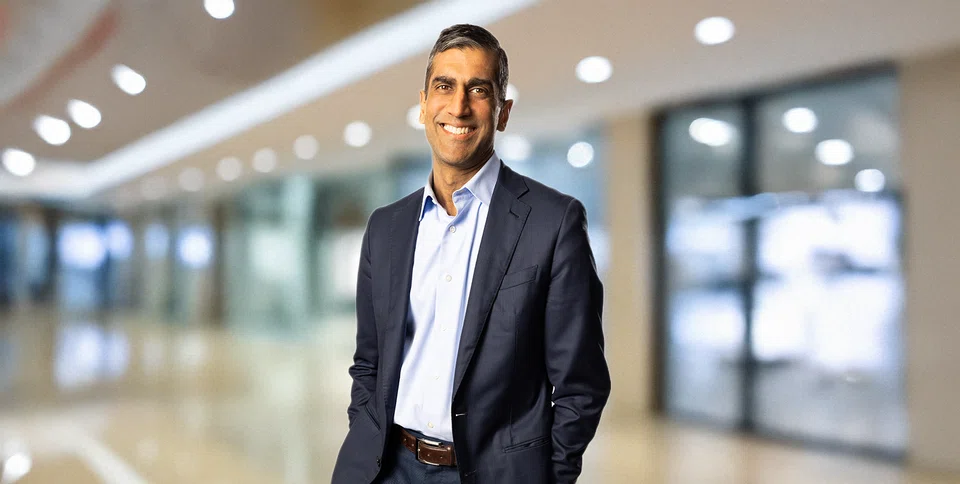
[SINGAPORE] Infrastructure may be widely viewed as a stable asset class with predictable cash flows, but it does not always behave like a safe haven during crises, said Raj Agrawal, global head of real assets at KKR.
“People did poorly during the global financial crisis (GFC), and people did equally poorly – if not worse – during the Covid crisis,” he told The Business Times.
It was during the GFC turmoil that KKR first broke into the infrastructure space, as several infrastructure portfolio companies and managers went bankrupt. It was a surprise at that time as it was thought to be resilient, noted Agrawal.
A key reason was that traditional infrastructure assets, such as toll roads, ports and airports, did not have contracted cash flows and were closely tied to the economy.
The lack of long-term cash flows, along with high leverage, meant that the asset class had a lot of volatility and was particularly exposed when economic growth slowed sharply, such as during the GFC. “We saw an opening to do it differently and to define infrastructure not by sector, but by a different risk-return profile,” pointed out Agrawal.
Rather than focus mainly on transportation assets, the firm expanded into assets that would not traditionally be classified as infrastructure. One example is Japanese pharmaceutical manufacturer Bushu Pharmaceuticals, which KKR acquired in 2023.
Bushu makes drugs for the Japanese market, and is in an industry that is capital-intensive with high barriers to entry due to regulation. The industry is also relatively recession-proof, with long-term contracts that generate stable cash flows.
“So financially, we would tell you that this is much safer than any toll road that we’ve seen and much more predictable than any toll road or airport,” Agrawal noted.
Big growth business
This is what KKR terms as industrial infrastructure – an asset that behaves like infrastructure financially, even if it falls outside traditional categories. This is a segment that the investment firm sees as a big growth business, which includes facilities involved in storage, processing, feed stock and pipelines that companies may sell and lease back from KKR.
This is playing out in the United States, where the company has an asset that stores natural gas under a long-term contract with a utility facility. This allows the private-markets operator to also run it more efficiently, scale it up with other assets and lease spare capacity to other natural gas players.
KKR’s entry into infrastructure was shaped by the GFC and that is partly why the firm emphasises downside protection to preserve capital even during downturns.
Out of the 100 investments made globally, Agrawal noted only a handful were affected. Aside from downside protections, there is an emphasis on contracted cash flows, or contracts that provide predictable revenue.
“We’ve leaned much more heavily into contracted sectors and away from some of the GDP-correlated sectors, and that’s really what helped us drive the capital preservation even through tough times,” said Agrawal.
Focus on Asia
He added that Asia-Pacific remains the most compelling region for growth, despite infrastructure’s sensitivity to economic cycles. “If I said there was a single most interesting geography for investing, it would be Asia-Pacific.”
The region is ripe for infrastructure players, with some two-thirds of the world’s population there, and accounting for about 60 per cent of global economic growth.
KKR has built a significant presence in the region, with two of the largest infrastructure funds focused on Asia. Its first Apac infrastructure fund closed at US$3.9 billion and its second closed at US$6.4 billion.
Agrawal said that the relative nascency of the infrastructure investment market in Asia enabled the firm to take a leadership position there compared to the US and Europe, allowing it to overtake peers despite the late start.
The private-markets player is raising its third Apac infrastructure fund, with reports suggesting that the target will exceed the second fund’s US$6.4 billion. KKR declined to comment on fundraising.
Significant part
Digital infrastructure, including data centres, fibre networks and telecommunications assets, remains a significant part of KKR’s business, accounting for about 25 to 30 per cent of its Asia portfolio.
Outside of South-east Asia, the firm is diversified across other segments, ranging from toll roads and renewable energy to a pallet rental business in India and an Australian airport company.
KKR has invested about US$15 billion in South-east Asia, with US$6 billion done in the last four months, making the region the fastest-growing part of the firm’s infrastructure business.
Across Apac, the firm manages over US$80 billion in assets under management.
Agrawal said that digital infrastructure remains a key part of the business, on the back of the growth of artificial intelligence. Even so, he acknowledged that the sector might face periodic hype cycles and over-exuberance.
“But we think if you avoid investing, then you’re giving up an opportunity,” he added.