

Initial plans to revive equities market may treat the symptoms but fall short of a cure: industry observers
An effective overhaul of the ecosystem could depend on the full set of measures, due to be released by August


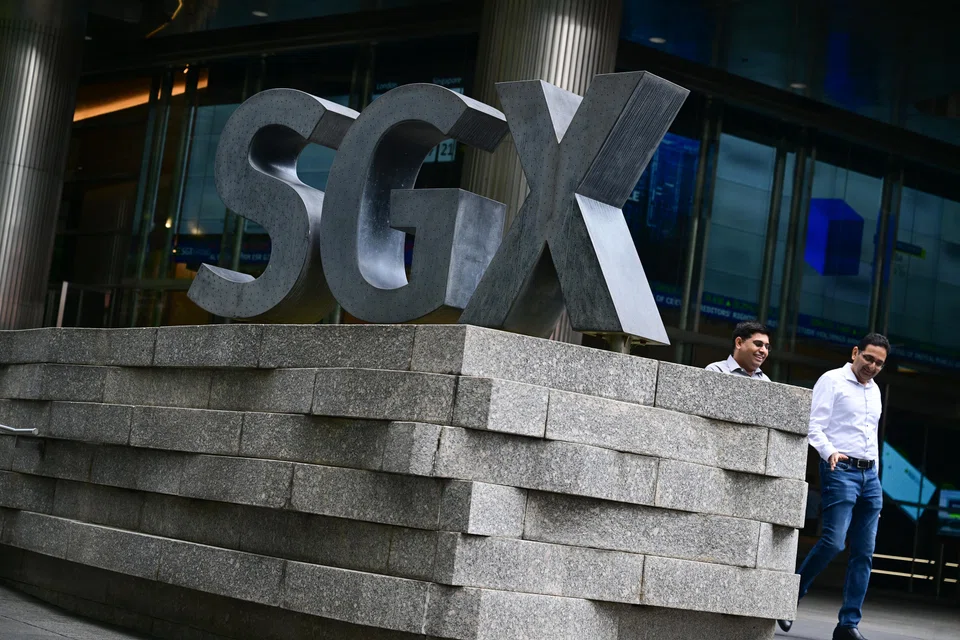
THE full update on the Monetary Authority of Singapore (MAS) equities market review group’s first set of measures, released on Friday (Feb 21), drew a cautious thumbs up from industry observers over the weekend.
The Business Times spoke to people across the capital market, including investors, fund managers, brokers and lawyers. They differed on the extent that the proposals would have in reviving the local market.
Carol Fong, group chief executive officer of brokerage CGS International, noted that the full update on the measures surpassed expectations, especially after a “comparatively lacklustre teaser” of the tax incentives that were first announced at Budget 2025.
Tay Hwee Ling, accounting and reporting assurance leader for Deloitte South-east Asia, said that mid-market companies with a strong local and regional presence, in particular, stand to benefit most with improved access to growth capital.
Nevertheless, it would require a “concerted effort” across the business ecosystem to attract more companies to list here, added Tay, who also serves on the review group’s enterprise and markets workstream.
Others, such as Lee Ooi Keong, managing director at board and C-suite advisory firm Clover Point Consultants, felt that the measures appeared to address the symptoms instead of the root cause of the poor performance of the Singapore bourse, namely poor liquidity and a lack of profitable companies.
More measures are expected to follow later in the year, with moves to streamline the listing process among other changes.
More attention to mid and small-cap stocks
Among the key measures unveiled was a S$5 billion investment initiative, called the Equity Market Development Programme (EQDP), designed to channel funds to asset managers with a “strong investment track record” and a focus on Singapore-listed equities.
The programme would bring more attention to mid and small-cap stocks, as well as attract foreign funds to some extent, said industry observers.
Terence Wong, CEO of fund manager Azure Capital, said that the programme will attract investors to the Singapore market by spurring demand and improving liquidity. With a buoyant market, foreign funds will also return, he added.
Fong of CGS International said that the programme’s focus on mid and small-cap stocks will help focus market attention on good Singapore companies with solid financial fundamentals, but otherwise have low market capitalisation or liquidity.
Similarly, Paul Chew, head of research at brokerage Phillip Securities, felt that the funding will have the biggest impact on small and mid-cap listed companies. He noted that while the S$5 billion programme fund is “not material” to the size of the overall market, it is significant when compared to the total value of companies under the S$1 billion market cap, which stands at around S$60 billion.
Long-term boost less certain
While positive, the impact of the EQDP will be “transitional” if other aspects of the market, such as research and regulations, do not work together to attract new capital into Singapore equities, added Chew.
Some foreign fund managers, particularly those focused on real estate investment trusts, banks, and dividends, may be attracted by the programme, said Joe Lin, executive director of investments at Golden Equator Wealth.
“However, without addressing liquidity concerns and expanding the diversity of listed companies, it is unlikely to significantly shift global fund flows towards Singapore,” he added.
Meanwhile, Dr Peng Chen, senior adviser at wealth advisory firm Providend, felt that the programme will expand the Singapore Exchange (SGX)-listed equity portfolio management and trading desks among the fund management community. However, it will not “transform the exchange overnight”.
Kelvin Lee, co-founder and CEO of investment platform Alta, was more pessimistic.
He said that Singapore’s local investor base does not seem convinced of the growth potential of mid-sized companies, preferring to invest in yield-driven investments over high-growth, riskier ventures.
Alta’s Lee added that, to this end, capital infusion into the market via the EQDP will not solve demand-side issues in the market. Instead, Singapore will need to demonstrate that its capital markets offer deep liquidity, fair valuations, and a pipeline of high-growth, investable companies to attract institutional and foreign fund managers.
Some call for even higher funding
Several industry observers also felt that the S$5 billion allocation for asset managers might be too small.
While the programme is “a good start” to revive the fortunes of the Singapore market, S Nallakaruppan, president of The Society of Remisiers (Singapore), was of the view that the liquidity boost to the market fell short of expectations.
He suggested that the government consider raising the funding to S$40 billion – approximately 5 per cent of Singapore’s total market cap – to truly boost liquidity.
Corporate lawyer Robson Lee, a partner at law firm Kennedys Legal Solutions, pointed out that while the EQDP indirectly supports both local and international fund managers, it is too early to predict whether they will “bite”, likening the S$5 billion funding to “startup capital” for the programme.
However, should it yield positive results, he believes that the government could increase the funding to maintain the momentum in growing the local bourse.
Some observers had previously suggested that GIC, Singapore’s sovereign wealth fund, allocate a small portion of its fund to the local bourse to boost valuations and investor confidence.
While the government recently reiterated its stance that it would not do so, industry observers said that the S$5 billion investment initiative for fund managers would go some way in achieving a similar objective.
Azure Capital’s Wong, for instance, believes that the EQDP will fulfil the liquidity boost in place of GIC funds.
“When investors speak of GIC, I think they really mean that the government should come in with funds,” he said. To this end, the EQDP is a signal that the government is stepping into the market with funds to help improve market liquidity.
On the other hand, Chew of Phillip Securities felt that the impact of the EQDP on the overall market “will be limited”, given that its value is around 1 per cent of the total market cap of SGX-listed companies. Instead, rising valuations and liquidity will attract aspiring IPOs, he said.
Echoing Chew’s view, Lin of Golden Equator Wealth, noted that the size of the EQDP fund may not create the desired impact on the market.
He felt that policymakers should “not close the door” on using sovereign funds. With GIC and Temasek’s sizeable combined managed assets, their participation in the market would have a “far greater and more sustained” influence.
“A one-time liquidity boost from the MAS fund may not have the same long-term impact as a sustained commitment from GIC or other institutional investors,” said Lin.
TRENDING NOW

ComfortDelGro appoints two new independent directors

Once staunchly pro-China, Malaysian Chinese businesses are now distancing themselves from Beijing

NoonTalk needs continued financial support from CEO Dasmond Koh, auditors warn

DP Architects sets the benchmark for sustainability disclosure and design

