InnoTek shifts gears to AI, EVs to capture industry changes
Already in China, Thailand and Vietnam, the company is mulling a move into Malaysia

FACED with a changing disk drive industry more than 15 years ago, InnoTek – previously Magnecomp, a supplier of high-precision disk drive components – sold its core business to a big customer at a “good price”. It then focused on growing the “very small stamping business” that was left.
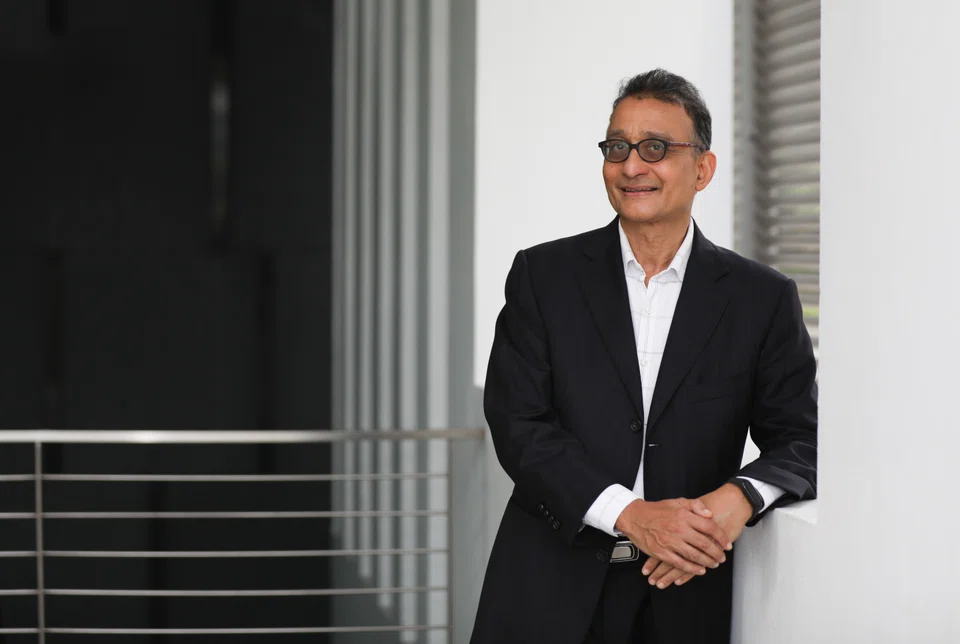
Today, the precision components manufacturer is stable but too small to be of interest to most investors, said its chairman Neal Chandaria. “We need to scale our business, and we need to enter sectors and segments which are going fast, which get investors excited.”
Among the promising new sectors it has identified are electric vehicles, and graphics processing unit (GPU) servers that are riding the artificial intelligence (AI) wave.
InnoTek used to have three business divisions – automotive, office automation, and TVs and displays – supported by five facilities in China.
In 2022, in the wake of the pandemic and rising geopolitical tensions, the company created an additional division that focused on new businesses. This division began manufacturing components for GPU servers, gaming machines, medical devices and ATMs.
“These are future sectors,” said Chandaria. “We felt, compared to the more traditional sectors, that these will have longer growth potential, and faster growth potential.”
The company already had the basic manufacturing expertise, he added, and worked with customers to identify the additional technical capabilities it needed.
This diversification is now bearing fruit. For the half-year to Jun 30, 2024, InnoTek reported a 30.9 per cent increase in revenue to S$121.6 million.
Chandaria said this growth was driven by projects related to GPU servers for AI applications. He added that its major customer in the segment is particularly focused on generative AI, a field that is currently booming.
These new businesses now represent about 27 per cent of InnoTek’s revenue, up from 14 per cent in the corresponding H1 of the preceding year.
Old industries, new developments
InnoTek’s legacy businesses are still big contributors to its revenue.
In H1 2024, the automotive sector contributed 33 per cent of its top line. Office automation accounted for a further 23 per cent; TVs and displays, another 15 per cent; and “others”, the remaining 2 per cent.
In the automotive segment, higher sales were driven by the strong EV market in China. To tap the explosive growth in this field, the company has added new capabilities, supplying battery components, including to leading Chinese battery companies.
In 2024, InnoTek also began producing parts for EV charging stations, to take advantage of the need for an ecosystem.
Some aspects of the group’s legacy automotive business are still relevant despite the rise of EVs. For instance, components for safety features are required in both EV and internal combustion engine (ICE) vehicles, Chandaria said.
Despite InnoTek’s strong revenue growth, its earnings slipped 8.3 per cent year on year to S$3.2 million in H1 FY2024.
Chandaria said ICE cars produced by foreign manufacturers have been affected by the shift towards EVs by Chinese manufacturers. Projects that would ordinarily have lifespans of five or six years are suddenly being shut down.
“Healthy order books started reducing, and so we took down various extraordinary costs to provide for the change or shift in the business.”
Business in the EV sector is tough too. “The EV business, even in China, is cut-throat, even though volumes are growing,” Chandaria said. “(There is) a lot of shakeout, a lot of companies are closing down.”
He expects business in 2025 to remain challenging, before stabilising in 2026.
Greater geographical reach
InnoTek’s reduced profitability was also partly due to costs associated with the set-up of facilities in Asean, said Chandaria.
Even before getting into new businesses, InnoTek had recognised that it would need greater diversity in its bases of production.
Following customers on their “China+1” strategies in the wake of US President Donald Trump’s first term, the company set up a facility in Thailand in 2017, followed by another in Vietnam in 2021.
In 2023, it acquired a 70 per cent stake in another Vietnamese facility.
“China is a manufacturing hub… and so we do supply components from China into the region,” said Chandaria. “But I would say more and more, as customers are ramping up their production from Asean countries, they want us to produce more and more locally.”
When it comes to supply chain efficiencies, productivity or quality, China is “head and shoulders above anywhere in South-east Asia”, Chandaria said. “But obviously, because of political considerations, diversifying supply chain considerations, these new options are coming up.”
InnoTek has decided that its Chinese facilities will focus more on China, he continued, noting that there will not be too much excess capacity emerging, because domestic businesses continue to grow. It is also able to shift production as needed, based on the demand in its business divisions.
While Asean contributes only about 15 per cent of the group’s revenue, the regional footprint is becoming more important amid geopolitical uncertainties.
Getting bigger, going deeper
InnoTek is now looking to expand in Malaysia, with Chandaria noting the country’s “very good infrastructure, relatively low cost and good technical skills”.
“Many of our customers are very comfortable operating in Malaysia,” he said. “Even today, we ship into Malaysia some of our products, and some of our customers have suggested to us that maybe we should look at setting up there.”
It is also working on higher value-added offerings in its existing segments.
In its office automation segment, for instance, it has gone up the value chain into assembly operations, in order to better serve its customers.
“So they’re very much more dependent on us in that sense,” said Chandaria. While many customers previously assembled the components themselves, they are increasingly outsourcing this step, he added.
Similarly, extending from its part in building servers, InnoTek has gone into liquid cooling for data centres.
It scouted for partners and found a company that provides liquid cooling for high-speed trains across China, and has been working with it to adapt its solution for servers.
Looking ahead, Chandaria now expects consistent growth for InnoTek. “We should be certainly reaching our earlier profitability levels in the next couple of years, and growing beyond that.”