

Integrated Shield insurers post stronger results in 2025, but recovery may be fragile
Industry margins are thin, and part of 2025’s performance likely came from the premium increases in September 2024

POLICYHOLDERS of Integrated Shield Plans (IPs) can generally heave a sigh of relief. Most insurers appear to have staged a turnaround in their underwriting results, but it remains to be seen whether this marks the start of a sustainable trend.
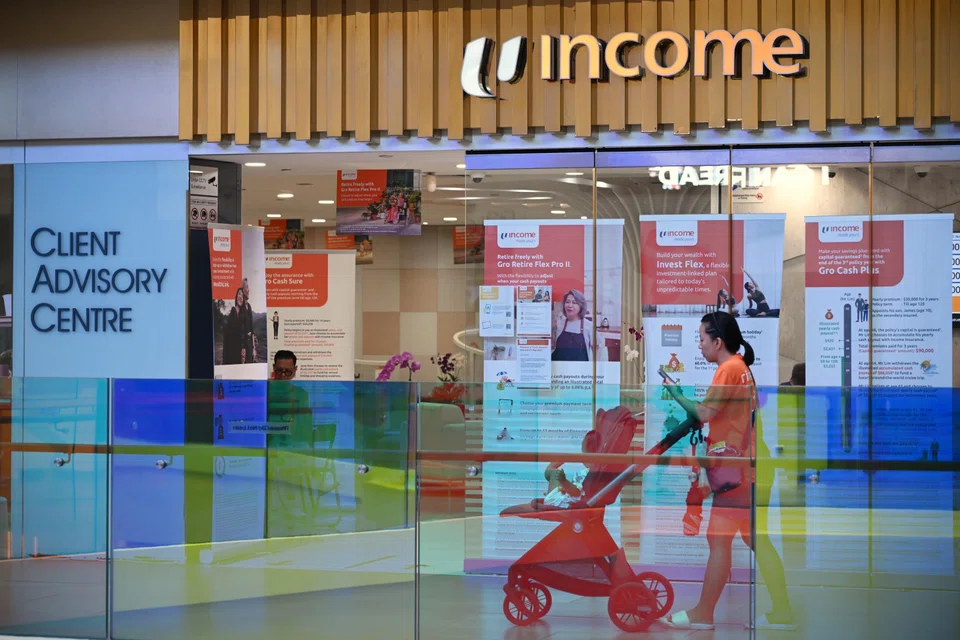
Among the most dramatic results were those of Income Insurance, which reported an underwriting profit of S$18.8 million, from its loss of more than S$49.4 million at end-2024.
Great Eastern increased its underwriting profit to S$8.39 million from S$4.8 million in 2024. In 2023, it had incurred a loss of S$44.8 million.
HSBC Life also turned around with a profit of S$12 million, from a loss of S$19.9 million previously.
Thin margins
In aggregate, based on an analysis by Singapore Actuarial Society president Alex Lee, the rolling 10-year underwriting profit margin before reinsurance remains unchanged at 0.5 per cent. Still, he noted that IP insurers broke even in 2025.
“With margins this thin or non-existent … one can therefore expect that any inflation or increase in utilisation will force premiums to increase too. Tough times ahead for everyone,” he wrote in a LinkedIn post.
To some extent, he said in reply to questions, the improvements in 2025 may reflect the premium increases that took effect from around September 2024. A moratorium on premium increases was imposed from September 2022 to end-August 2024 to ease the implementation of the Cancer Drug List (CDL) in 2022.
“The effects of premium increase in late 2024 would have only fully crystallised in 2025. Let’s say premiums increase every other year, and the healthcare costs continue to rise. The new rates will tend to look more profitable in the first year to subsidise the lower margin or loss in the second year to keep the overall picture profitable.”
He noted, however, that while claims incurred per life increased by about 6 per cent overall from the prior year, “there seems to be an underlying change in consumption and/or billing behaviour where claims count grew 18 per cent, but the average size of each claim fell 10 per cent”.
The industry has undergone several changes in efforts to keep IPs sustainable. The CDL in 2022 was one such change, narrowing eligible cancer drugs to those which are clinically proven and cost-effective.
In April this year, new IP riders can no longer cover the deductibles, and the annual co-payment cap doubled from S$3,000 to S$6,000. At this time, several insurers also took the opportunity to raise the premiums of their base plans, some by double digits.
Christina Low, Income Insurance vice-president and head of health strategy, said its improved underwriting results “reflect the recovery of the health portfolio from 2024 losses due to significantly higher claims and rising healthcare costs”.
“We have taken steps to restore balance and sustainability, including premium adjustments and regular review of product benefits, to ensure continued relevance to policyholders and closer management of the claims experience.”
A Great Eastern spokesperson said: “The regular review and disciplined management of our IP business has contributed to the improved financial performance of our IP portfolio.”
The insurer said claims management is “deliberately handled in-house, providing us the direct oversight needed to act in our customers’ best interests while driving efficiency”.
To give policyholders more choices, GE launched a hybrid plan this year, the Great SupremeHealth P Prime IP, for those who want access to private healthcare at more affordable premiums. The plan names specific panel hospitals, including Mount Alvernia and Raffles Hospital.
The take-up is understood to be strong, with one in four policyholders opting for the P Prime base plan or riders. “We believe customers should purchase only what is necessary and suitable for their needs.”
HSBC Life said it seeks to ensure the long-term sustainability of its IPs, “with a focus on balancing affordability and access while encouraging appropriate healthcare utilisation and better health outcomes for our customers”.
Its initiatives over the past years include premium discounts to encourage responsible consumption and guidance on the right siting of care.
Singlife’s underwriting losses improved from a loss of about S$59.66 million in 2024 to S$15.12 million. Helen Shen, the company’s group head of products, said the improvement was driven by better claims management, improved persistency and ongoing operational efficiencies.
“These helped to moderate the impact of medical inflation and an increase in claims... We have also seen improved persistency in the portfolio, with lower lapse rates contributing to a more stable risk pool over time. In addition, we have continued to streamline operations through process improvements and by leveraging technology.”
She said Singlife worked closely with IHH Healthcare to offer fixed price packages for selected treatments such as cardiac care and scopes. “We believe this model of closer payer-provider collaboration has helped to moderate the growth of private healthcare costs.”
Cost pressures
Prudential, consistently among the most profitable of IP insurers, still generated an underwriting profit of S$21.94 million, but this was 13 per cent lower than its 2024 profit of S$25.29 million.
Prudential’s chief health officer Dr Sidharth Kachroo, noting that the claims volume of its IPs grew 30 per cent between 2024 and 2025, said the pressures are similar to those felt by the industry at large, such as an ageing population and higher costs of consumables and pharmaceuticals.
“One key driver was customers’ use of non-panel medical providers. The average bill size for non-panel providers was more than three times that of Prudential’s panel providers for both years,” he said.
To manage claims costs, it has strengthened its hospital-led programme, PruPanel Connect (PPC), by adding eight new institutions including Thomson Medical Centre and Woodlands Health.
AIA’s underwriting results deteriorated in 2025, from a profit of S$7.17 million in 2024 to a loss of S$13.44 million.
Irma Hadikusuma, AIA chief marketing and healthcare officer, said underwriting results reflect a number of factors, “primarily affected by premiums earned over the year as well as claims incurred”.
“AIA has consistently taken a prudent and measured approach to premium adjustments. Over the last few years, our premium increases have been modest and broadly in line with medical inflation.
“This reflects our longstanding commitment to keep our AIA IPs and riders accessible for both new and existing customers, while ensuring our plans remain commercially viable for the long term.”
Raffles Health Insurance’s underwriting losses also deepened from S$2.3 million to S$3.2 million. This year, it raised premiums of its base plans for the first time since it launched IPs in 2018.
Ben Siah, its general manager, said there are no further plans to raise premium rates.
“The underlying cost factors for the underwriting results are primarily driven by the medical claims cost inflation trend.
“We continue to monitor the claims experience to understand the drivers of medical claims cost inflation, and to proactively manage it to ensure the long-term sustainability of the policies.”
TRENDING NOW

Britain’s mansion tax shows the difficulty of targeting wealth

Once staunchly pro-China, Malaysian Chinese businesses are now distancing themselves from Beijing

The only common thing in S-E Asia is that we all eat rice: Cisco’s Asean president

Singapore data centre operator DayOne opts for US IPO at likely US$20 billion valuation

