

Intel lands Tesla as first major customer for 14A chip technology
The chipmaker has previously said that it was in discussions with large customers about 14A
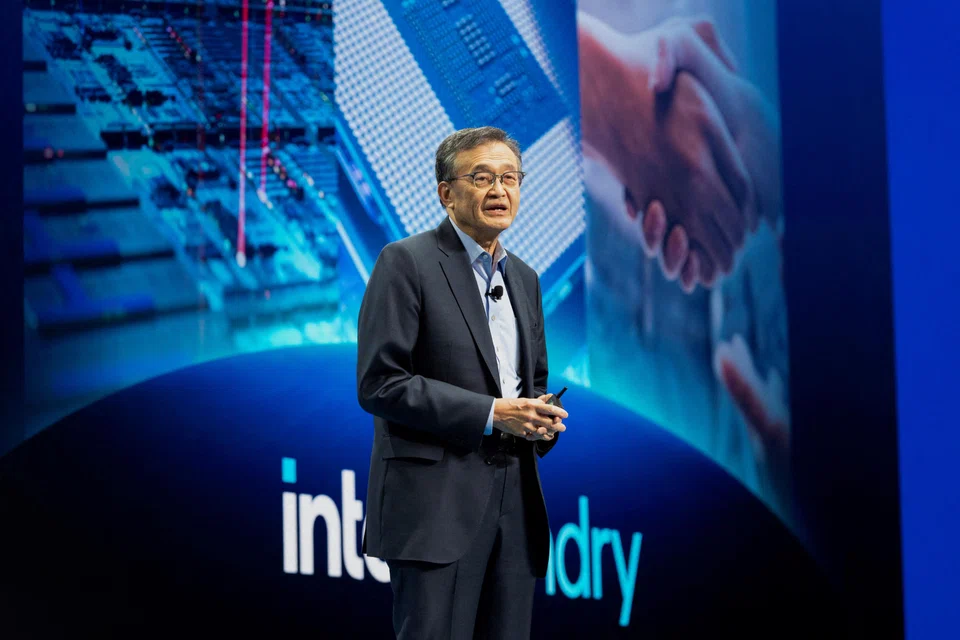
[BENGALURU/CALIFORNIA] Tesla CEO Elon Musk said on Wednesday (Apr 22) that the electric vehicle maker plans to use Intel’s next-generation 14A manufacturing process to make chips at its Terafab project, an advanced artificial intelligence chip complex Musk has envisioned in Austin.
The contract would mark Intel’s first major customer for the technology, a breakthrough for the chipmaker which has struggled to stand up its contract manufacturing business essential for taking on top rival TSMC.
Intel CEO Tan Lip Bu has said that the company would exit the chip manufacturing business altogether if it failed to secure an external customer.
Intel has previously said that it was in discussions with large customers about 14A, but has not yet disclosed a major external customer. It declined to comment on Musk’s remarks.
The chipmaker’s shares rose 3.6 per cent in extended trading.
Intel joined Musk’s Terafab AI chip complex earlier this month with SpaceX and Tesla to make processors to fuel the billionaire’s robotics and data centre ambitions. Tesla on Wednesday sharply boosted its capital investment plans, with Musk saying the outlay was necessary to fuel future revenue streams.
The carmaker’s investors were less than impressed, pushing its stock down slightly after hours. Musk, who has wooed investors with his promises to build ubiquitous humanoid robots and data centres in space, has also drawn criticism for his loose timelines and often-missed deadlines.
The Terafab, too, would be a massive undertaking. Musk said in March that his space startup SpaceX and Tesla would build two advanced chip factories at this sprawling facility, one to power cars and humanoid robots, and another designed for the space data centres.
Many details of the Terafab project, such as who will pay for pricey chipmaking equipment, who will operate the factory and when it will come online, remain unknown. Musk has said, though, that Terafab will eventually produce one terawatt of computing capacity a year, compared with about half a terawatt currently generated across the United States.
SEE ALSO



Building enough chip capacity to power one terawatt of annual compute would cost between US$5 trillion and US$13 trillion in capital expenditure, according to Bernstein estimates.
Real volumes
For Intel shareholders, though, this is good news.
“Given that by the time Terafab scales up, 14A will probably be fairly mature or ready for prime time,” Musk said. “14A seems like the right move, and we have a great relationship with Intel,” he said.
Ben Bajarin, head of technology consultancy Creative Strategies, said that Intel’s 14A technology could “turn out to be a bigger deal for Intel than folks thought”.
“It’s important to have multiple partners as early design partners to help clean the pipe and work through needed learnings at the leading edge. They will definitely have scale, so a great first non-Intel customer,” Bajarin said.
Seaport Research Partners analyst Jay Goldberg said Musk’s vote of confidence in Intel’s technology outweighed the unknowns about the Terafab project.
“Having a customer is more important than the timing,” he said.
Goldberg said that Musk’s lofty estimates of how many chips its robots could one day require may or may not materialise, but even making chips for Tesla’s existing businesses would be a significant win for Intel.
“It’s not equivalent to Apple or Nvidia” in terms of chip volumes, Goldberg said. “But it’s a real customer. It can be real volumes.” REUTERS
Decoding Asia newsletter: your guide to navigating Asia in a new global order. Sign up here to get Decoding Asia newsletter. Delivered to your inbox. Free.
Share with us your feedback on BT's products and services
TRENDING NOW

DBS, OCBC, UOB rout lops billions off STI as inflation, rate concerns spook investors

Grab CEO’s wife Chloe Tong on life with Anthony Tan and finding her purpose

OCBC sheds S$8 billion in value as shares close nearly 6% down; analysts cautious on banks

Deal between tycoon friends sparks scrutiny of Philippine power sector

