

An introduction to the Jardines
Shunned by local brokers, tightly-controlled, the venerable and storied Jardine group is nevertheless too important to miss
TO someone looking at the Singapore market for the first time, it might be somewhat puzzling that about one-eighth of the weight of the benchmark Straits Times Index (STI) - made up of three stocks - is not covered by local brokers.
These stocks form part of the Jardine conglomerate: Jardine Matheson Holdings, Jardine Strategic Holdings, and Jardine Cycle and Carriage (C&C). If you include the full revenue contribution of all its associates and joint ventures, the ultimate holding company, Jardine Matheson, takes in about US$60 billion in revenue every year.
The history of the group is intertwined with the political, economic and industrial development of Hong Kong and China. Today, its interests span the region, including Singapore and Indonesia.
The Jardine group owns businesses Singapore investors might be familiar with: Hongkong Land (also part of the STI), Dairy Farm International and Mandarin Oriental International.
Even if you might not have heard of Hongkong Land, you might be familiar with the two towers of One Raffles Quay and the three towers of the Marina Bay Financial Centre. Hongkong Land owns a third of these developments and gets income by renting space out.
Visitors to Hong Kong will likely have passed through some of the commercial buildings that Hongkong Land owns by the Hong Kong and Central MTR stations: Exchange Square, Alexandra House, Chater House, Jardine House, Prince's Building and Landmark Atrium.
As for Dairy Farm, you might have shopped at its retail outlets in Singapore: Cold Storage, Giant, 7-Eleven and Guardian. In Hong Kong, you might have shopped at Ikea, Mannings, or the Wellcome supermarket, which are brands that are part of the group. Or you might have eaten dim sum at Maxim's Palace, part of the Maxim's restaurant chain that is 50 per cent owned by Dairy Farm.
Mandarin Oriental, meanwhile, is a hotel group that operates or has under development 45 hotels with 11,000 rooms in 25 countries.
Two other companies in the group of note are Indonesia-listed Astra International and London-listed Jardine Lloyd Thompson Group.
Jardine Lloyd Thompson provides insurance and reinsurance services. It also advises companies on their pension, retirement and health benefits plans.
Astra is a major Indonesian group that sells cars and motorcycles, makes construction and mining equipment, owns a bank and car insurer, has an infrastructure and logistics arm, and sells crude palm oil.
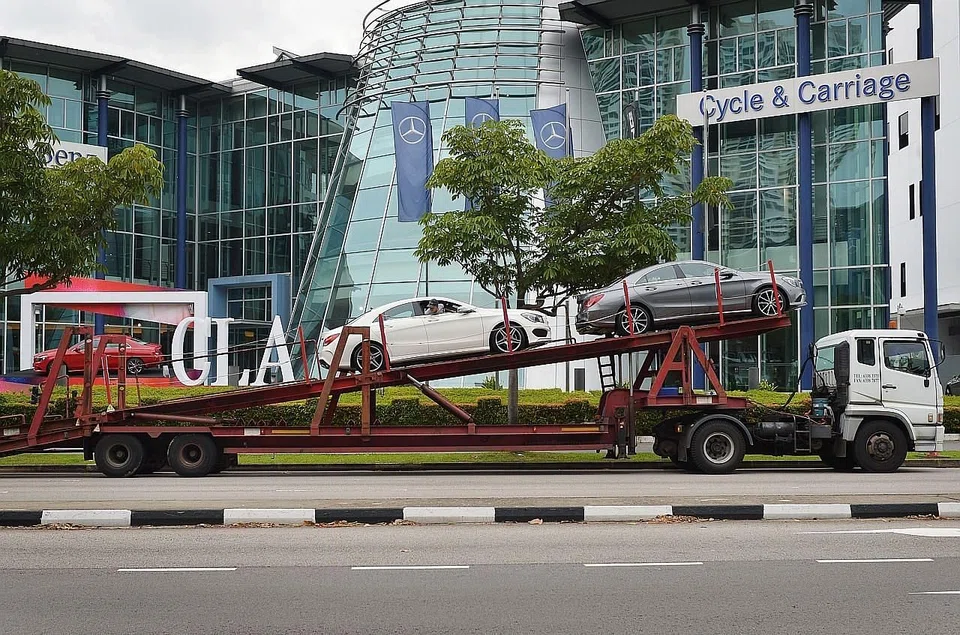
Singaporeans might know Jardine C&C because of the Cycle & Carriage car distributor here, which sells Mercedes-Benz, Mitsubishi, Kia and Citroen cars.
Yet the Singapore arm of Jardine C&C only contributed about US$31 million out of the company's US$894 million 2013 net profit. The bulk of the profit - US$849 million - was contributed by Astra.
Last but not least, Jardine Pacific, which holds the group's unlisted businesses in Asia, has interests in construction, air cargo terminal operations, aviation services, engineering, IT, shipping, travel and food among others. A subsidiary, Jardine Restaurant Group, is a franchisee of Pizza Hut in Taiwan, Hong Kong, Macau and Vietnam, and also operates KFC outlets in these areas.
Opium, war and Hong Kong: the beginnings
To try to understand the Jardine group, we have to start with the ultimate holding company right at the top - Jardine Matheson - and the secondary holding company known as Jardine Strategic. Both companies, which hold stakes in each other, control the Jardine empire.
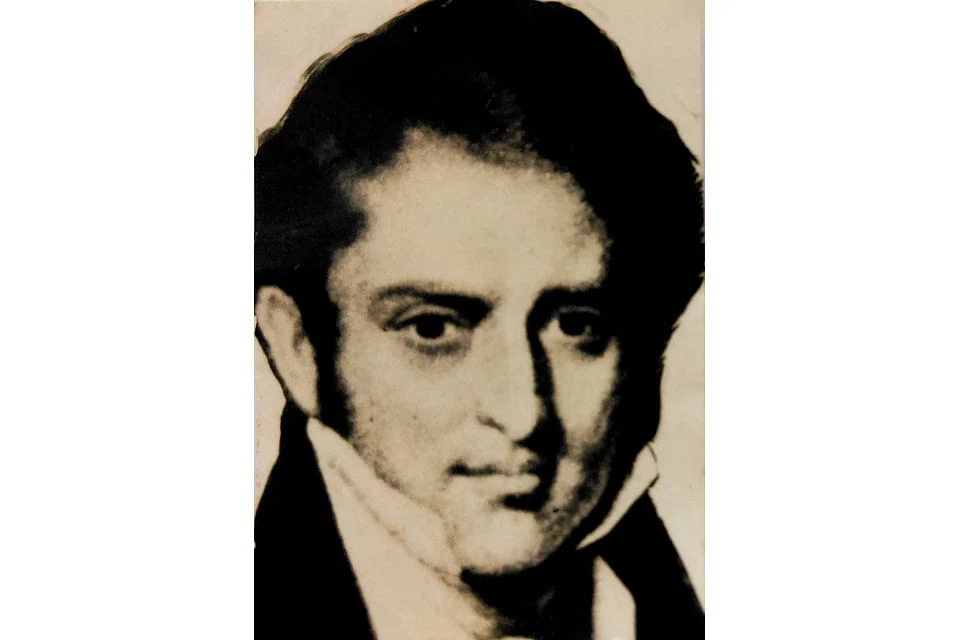
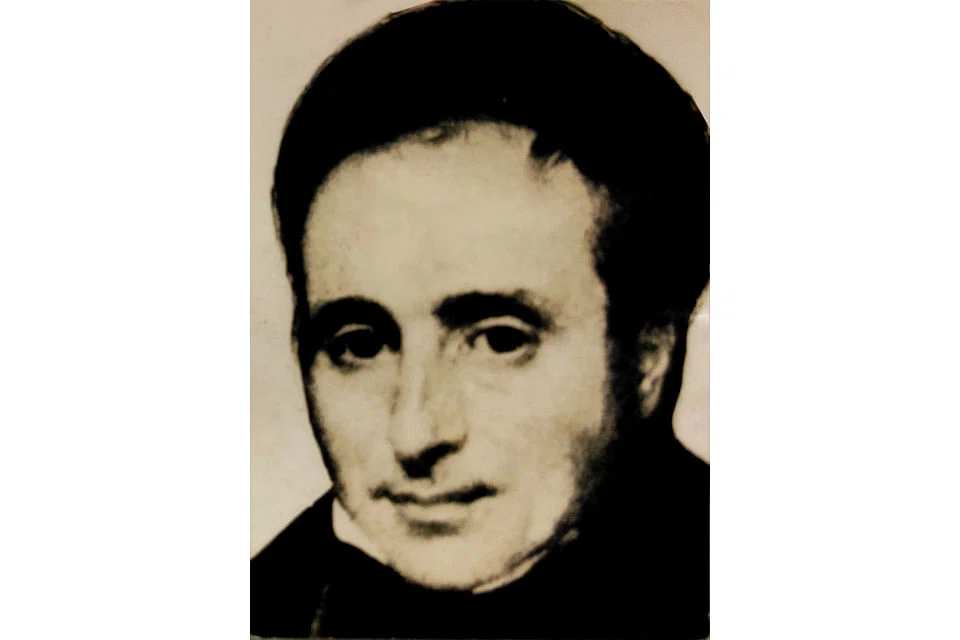
The name Jardine Matheson comes from its two Scottish founders: William Jardine and James Matheson. Dr Jardine was a doctor-turned-opium trader, who was selling smuggled India-grown opium in China, which had banned the import. Mr Matheson, later Sir Matheson, was also involved in the India-China trade. Both were based in Canton, or modern-day Guangzhou. They formed Jardine Matheson and Co in 1832.
A year later in 1833, the state-backed East India Company (which had established a trading post in Singapore in 1819 through Thomas Stamford Raffles) had its monopoly over the China trade revoked by Parliament. The end of the monopoly came in the spirit of free trade and also after years of lobbying by other British competitors. Jardine Matheson leapt at the opportunity and began exporting tea from China to Britain in 1834.
Dr Jardine played a role in persuading the British government to wage the First Opium War on China to protect its trade interests. This eventually resulted in the ceding of Hong Kong to the British until its eventual handover to China in 1997.
From its beginnings as a trading house in 19th century, the Jardine group went into shipping, banking, insurance, and other industrial and infrastructure interests. Dairy Farm was established in 1886, and Hongkong Land in 1889.
The Jardine group began expanding into products and services required for China's industrialisation in the 1900s. It survived the Second World War, though many of its managers died or were imprisoned.
And in 1949, when the Communist Party took over China, many of its assets were nationalised. The experience, commentators said, would shape its attitude towards China in the years to come.
Jardine Matheson itself was listed on the Hong Kong Stock Exchange in 1961, ending a 129-year partnership system. Its prospectus described a wide variety of business activities in the "Far East" - "merchanting of imports and exports, the distribution and servicing of engineering products, the shipping industry, air transport business, insurance, investment management, agency business and general merchant adventure".
By then, the Keswick family, who was long associated with the Jardine group, had bought out the Jardine family's stake, according to a book by Carol Matheson Connell titled: A Business in Risk: Jardine Matheson and the Hong Kong Trading Industry. (The first Keswick, William, had a grandmother who was the older sister of Dr Jardine).
In 1963, Hongkong Land opened the Mandarin hotel, which will eventually become Mandarin Oriental. In 1964, Dairy Farm bought the Wellcome grocery chain in Hong Kong. In 1970, Jardine Fleming, an investment bank, was formed.
China, politics and corporate restructuring
It was in the last 30 years or so that the Jardine group's current corporate structure took shape, shaped by takeover attempts and fear of political reprisal.
In 1984, the Jardine group shifted its legal domicile to tax haven Bermuda amid discussions between China and Britain for the British to return sovereignty of Hong Kong to China.
As an aside, the year 1984 was also notable because Jardine Fleming was booted out of Singapore by the Monetary Authority of Singapore (MAS), which withdrew the merchant bank's licence. Among various reasons, MAS had said that it was not pleased with the way the bank valued Straits Steamship (now Keppel Land), which Keppel Shipyard acquired the year before at a price that some deemed too high.
In the late 1980s, the Jardine group fought off takeover attempts by Hong Kong tycoons YK Pao and Li Ka-Shing.
Dairy Farm and Mandarin Oriental were listed in Hong Kong in 1986. Jardine Strategic was formed as a holding company to tighten up control over the group and make it takeover-proof.
The year 1992 saw a spat with China, when the Keswicks were accused of backing the controversial political reforms introduced by Hong Kong's last governor Chris Patten.
China, in a commentary in end-1992 through the official Xinhua news agency, blasted the Jardine group and referred to the country's British subjugation in the opium war days. It is "ironic and pitiful" that a conglomerate that "grew along with colonial dictatorship" is "yelling about democracy", Xinhua said.
Jardine shares promptly fell, and the group worked even harder at diversifying its businesses.
In 1992, the Jardine group had first bought into Cycle & Carriage in Singapore. It acquired a 16 per cent stake from the Kuwait Investment Office, which was selling its assets to finance the country's post-war reconstruction. Jardine soon bought more shares in C&C the following year.
In 1994-5, prior to the Hong Kong handover in 1997, Jardine Matheson and most of its listed group companies delisted from Hong Kong, moving to London and Singapore. Its trading takes place here. Before it upped and left, the Jardines had tried to get an exemption from the Hong Kong takeover code, but failed.
Jardine Matheson began trading in Singapore in 1995, ending the first day of trading at US$7. At the same time, the company was seen publicly mending its relations with China.
In 2000, Giant Hypermarket was opened in Singapore by Dairy Farm, and Cycle & Carriage first bought into Astra International. The Jardine group, which had previously exchanged its shares in Jardine Fleming for a stake in joint venture partner Robert Fleming, sold its Robert Fleming stake to Chase Manhattan Bank.
The years 2000 and 2001 marked battles between American fund manager Brandes Investment Partners, and the Keswick family. Brandes wanted the Keswicks to unlock shareholder value by removing the cross-holding structure between Jardine Matheson and Jardine Strategic. The Keswicks won.
In 2005, Astra became a subsidiary of Jardine C&C. That year, Hongkong Land launched a takeover bid for Singapore residential property developer MCL Land. It eventually boosted its stake to 77 per cent. MCL Land itself was delisted in 2010.
The Jardine group continued tightening its control over its companies. Hongkong Land became a subsidiary in 2009 for the first time. By 2012, Jardine Matheson owned 42 per cent in Jardine Lloyd Thompson.
Control and corporate governance
As of end-2013, Jardine Matheson owns 83 per cent of Jardine Strategic, which in turn owns 56 per cent of Jardine Matheson.
Jardine Strategic owns 78 per cent of Dairy Farm, 74 per cent of Mandarin Oriental, 73 per cent of Jardine Cycle & Carriage, and 50 per cent of Hongkong Land. Jardine C&C owns about 50 per cent of Astra. These figures were little changed at end-2014, based on a Bloomberg check.
In 2014, the Jardine group sparked corporate governance concerns when it downgraded its listing status in Britain from a "premium" to a "standard".
Premium listed firms must meet stringent regulatory standards in Britain, while those with standard listings only need to meet standards set by the European Union.
This was reportedly in response to rules getting tougher for UK-listed "premium" firms, such as requiring all controlling shareholders to keep an "arm's length" distance from the company and not interfere with day-to-day control. Other changes involve enhanced disclosures and safeguards on the appointment of independent directors.
Jardine companies said that the proposed transfers will allow the group to maintain its existing structure and governance model.
"These are well suited to Asian conditions and have enabled each group company to take a long-term view in the development of its business and to produce sustained growth in shareholder value," they said.
Commentators had wondered if the change meant the Jardine companies had no primary listings, where they are subject to stricter regulation. In Singapore, the Jardine companies are all secondary-listed.
Mak Yuen Teen, an associate professor at the National University of Singapore Business School and a noted corporate governance advocate, asked if the Jardines still satisfy the requirements of secondary listings in Singapore, and if lower disclosure and governance standards create additional risks for investors.
The Singapore Exchange (SGX), however, said that a standard listing should not be confused with a secondary listing, and premium and standard listings in London refer to different criteria to qualify for a primary listing.
Prof Mak replied that the requirements for a standard listing are well below those for a premium listing in the UK, and also well below the requirements for a primary listing on the SGX in a number of important areas.
SGX had said that it is in discussions with the Jardines on the matter. It also said that it is unable to discuss dealings with individual companies.
The Jardines, meanwhile, had said that they intend to continue governance practices that go further than London standard listing requirements "as part of the group's commitment to maintaining corporate governance arrangements that are familiar to its long-term investors".
Meanwhile, concerns of relative illiquidity, along with the sheer complexity of the Jardine group, might explain why local brokers do not have the resources to cover the conglomerate and issue analyst reports.
Each Jardine share lot was also previously not as affordable to trade for many retail investors. Jardine Matheson traded in lot sizes of 400 shares and prices of US$60 each, making each potential investment at least S$30,000. Similarly, Jardine Strategic had traded in lot sizes of 500 shares and prices of around US$35. Jardine C&C had a lot size of 1,000 shares and prices of over S$40 per share.
With the reduction of board lot sizes last month, the shares now trade in lot sizes of 100 shares each. Retail investors can now get exposed to the Jardines for under S$10,000 per lot.
The Jardine conglomerate has a long and rich history, and the vast Jardine Matheson business empire stretches into the lives of many people in this region.
However, like investing in any company with a controlling shareholder, would-be investors have to recognise that their fate lies in the ability of the Keswick family to create value for shareholders in the foreseeable future.
GET STARTED NOW
Be a young investor
Do you aspire to be a successful young investor? Are you keen on taking the first step towards achieving that? The BT-Citibank Young Investors' Forum is no typical page extracted from a financial textbook. This forum will present step-by-step guides on how to start investing, feature stories of peers who have made some headway with their investments, and provide answers to your burning questions on investing. First, we need you to invest - not your money, but your time - in reading The Business Times every Monday. You need not be an armchair reader either - write in to btyif@sph.com.sg now!

TRENDING NOW
World’s largest offshore wind platform by Seatrium consortium on track to be completed by 2028

Is stamp collecting enjoying an analogue revival or are its best days over?

GovTech retrenches another 38 staff in second round of layoffs
MBS adjusted property Ebitda falls 20.6% in Q3 with fewer high-roller visits, weaker hold

