

Investors eye more share buybacks, special dividends as DBS, OCBC, UOB release Q4 earnings
Local banking trio is due to report Q4 and full-year results in February

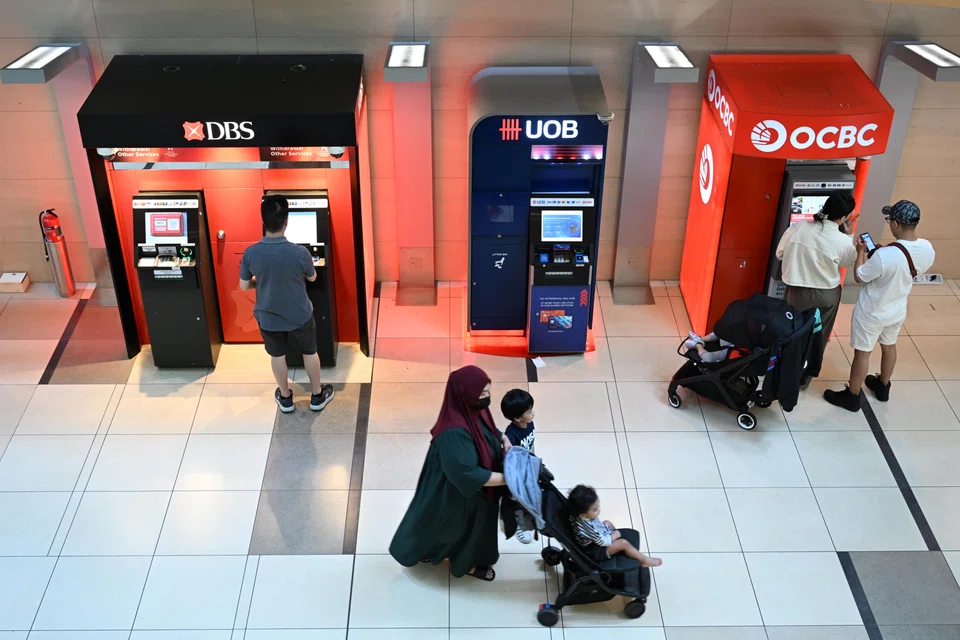
INVESTORS are keenly watching the capital management plans of the Singapore banks, which are expected to post yet another resilient set of results for the fourth quarter of 2024, analysts said.
These banks are due to report their Q4 and full-year 2024 results in February – DBS on Feb 10, UOB on Feb 19 and OCBC on Feb 26.
Analysts said that the lenders likely maintained their strong asset quality and excess Common Equity Tier-1 levels, which leaves room for capital returns to shareholders.
Thilan Wickramasinghe, head of Singapore research at Maybank Securities, said: “We expect increased management focus on optimising balance sheets with potential special dividends and larger share-buyback programme announcements.”
DBS and UOB could deliver special dividends and give more clarity on share buybacks plans, he added.
While OCBC has lagged in capital returns clarity so far, Wickramasinghe noted that this could change in the upcoming reporting season.
CGS International analysts Andrea Choong and Lim Siew Khee said DBS may declare a special dividend of S$0.50 per share, and raise its ordinary dividend per share (DPS) to S$0.60, on top of the S$3 billion share-buyback programme it announced with the release of its third-quarter results.
The CGS analysts noted that UOB has around S$2.5 billion in excess capital, which may be available for a share-buyback programme or special dividends – implying a DPS of around S$1.50.
As for OCBC, the CGS team noted that the bank prefers to return capital via dividends instead of share buybacks. With excess capital of around S$3.6 billion, it may potentially return up to S$0.80 in DPS.
But Jefferies equity research analysts Sam Wong and Chen Shujin said the lenders may want to tie the near-term capital return to longer-term growth, rather than just present a one-off surprise.
The Jefferies team is “more excited” about the banks’ longer-term return on equity (ROE) and growth potential, than about near-term capital return.
“We think the market underestimates the long-term ROE potential of the Singapore banks if they execute their overseas strategy well,” said the analysts.
According to Jefferies’ 2025 outlook, improvement in the lenders’ overseas franchises could grow DBS, UOB and OCBC’s ROE by 0.7, 0.5 and 0.4 percentage point, respectively.
The scarcity value of the lenders is also underappreciated, given the risks in other markets, the Jefferies analysts said.
Furthermore, the banks’ total shareholder return yield of 5 to 7 per cent is also ahead of domestic sectors such as the Singapore real estate investment trusts, they added.
Resilient earnings
Sequential earnings for the lenders should be largely flat to positive, aided by improved credit growth and resilient net interest margins (NIMs), said Maybank’s Wickramasinghe.
Net interest income should improve overall, due to better loan volumes and margins, he said.
He noted that loan growth in Singapore’s banking system hit a two-year high in November 2024. The banks also alluded to improvements in credit demand, especially in the Asean region, and the technology, media and telecom as well as renewables sectors.
“Credit demand should have broadened from the high-quality, low-margin, large corporate loans towards more SMEs (small and medium-sized enterprises) and longer-term capital spending,” he added.
Meanwhile, November’s 50-basis-point cut in US interest rates may be more noticeable only in the first half of 2025, even though September’s 25-basis-point cut could weigh slightly on asset yields, the CGS team said.
The CGS analysts said that Q4 earnings were likely seasonally softer as business activity decreased amid heightened leisure travel and year-end festivities.
According to Singapore’s Q4 2024 gross domestic product report, growth in the finance and insurance sector was driven by a strong performance in banking, fund management and payments companies.
But a key downside risk for 2025 is the potential constraint on growth rates due to less-than-anticipated global easing of monetary policy, said SGX Research.
Yet, RHB’s research team said Singapore banks are likely the most defensive option among the regional banks, as they are best placed to weather the strong US dollar and higher-for-longer interest rates.
While the strong performance of the banking stocks in 2024 may mean more modest returns in 2025, dividend yields remain attractive, further supplemented by capital management initiatives, the RHB team said.
Morningstar senior equity analyst Michael Makdad said that he does not see any reason to expect a change in the earnings-growth trend.
Fewer cuts in US rates should mean a smaller reduction in local interest rates, supporting the NIMs of the Singapore lenders.
The trio is also experiencing faster-than-expected growth in wealth management fees amid rising equities markets and secular demand from affluent individuals across Asia.
Furthermore, credit costs are benign, and there are not many struggling borrowers outside a few areas such as office property, Makdad said.
The three banks now make up 54.3 per cent of the Straits Times Index, SGX Research reported. The counters gained 2.5 per cent up to Feb 4, following a 41.4 per cent total return in 2024.






