

Investors must diversify to navigate ‘world of uncertainty’ in 2025
Focus on defensive strategies, particularly around Asia and countries with minimal trade exposure, say investment strategists

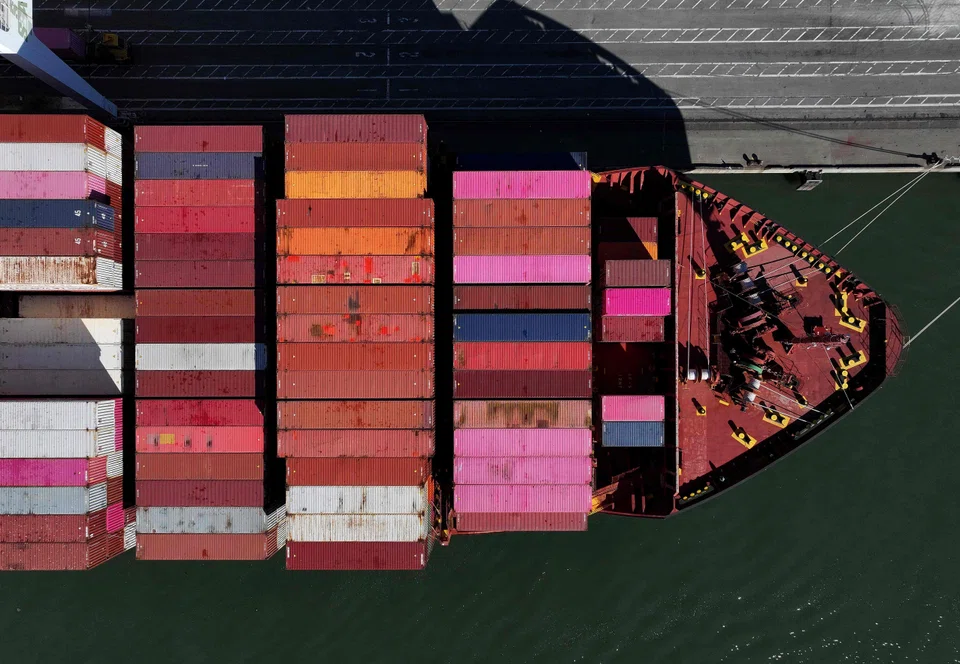
INVESTMENT strategists are gearing up for a year of heightened market volatility and trade policy uncertainty, according to their 2025 outlook.
However, Bank of Singapore (BOS) chief economist Mansoor Mohi-uddin believes that investors should be prepared for both downside and upside risks.
Speaking at BOS’ 2025 Outlook conference on Thursday (Jan 9), he pointed to potential risks, such as a surprise move by US president-elect Donald Trump to pull the US out of the North Atlantic Treaty Organization, but also identified possible positive scenarios, including a deal with Iran or a grand bargain with China.
“In this era of great power competition, we are going to see a lot more spending by both firms and governments on supply chains, energy, on critical infrastructure and, of course, defence,” Mohi-uddin said.
Against this backdrop, Citi Wealth chief investment strategist and chief economist Steven Wieting suggests that investors consider safer havens in countries with minimal trade exposure amid potential geopolitical discord.
Speaking at Citi Wealth’s Outlook 2025 media briefing in Singapore on Wednesday, he pointed to Indonesia and Malaysia as potential beneficiaries of trade diversification amid US-China trade tensions.
He also highlighted countries such as India, where gross trade – imports and exports combined – accounts for just 30 per cent of gross domestic product, and Brazil, where shipments to the US make up only 5 per cent of total exports.
“Global assets have cheapened significantly in the last eight years, and Asia stands out as an area where we have the bulk of our modest overweights outside the US,” added Wieting, emphasising that Asia remains a key area for sustained growth.
Growth drivers
In Asia, Citi Wealth foresees India, East Asian markets with exposure to investments related to artificial intelligence (AI) and Japan equities to prove attractive.
Ken Peng, head of Asia-Pacific investment strategy at Citi Wealth, said: “Strong domestic demand in India, and progress in reflation and reforms in Japan will drive continued growth there...
“As global trends like AI continue rolling out across industries, markets like South Korea and Taiwan are well-placed to address infrastructural needs and future upgrade cycles.”
On China, Peng noted that recent economic stimulus efforts have had limited effects, but there is potential for upside in the Chinese market, with Chinese equities offering a decent dividend yield of around 3 per cent.
“China is going to be a very rich source of alpha for this year, and that’s not well-appreciated in the market now,” he said, adding that investing in China comes with risks, but that it should not be dismissed as a potential source of growth.
Citi Wealth also sees strong valuations and potential solid returns in small and mid-cap US stocks, with rising volatility expected.
Wieting said: “We see deregulation beneficiaries in energy and power infrastructure, banks, digital assets, infrastructure, and think that AI will be a lot more than just spending on chips.”
Navigating unpredictability
In the broader economic landscape, Mohi-uddin expects inflation to remain “stubborn”, which will lead to divided views among central banks on how much they can influence rates. He also anticipates that the US Federal Reserve could implement, at most, two more rate cuts in 2025.
With the European Central Bank also facing challenges, he pointed to the strength of the US dollar, which will remain strong amid uncertainties.
He also suggested that gold would perform well in this environment, alongside strong Treasury yields, which are expected to reach 5 per cent.
Amid these shifting dynamics, BOS chief portfolio strategist Dr Owi Ruivivar believes that investors can better navigate the uncertainties by focusing on diversification, defensive strategies and long-term thinking.
She explained that uncertainty means the future is probabilistic, with even the probabilities themselves spanning a wide range.
“Whenever you don’t know, or you’re not sure of the answer, the best thing to do is to build a diversified portfolio,” she said.
Dr Ruivivar referred to diversification as the “only free lunch in investing”, quoting Nobel Prize-winning economist Harry Markowitz.
“That is true because not only can you inherently reduce the downside risk, which is, at the end of the day, very critical for investors, but (you can) also try to enhance your source of return,” she said.
TRENDING NOW

Government to bring forward raising of retirement age, give employers more financial support to create flexi-load jobs
Indonesia stocks suffer worst plunge in nearly 30 years as MSCI proposes standalone status

If Europe goes to war, the fallout will be felt in East Asia
Natural gas to stay for the long haul beyond 2050: Singapore International Energy Week panellists

